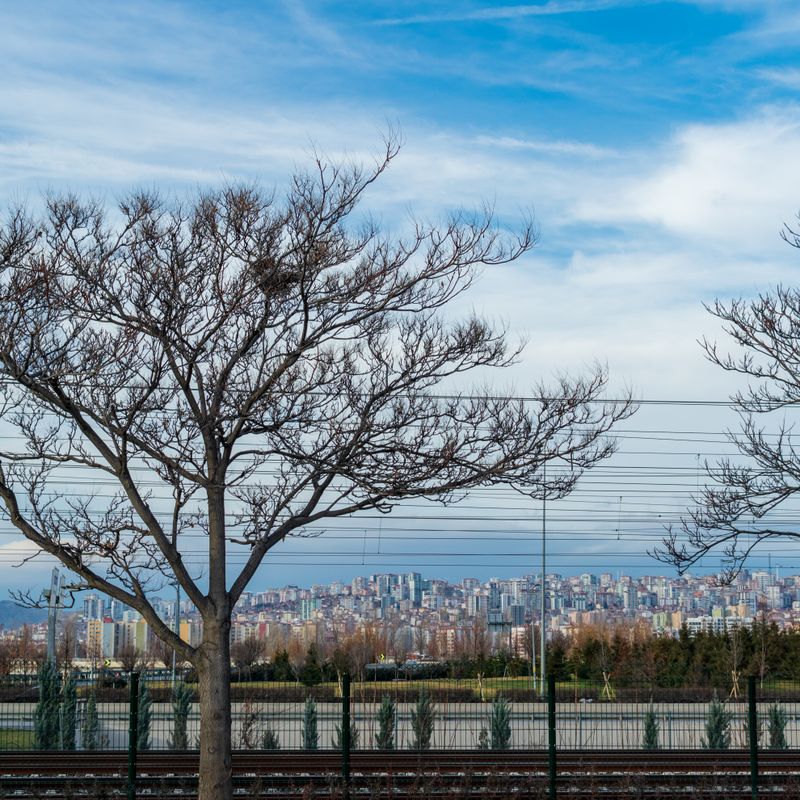
A single sapling can change how a whole block feels in August.
Cities run hot, loud, and fast—and that pace can make it easy to forget how much of urban life is shaped by what grows (or doesn’t) at street level. The urban tree planting benefits people talk about aren’t just aesthetic; they’re practical, measurable, and often immediate, from cooler sidewalks to healthier air and calmer minds. What follows is a grounded look at what trees actually do in dense places, why those gains aren’t distributed evenly, and how cities can plant smarter—not just more.
The day the street got cooler
On a treeless avenue, summer heat feels like it’s bouncing upward from the pavement. Step onto a shaded side street and the difference can be startling—your shoulders loosen, your pace changes, you stop squinting. That experience isn’t imaginary.
Urban heat is intensified by asphalt, dark roofs, and a lack of evapotranspiration (the cooling effect of water moving through plants and evaporating from leaves). The U.S. Environmental Protection Agency has described how built surfaces and reduced vegetation drive the urban heat island effect, making cities warmer than surrounding areas, especially at night.
Trees help in two ways at once: they shade surfaces so less heat is absorbed, and they cool the air through evapotranspiration. Put simply, a tree doesn’t just block sun; it behaves like a small, living cooling system.
That matters most where heat is already dangerous. According to the Centers for Disease Control and Prevention, extreme heat is a leading weather-related killer in the United States. In that context, planting (and keeping) street trees becomes less like beautification and more like public health protection.
What are the biggest urban tree planting benefits?
The biggest benefits are cooler neighborhoods, cleaner air, reduced stormwater flooding, better mental health, and stronger climate resilience—and they tend to compound over time.
A newly planted tree won’t fix everything in year one. But as canopy expands, the returns grow: more shade, more habitat, more carbon stored, more water intercepted before it hits overloaded drains.
Cooling and energy relief
Shade can lower surface temperatures on sidewalks, buildings, and parked cars. When trees are strategically placed near homes and along streets, they can also reduce cooling demand, easing strain on power grids during heat waves.
Air quality and respiratory health
Trees trap particulate matter on leaves and can remove some pollutants from the air. The relationship is nuanced—species choice and street design matter—but the general direction is clear: leafy canopy can be part of an air-quality toolkit.
A widely cited study in The Lancet (2019) examined green space exposure and health outcomes, associating higher greenness with lower mortality risk. While it doesn’t claim trees are a standalone cure, it adds weight to what many city residents sense: greener places often feel healthier.
Stormwater management that doesn’t look like infrastructure
A mature tree can intercept rainfall on its leaves and branches, and its roots improve soil infiltration. That reduces runoff volumes and slows peak flows—important as many cities face heavier downpours.
Think of it as quiet infrastructure: not a pipe underground, but a system above and within the soil that helps keep streets from turning into streams.
Biodiversity and urban habitat
Even small canopy pockets can become corridors for birds and pollinators. Native trees, in particular, often support more local insects, which in turn feed urban bird populations.
Mental health, attention, and everyday calm
It’s hard to overstate how much visual relief matters in dense environments. A classic study in Science (2008) found that a walk in nature can improve attention performance compared with a walk in a more built-up setting. Urban trees aren’t wilderness, but they can provide micro-doses of that restorative effect—especially for people who don’t have time or access to larger parks.
The equity question: who gets shade, and who doesn’t?
If you look at canopy maps in many U.S. cities, a familiar pattern appears: wealthier neighborhoods often have more trees, while hotter, more paved areas have fewer. These aren’t accidents of taste. They reflect decades of investment decisions, zoning patterns, and maintenance capacity.
When shade is unevenly distributed, the costs are too. Treeless blocks can mean higher indoor temperatures, higher energy bills, more heat stress, and fewer comfortable outdoor spaces for kids and older adults.
Urban forestry programs increasingly talk about “tree equity,” a concept popularized by groups like American Forests, which emphasizes aligning canopy investments with heat risk, health burden, and historical underinvestment. That shift is important because it frames tree planting as a fairness issue, not simply an environmental preference.
The catch: equity isn’t achieved by planting alone. It requires long-term care, protection from construction damage, and street designs that give trees room to live.
Planting is the easy part; survival is the strategy
Many city tree campaigns announce ambitious numbers—tens of thousands of trees planted—yet survival rates can lag when watering, soil, and siting are treated as afterthoughts.
A sapling in a cutout surrounded by compacted soil and dog traffic has a harder life than a sapling in a widened planting strip with engineered soil and routine watering. The difference shows up years later, when one becomes shade and the other becomes a memory.
Here’s a practical way to think about common approaches:
| Approach | What it gets right | Common failure point | Best for |
|---|---|---|---|
| Street trees in small sidewalk pits | Uses existing streets; visible impact | Limited soil volume; heat and salt stress | Dense corridors where space is tight |
| Planting strips / parkways (between sidewalk and curb) | More soil; better root growth | Conflicts with utilities; mowing damage | Residential streets and retrofits |
| Pocket parks and courtyard groves | Creates mini-canopy fast | Can cluster benefits away from hottest streets | Neighborhoods lacking park access |
| Large-canopy park trees | Major cooling and habitat value | Long timeline; vulnerability to storms/disease | Citywide resilience and recreation |
The urban tree planting benefits people most want—cooler sidewalks, shade at bus stops, calmer streets—depend on location. Trees placed where people walk, wait, and cross intersections can change daily comfort more than the same number planted far from pedestrian routes.
A smarter checklist for cities (and neighbors) who want trees that last
If a city wants canopy, it has to plan for roots, water, and time. If residents want shade, it helps to know what to ask for besides “more trees.”
A concise, survival-first checklist:
- Choose the right species for the site, not the idealized picture. Consider mature canopy size, salt tolerance, drought tolerance, and pest risk.
- Prioritize soil volume. Larger soil areas correlate with healthier, longer-lived street trees.
- Plan for water in the first three years. Early watering is often the difference between survival and replacement.
- Protect trunks and roots during construction. One sidewalk project can undo a decade of growth.
- Mix species to reduce catastrophic loss. Diversity lowers vulnerability to pests and diseases.
- Place trees where they reduce heat exposure most. Focus on hot corridors, transit stops, schools, and senior centers.
- Budget for pruning and maintenance. A tree program without maintenance is a short-term publicity plan, not an urban forest.
These steps sound unglamorous, but they’re where long-term canopy is won. Cities that treat trees as infrastructure—assets with maintenance cycles—tend to keep them.
When trees collide with real urban constraints
Trees can also create tension. Roots buckle sidewalks, branches tangle with wires, leaves clog drains, and pollen aggravates allergies. It’s not anti-tree to acknowledge these tradeoffs; it’s pro-competence.
The best programs plan around constraints instead of pretending they don’t exist:
- Sidewalk damage can often be reduced with adequate soil volume, root barriers, and species selection.
- Utility conflicts can be eased with coordinated planting plans and, in some corridors, smaller-stature trees under lines.
- Allergy concerns can be addressed by avoiding overreliance on high-pollen species and diversifying plantings.
- Maintenance complaints diminish when pruning cycles are predictable and communication is clear.
There’s also a bigger ecological constraint: climate change is reshaping what “hardy” means. Trees selected from older climate assumptions may struggle as summers get hotter and droughts intensify. Forward-looking urban forestry increasingly considers future heat and water conditions when choosing species.
A quiet kind of climate adaptation
It’s tempting to think of climate action as something only national policies or megaprojects can deliver. But cities adapt through thousands of small, grounded decisions: what gets planted, what gets watered, what gets protected.
The urban tree planting benefits that show up first—shade on a walk to school, a cooler bus stop, a block that finally feels usable in July—can also build momentum for deeper resilience work: permeable surfaces, better transit, safer streets, and buildings that waste less energy.
Trees don’t replace those changes. They make them easier to live with. They soften the sharp edges of density and remind a city that the outdoors is not only something you travel to—it’s something you can cultivate right outside your door.
Maybe that’s the most persuasive argument for planting: not that trees are a symbol of a greener future, but that they’re one of the few climate tools that make the present day feel better while they grow.