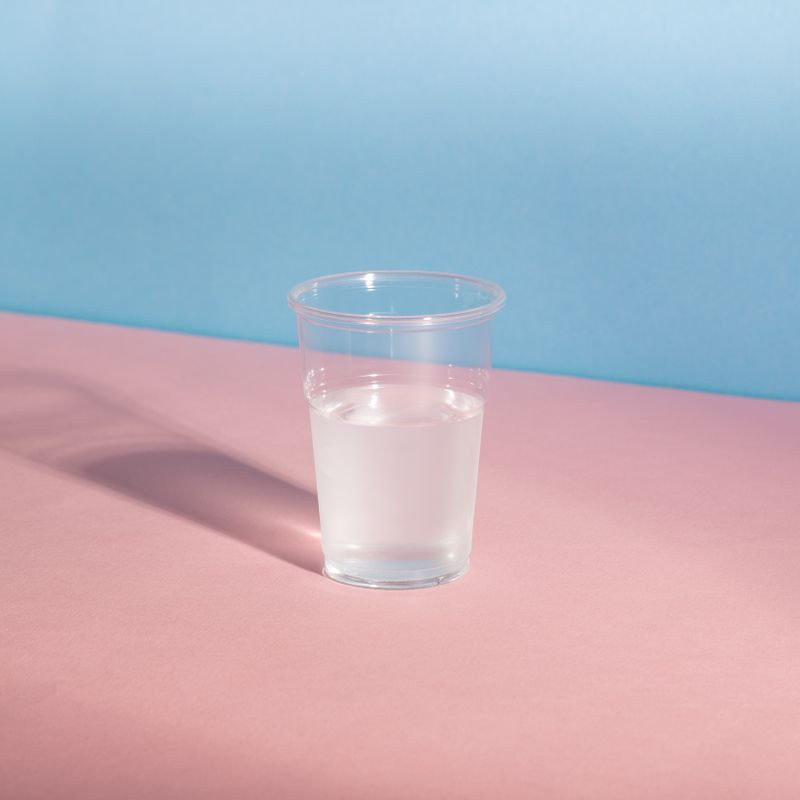
A glass of water looks simple—until you start asking what else might be floating inside.
Microplastics in drinking water have become one of those modern worries that’s hard to unsee once you’ve heard about it. The basic question is straightforward—are tiny plastic particles getting into what we drink?—but the useful answers live in the details: what “microplastics” actually are, how they’re measured, what scientists have found so far in tap and bottled water, what the health evidence can (and can’t) say today, and what practical steps reduce exposure without spiraling into panic.
What counts as “microplastics,” and why measuring them is so hard
Microplastics are generally defined as plastic particles smaller than 5 millimeters—small enough to be eaten by marine life, slip through some filtration steps, and travel widely. Within that umbrella is an even trickier category: nanoplastics, often described as particles below 1 micrometer (one millionth of a meter). The smaller the particle, the harder it is to detect—and the more likely it is to behave in unexpected ways.
The measurement challenge is not just about size. It’s also about:
- Different plastics, different signals. Polyethylene, polypropylene, PET, and polystyrene show up differently under spectroscopy.
- Different shapes. Fibers (from textiles), fragments (from broken items), and beads (from industrial sources) each move and filter differently.
- Different lab methods. Studies have used varying collection, digestion, and identification techniques, which makes “apples to apples” comparisons difficult.
That’s why headlines can feel inconsistent: one study “finds a lot,” another “finds less,” and both can be true given different detection thresholds. A major step toward clarity came in 2019 when the World Health Organization reviewed the state of evidence on microplastics in drinking water and emphasized that standardized methods were still developing—and that the smallest particles were likely undercounted.
Where microplastics in drinking water come from (tap and bottled)
It helps to picture plastics as a constant background material in modern life. Over time, friction, heat, sunlight, and ordinary wear break larger plastic items into smaller pieces. Those pieces travel.
For drinking water, the most plausible pathways include:
- Source water contamination. Rivers and reservoirs receive plastic debris from stormwater, wastewater discharges, and litter that breaks down.
- Wastewater and sludge. Wastewater treatment can capture a large portion of microplastics, but not all. Some particles pass through; others end up in sludge that may later be used on land, potentially re-entering waterways.
- Distribution systems. Pipes themselves are often metal, concrete, or PVC; wear and biofilms can interact with particles moving through the network.
- Household plumbing and fixtures. Aerators, seals, and flexible plastic components can contribute trace particles, especially as they age.
- Bottling and packaging. Bottled water has its own routes: abrasion from caps, friction during transport, and shedding from packaging materials.
None of these pathways guarantees high exposure for any individual, but together they explain why researchers have detected microplastics across many water systems worldwide.
What experts actually know right now
The most honest snapshot is this: microplastics have been detected in both tap and bottled water in many studies, but the health significance at typical exposure levels is still being defined. That’s not a dodge; it’s how evidence accumulates when detection is improving faster than toxicity thresholds.
A few anchor points matter:
- The World Health Organization (2019) concluded that, based on the evidence available then, microplastics in drinking water did not appear to pose a clear health risk at current levels, while also calling for better data on exposure—especially for smaller particles.
- In 2024, researchers reported findings in Proceedings of the National Academy of Sciences suggesting that bottled water can contain large numbers of nanoplastics (which are below the size range that many earlier methods could reliably quantify). This doesn’t automatically translate to disease risk, but it underscores that earlier estimates may have been incomplete.
Experts tend to agree on a few practical interpretations:
- Presence is not the same as harm. Detecting particles is easier than proving effects in humans.
- Particle size likely matters. Smaller particles may have different biological interactions than larger fragments.
- Chemicals matter too. Plastics can contain additives (like plasticizers) and can carry other contaminants on their surfaces, but how much that contributes via drinking water is still under study.
Are microplastics in drinking water dangerous?
Not definitively, based on current human evidence. Scientists are still working out real-world dose, particle size distributions (including nanoplastics), and how the body processes them.
What researchers can say with more confidence is how risk evaluation is being approached.
What happens after ingestion?
Most larger microplastic particles are thought to pass through the digestive tract and be excreted. The harder question is what happens with very small particles, particularly those in the nano-size range, which may interact differently with cells and tissues.
Laboratory studies and animal studies have shown that certain plastic particles can cause inflammation or oxidative stress under some conditions. But lab setups often involve controlled exposures that may not match typical drinking water intake.
Why chemical additives and “hitchhikers” complicate the story
Plastics are not chemically inert in the way glass is. They may include stabilizers, flame retardants, pigments, or other additives, and they can adsorb pollutants present in the environment. Whether drinking water microplastics meaningfully increase exposure to those chemicals is an active research area, and it’s part of why some scientists advocate a precautionary approach even while human outcome data remains limited.
The bigger context: overall exposure isn’t only from water
Even if your goal is to reduce microplastics in drinking water, it’s worth remembering that ingestion also comes from food (including seafood and salt), dust, and consumer products. Water can be a contributor—but it’s not necessarily the dominant one for every person.
Tap vs bottled: what’s the smarter everyday choice?
People often assume bottled water is “cleaner.” When it comes to microplastics, the answer can be counterintuitive.
Bottled water adds extra contact points with plastic—bottle walls, caps, and the bottling process itself. Tap water can contain microplastics too, but municipal systems often include treatment steps (coagulation, sedimentation, filtration) that can reduce particles.
Here’s a grounded comparison for decision-making, acknowledging that local conditions vary.
| Factor | Tap water | Bottled water |
|---|---|---|
| Typical treatment oversight | Regulated and routinely tested for many contaminants (varies by country/utility) | Regulated, but testing regimes and transparency can vary by brand and jurisdiction |
| Microplastic sources | Source water + treatment + pipes/home plumbing | Source water + processing + packaging abrasion |
| Convenience | High, low cost | Portable, higher cost |
| Waste footprint | Low | High (packaging, transport) |
| Best move if you’re concerned | Use a quality home filter and maintain it | Choose alternative containers when possible; don’t store in heat |
If you’re choosing based on microplastics in drinking water alone, many experts lean toward well-treated tap water plus a well-chosen home filtration step, especially because it avoids the packaging pathway.
Practical ways to reduce exposure without turning your kitchen into a lab
No single step eliminates microplastics entirely, but you can reduce likely inputs with a few sensible choices.
A quick, realistic checklist
- Use a certified filter (look for NSF/ANSI certifications) and replace cartridges on schedule. While certifications often focus on chlorine, metals, or organics, higher-performance filters can also reduce particulate matter.
- Consider reverse osmosis (RO) if you want the most aggressive removal of very small particles. RO systems can be effective for many contaminants, though they waste some water and require maintenance.
- If RO feels like overkill, a well-made activated carbon + fine membrane system (or a gravity filter with a strong track record) may still cut down particulates.
- Avoid heating water in plastic, especially in the microwave. Heat accelerates shedding and chemical migration.
- Don’t leave bottled water in hot cars or direct sun. Temperature swings can increase plastic wear and leaching.
- For kettles and storage, prefer stainless steel or glass.
What about boiling?
Boiling is excellent for killing microbes, but it doesn’t reliably remove microplastics. In some cases, boiling can concentrate whatever is already in the pot as water evaporates. If you boil, pair it with filtration if your goal is particle reduction.
A note on filters: “best” depends on your constraints
If you rent, travel, or can’t install under-sink systems, don’t discount simpler options. The best filtration is the one you’ll maintain. An RO system with neglected filters is not a win.
What researchers are racing to figure out next
The science is moving quickly, and the most interesting advances are less about dramatic new fears and more about better clarity.
Key frontiers include:
- Standardized testing methods. Until labs measure the same size ranges with the same protocols, comparing results remains messy.
- Nanoplastics exposure estimates. As detection improves, the “invisible majority” may become quantifiable—and could change how exposure is discussed.
- Toxicology that matches real life. Scientists are working toward dose levels, particle types, and mixtures that reflect what people actually ingest.
- Treatment optimization. Water utilities continually adjust coagulation and filtration. Understanding which steps remove which particle sizes can inform upgrades without massive cost.
- Health endpoints with strong study design. The hardest evidence to obtain is long-term human outcomes linked to measured exposure. That’s where public health confidence ultimately comes from.
What’s striking is how often the microplastics conversation ends up pointing back to ordinary infrastructure questions: wastewater capture, stormwater management, product design, and material choices upstream.
Living with uncertainty, without surrendering to it
There’s a specific kind of frustration in the microplastics era: you can do everything “right” and still live in a world where tiny fragments circulate through air, water, and food. The goal, then, isn’t purity—it’s prudence.
If microplastics in drinking water are on your mind, the most balanced posture is to treat the issue like other emerging environmental exposures: reduce what’s easy to reduce (filtration, container choices, heat avoidance), keep an eye on evolving standards, and support the kind of water and waste infrastructure that prevents pollution before it reaches the faucet.
The glass of water can still be simple—just not simplistic. The more we learn, the more the solution looks less like a single consumer trick and more like a quiet redesign of how plastic moves through everyday life.