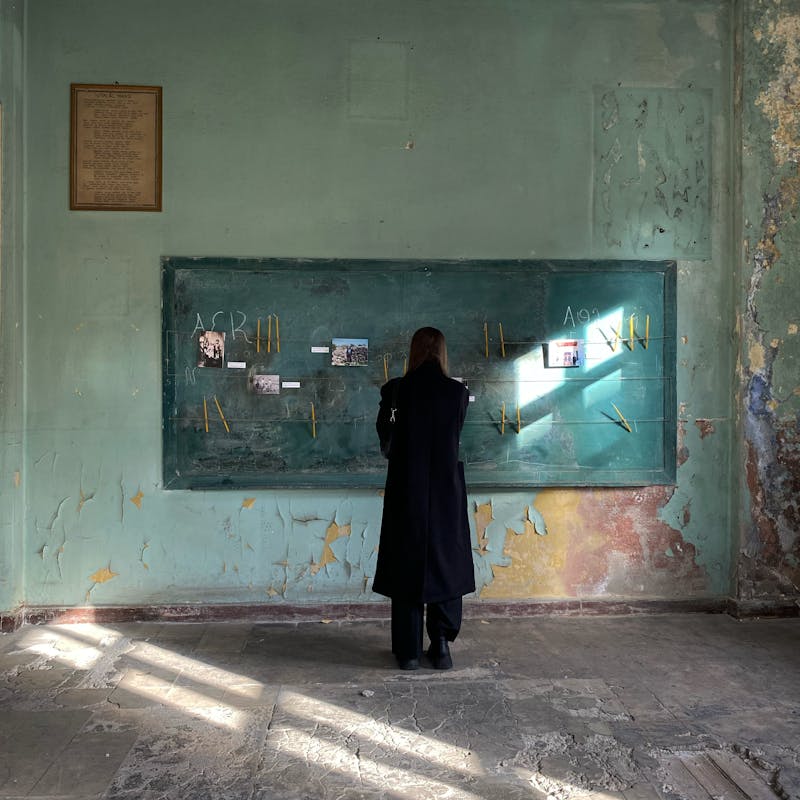
A career often begins as a feeling, not a plan.
The classroom is where many people first learn what “counts” as smart, practical, or worthy—and those early lessons can quietly steer career choices for years. The long shadow of school isn’t just about grades or guidance counselors; it’s about the daily signals students absorb about who they are, what they’re good at, and what kind of future seems available.
The first labels we learn to answer to
School is full of quick judgments that harden into identity. “Good at math.” “Not a reader.” “Creative but unfocused.” Even when said casually, these labels land with the weight of authority.
A student praised for speed and accuracy may come to equate competence with getting the right answer fast, which later makes fields built on iteration—design, research, entrepreneurship—feel uncomfortable. Another student who struggles with timed tests might decide they’re “not STEM material,” even if they thrive in hands-on problem solving.
The trouble isn’t that teachers notice differences; it’s that children internalize those differences as destiny. By the time career conversations become explicit, many students are already negotiating with a private story about what kind of person they are allowed to be.
Hidden curricula: what school rewards, careers require
Beyond the official subjects, classrooms teach a “hidden curriculum”: punctuality, compliance, the ability to perform on demand, the skill of speaking up in a certain tone. Those are not inherently bad lessons, but they’re incomplete.
Many modern careers reward ambiguity tolerance, collaborative conflict, and the patience to revise work that no one grades. Yet school often rewards the opposite: certainty, individual performance, and clear rubrics.
That mismatch can shape career preferences in subtle ways. People who flourish in structured assignments may gravitate toward roles with defined ladders and metrics. People who felt stifled might seek creative industries—sometimes not because they love the work, but because they’re running from the feeling of being measured.
The power of one teacher’s belief
Ask adults why they chose a path and you’ll often hear a story about a single teacher. Someone who insisted a quiet student’s writing mattered. A coach who saw leadership before anyone else did. A science teacher who made a lab feel like discovery rather than intimidation.
Encouragement works because it’s specific. “You ask good questions” is different from “You’re smart.” The first points to a behavior that can be repeated; the second can feel like a fragile title that must be defended.
The opposite is also true. Dismissive comments—especially in middle school, when identity is still soft—can lock doors. A sarcastic remark about a student’s accent during a presentation can ripple into a lifetime of avoiding roles that involve public speaking, management, or client-facing work.
Tracking, access, and the careers that become visible
Career choice is often less about passion than exposure. Schools that offer Advanced Placement courses, robotics clubs, debate teams, internships, and arts programs don’t just teach skills; they make certain futures imaginable.
Tracking systems can widen this gap. When students are placed early into “advanced” or “standard” lanes, they may lose access to challenging material, experienced teachers, or peers who pull them forward. Later, when college majors or apprenticeships require prerequisites, the choice looks personal—when it was partly logistical.
Even well-meaning advice can be constrained by what the school itself recognizes as “real” success. If the loudest celebrated outcomes are four-year degrees and office jobs, trades, caregiving professions, and creative work can feel like backup plans instead of respected paths.
Confidence, anxiety, and the internal career counselor
Classroom experiences shape the inner voice that speaks up during career decisions. A student who learned that mistakes are embarrassing may become an adult who avoids stretch roles, negotiating hard for stability while quietly resenting it.
Perfectionism often has a school-shaped texture: the belief that effort should look effortless. In workplaces, that can translate into imposter syndrome, over-preparation, or reluctance to ask questions—traits that influence what opportunities people pursue.
Meanwhile, students who experienced autonomy—choosing project topics, designing experiments, leading group work—often carry a steadier sense that they can learn their way into new roles. They’re not necessarily more talented; they’re more practiced at being a beginner.
When “practical” becomes a script
Many people can recall the moment a dream was edited into something more “reasonable.” Sometimes it was a parent’s worry, sometimes a counselor’s suggestion, sometimes the unspoken hierarchy of subjects: math and science as serious, arts and humanities as indulgent.
Practicality is not the enemy; it’s a form of care. But when practicality becomes a script rather than a conversation, it narrows the set of acceptable selves. Students from families with fewer financial buffers often feel this pressure earliest and hardest. They may choose careers for predictability and benefits, not because they’re unambitious, but because they’ve learned how quickly things can fall apart.
The long shadow here is moral: school and society can treat certain choices as responsible and others as reckless, without acknowledging that risk tolerance is unequally distributed.
Rewriting the story after graduation
The hopeful truth is that classroom influence is strong but not final. Adults revise their identities all the time—often when a new environment provides different feedback.
A person who believed they “hated math” may discover they actually hated being rushed, and later enjoy data analysis when it’s tied to a meaningful question. Someone who avoided leadership because group projects were miserable may thrive in management once collaboration is supported and roles are clear.
Rewriting the story often starts with noticing which parts of a career decision feel like genuine interest and which parts feel like old school emotions: dread of being called on, hunger for praise, fear of getting it wrong in public.
A quieter definition of success
If classrooms cast long shadows, it’s because they are where many people first learned how to measure themselves. Later, careers can become a way of continuing that measurement—or finally choosing a new one.
A reflective career choice doesn’t ask, “What am I good at?” only in the way school defined it. It asks, “What kind of problems do I want to spend my attention on?” and “What environments help me do my best work?” Those questions make room for growth, for late starts, for detours that aren’t failures.
The classroom may have given you a label, a fear, or a spark. The rest of your life gets to decide how much authority it deserves.