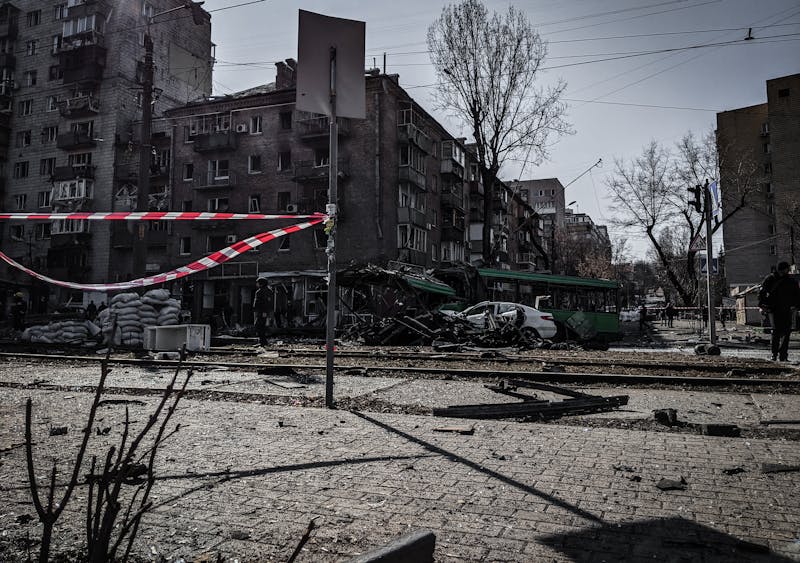
War is no longer fought just with bullets—it’s now a battle of drones, data, and digital influence.
The Rise of Asymmetric Warfare
Traditional war—two standing armies clashing on a battlefield—has become increasingly rare. Instead, the 21st century is witnessing a surge in asymmetric warfare, where state and non-state actors engage using unconventional tactics. The Russia-Ukraine war exemplifies this shift. While Russia employs conventional military force, Ukraine counters with a hybrid model—combining guerrilla tactics, cyberattacks, and real-time intelligence sharing from Western allies.
This model has proven surprisingly effective. Civilian infrastructure and morale are being targeted not just with missiles but also with information warfare. Telegram, Twitter, and other platforms have become battlegrounds, where public sentiment and narrative control play a decisive role.
Tech is the New Battlefield
From commercial drones used to drop grenades to satellite internet empowering frontline communication, technology is reshaping the landscape of conflict. During the Russia-Ukraine war, Starlink satellites provided critical communication capabilities, allowing Ukrainian forces to maintain coordination even under intense attacks.
Similarly, in the Israel-Hamas conflict, Iron Dome missile defense systems and AI-driven threat detection tools have significantly altered how modern states defend against high-frequency rocket attacks. Surveillance drones, facial recognition, and predictive analytics now offer a kind of omnipresent awareness that was unthinkable even two decades ago.
The Role of Proxy Warfare and Hybrid Tactics
Both the Ukraine and Gaza conflicts illustrate the growing prevalence of proxy wars. Russia’s involvement in Ukraine, and Iran’s support for Hamas, show how larger powers leverage local conflicts to extend geopolitical influence without direct engagement.
Hybrid tactics—merging military, political, economic, and cyber operations—blur the lines between war and peace. Disinformation campaigns, energy blackmail, and cyber sabotage are tools of war now wielded with increasing sophistication. It's not just about winning battles but controlling perception and resilience.
Civilian Spaces as Strategic Targets
One of the most disturbing trends in modern warfare is the increasing involvement of civilians—not as collateral damage, but as targets or strategic leverage. Urban warfare, human shields, and attacks on hospitals or infrastructure aim to break public will and sow chaos. This shift raises profound ethical and legal questions, testing the limits of international humanitarian law.
In both Ukraine and Gaza, the targeting of power grids, water supplies, and residential areas has drawn international condemnation. Yet these tactics persist, suggesting a strategic recalibration where psychological impact often outweighs traditional military victories.
The Globalization of Conflict Narratives
Social media has turned everyone into a potential war correspondent. From Kyiv to Gaza, real-time videos and posts can shape global opinion faster than official statements. Memes, hashtags, and viral footage are not just propaganda tools—they can sway foreign policy, influence elections, and mobilize diasporas.
For modern militaries, narrative control is as crucial as battlefield success. Winning hearts and minds now involves digital strategy teams alongside generals. In many ways, the information war determines the scope and scale of international involvement.
What's Next? The Invisible Front Lines
Looking ahead, we’re likely to see even more diffuse, tech-driven forms of conflict. Cyberattacks may precede or replace traditional strikes. AI could play roles in decision-making, from battlefield strategy to drone targeting. Quantum computing might revolutionize encryption and decryption in intelligence warfare.
The question is no longer whether war is changing—it’s how fast and how far it will go. As boundaries between combatants and civilians blur, and the theater of war extends from physical to digital realms, policymakers, technologists, and citizens alike must rethink what it means to be at war—and how to prepare for peace.