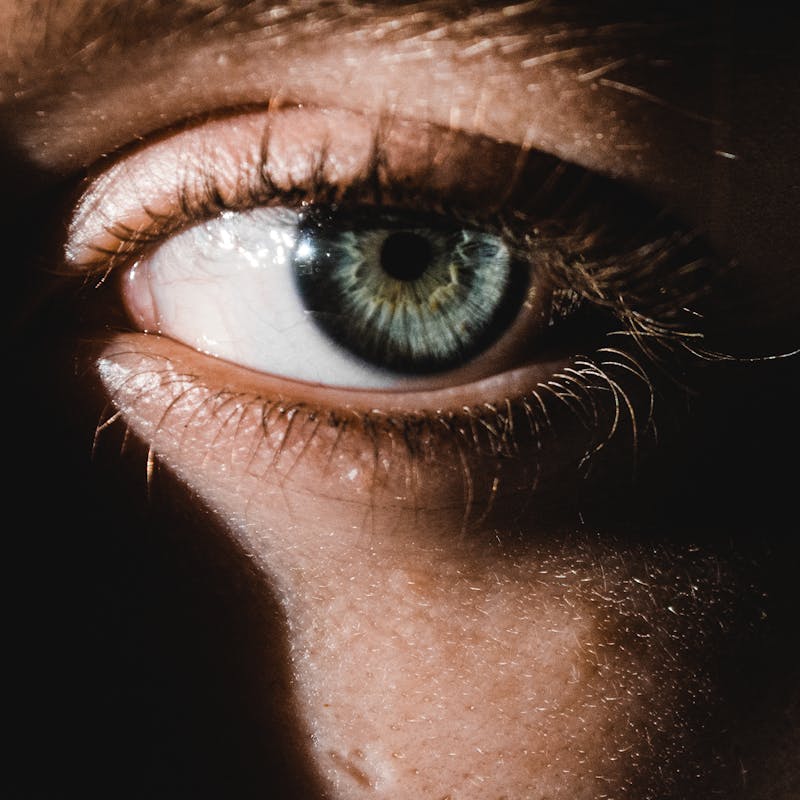
Night makes everything louder—even your thoughts.
If you’ve ever felt your chest tighten or your mind sprint the moment the lights go out, you’re not imagining it. Anxiety symptoms at night can feel sharper, more physical, and harder to talk yourself down from than the same worries in daylight. The reasons are a mix of biology, environment, and the way the brain processes threat when it’s tired.
What follows isn’t a promise to “just relax.” It’s a clearer map of why nighttime anxiety spikes, what it can look like in the body, and how to respond in ways that don’t accidentally fuel the cycle.
Why anxiety symptoms at night can feel more intense
They often feel stronger because your brain has fewer distractions and your body is shifting into a different physiological state. In the quiet, subtle sensations—heartbeat, stomach flutter, a warm face—become easier to notice and interpret as danger.
At night, the mind also loses its usual anchors. You’re not sending messages, moving through errands, or absorbing background noise. The same internal signal that would be a whisper at 2 p.m. can become a headline at 2 a.m.
There’s also anticipation: sleep is a goal you can fail at. When rest becomes a performance, the pressure to fall asleep “right now” can trigger the very arousal that makes sleep impossible.
The biology of nighttime worry: hormones, arousal, and a tired brain
Your body runs on rhythms. As evening arrives, systems begin to tilt toward sleep—temperature drops, digestion slows, and melatonin rises. For some people, that transition is bumpy.
If you’re already stressed, your nervous system may stay on guard. Cortisol and adrenaline don’t always “clock out” neatly, especially after a demanding day, conflict, or ongoing uncertainty. A tired brain is also less skilled at perspective. When you’re fatigued, the prefrontal cortex—often described as the brain’s planner and reappraiser—has less bandwidth to reassure you that a sensation is uncomfortable but not catastrophic.
Add stimulants and timing. Late caffeine, certain decongestants, nicotine, and even intense late-night workouts can keep arousal high. Alcohol can feel sedating at first but may fragment sleep later, increasing wake-ups where anxious thinking can rush in.
What does nighttime anxiety actually feel like?
Night anxiety isn’t only “worry.” It often shows up as a cluster of sensations that feel urgent because they interrupt rest.
You might notice:
- A racing heart or thudding pulse that becomes impossible to ignore in silence
- Shortness of breath, sighing, or the sense you can’t get a “full” inhale
- Restlessness, shaky limbs, or an inability to get comfortable
- Nausea, reflux, or a tight stomach
- Hot flashes, sweating, or chills
- A mind that loops: replaying conversations, predicting worst-case outcomes, or scanning for problems
For some, these episodes resemble panic attacks—sudden surges of fear with strong physical symptoms. For others, it’s a slow build: one thought becomes ten, and sleep drifts farther away.
Is it anxiety—or something else waking you up?
Often it is anxiety, but it’s worth knowing that several common issues can mimic or amplify it. If symptoms are new, severe, or changing quickly, medical guidance matters.
Sleep-related breathing problems, nighttime reflux, thyroid issues, blood sugar dips, medication side effects, and chronic pain can all trigger wake-ups and bodily sensations that the mind interprets as danger. Even dehydration or overheating can produce palpitations and discomfort.
A useful clue is pattern. If you wake at the same time each night with a jolt, consider what’s happening around that point: alcohol wearing off, a noisy environment, a partner’s movement, late meals, or racing thoughts that start the moment you become semi-awake.
The thinking traps that thrive after dark
Nighttime has its own psychology. When you’re alone with your thoughts, the brain can slip into threat scanning—looking for what’s wrong so it can prevent harm. But at night there’s less actionable problem-solving available.
Common traps include:
- Catastrophic interpretation (“This heartbeat means something is seriously wrong.”)
- Time pressure (“If I don’t fall asleep in 10 minutes, tomorrow is ruined.”)
- Moral accounting (“I should have handled that better; I’m failing.”)
These aren’t character flaws. They’re the mind’s attempt to regain control. Unfortunately, they tend to activate the body further, making anxiety symptoms at night feel even more convincing.
A calmer response plan that doesn’t become another “task”
The goal isn’t to force sleep; it’s to reduce the struggle. Think of it as changing your relationship to wakefulness.
Start with the body, because it’s the quickest lever:
- Lower stimulation: dim lights, keep the room cool, and reduce checking behaviors (clock-watching is a classic accelerant).
- Regulate breathing gently: slower exhale than inhale can signal safety. Not as a test you must pass—just a nudge.
- Ground in sensation: feel the weight of the blanket, the mattress under your calves, the air at your nostrils. Small details pull attention away from threat stories.
Then address the mind without wrestling it:
- Try a “parking lot” note: one or two lines on paper—what you’re afraid you’ll forget, and when you’ll handle it tomorrow.
- Use neutral language: instead of “I can’t sleep,” try “I’m having a wakeful patch.” It sounds minor, and that’s the point.
If you’ve been awake long enough that frustration is rising, changing location briefly can help. A low-light, quiet activity—reading something non-activating, listening to a calm audio track—can reset the association between bed and struggle.
When nighttime anxiety becomes a pattern worth addressing in daylight
Night is often where the bill comes due. If the day is packed with coping-by-busyness, the mind may finally demand attention when everything stops.
Daytime support can be surprisingly practical: earlier caffeine cutoff, consistent wake times, sunlight in the morning, and movement that lowers baseline stress. Therapy approaches like CBT or CBT-I (for insomnia) can help untangle the belief that wakefulness is dangerous and reduce conditioned arousal around bedtime.
If nighttime anxiety is frequent, causes significant sleep loss, or comes with panic, intrusive thoughts, or depression, it’s a strong sign to seek professional support. Relief isn’t only about nighttime tricks—it’s about lowering the overall load your nervous system is carrying.
The quiet truth about nights that feel impossible
The hardest part of night anxiety is how private it can feel: you lying there, convinced you’re the only person awake, the only one whose heart won’t settle.
But wakeful nights are a human experience, not a personal failure. The body learns from repetition, and so does the brain. Each time you respond with a little less alarm—each time you practice safety instead of struggle—you teach your system that the dark isn’t an emergency.
And slowly, night can become what it’s meant to be: not a stage for fear, but a place where the mind finally gets permission to rest.