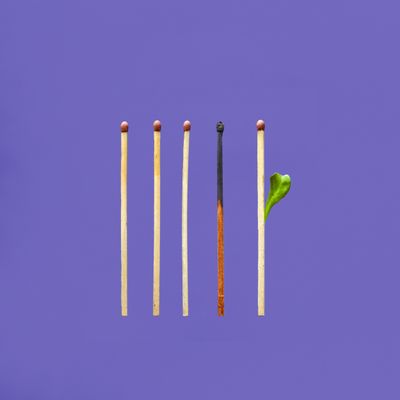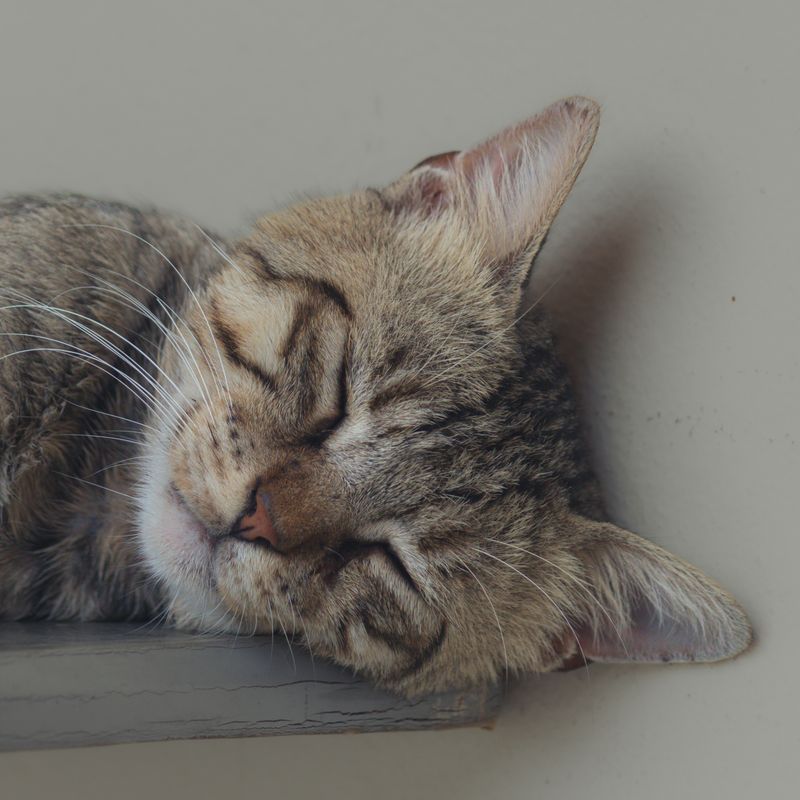
Night turns the volume up on worries that felt manageable at noon.
Sleep anxiety is the tense, self-monitoring fear of not being able to fall asleep—or of what tomorrow will feel like if you don’t. This piece unpacks why those thoughts often intensify after dark, what’s happening in your brain and body, and how to respond in ways that reduce pressure rather than adding to it.
If you’ve ever watched the clock, negotiated with yourself (“just one more attempt”), or dreaded your own bed, you already know the paradox: the harder you try to sleep, the more awake you feel. Nighttime is when the conditions for that paradox line up—quiet, fatigue, fewer distractions, and a mind trained to scan for threat.
Why does sleep anxiety get worse at night?
Because night removes buffers and adds triggers. Fewer distractions mean your mind has more space to replay conversations, predict problems, and magnify sensations. At the same time, being tired can make thoughts feel more urgent and emotions harder to regulate.
There’s also a basic learning loop at work: if your bed has become a place where you struggle, your brain starts treating bedtime as a cue for alertness. That’s not a character flaw; it’s conditioning. Over time, the bedroom can start to feel like a test you keep failing.
A few common “night amplifiers” show up again and again:
- Silence and darkness: not inherently scary, but perfect for internal noise.
- The stakes feel higher: tomorrow’s performance, mood, parenting, or meetings.
- Body sensations are louder: a racing heart, warm skin, restless legs—easier to notice when you’re still.
- Cognitive narrowing: fatigue makes flexible thinking harder, so worries become more repetitive.
The biology: arousal, conditioning, and the midnight spotlight effect
Sleep isn’t something you force; it’s something that happens when arousal drops. Sleep anxiety, by definition, pushes arousal up.
Hyperarousal: when “rest time” becomes “alert time”
Anxiety activates the sympathetic nervous system—your fight-or-flight gear. Even if you’re safe in bed, your body may behave as if there’s something to solve. That can look like:
- increased heart rate
- shallow breathing
- muscle tension
- a scanning mind that won’t “land”
This is a known feature of insomnia as well. The American Academy of Sleep Medicine’s clinical guidance for chronic insomnia emphasizes that persistent sleep difficulties are often maintained by hyperarousal and unhelpful behaviors around sleep, which is one reason behavioral approaches are first-line.
Conditioning: the brain learns “bed = problem”
If you repeatedly lie awake in bed frustrated or afraid, your brain pairs that environment with alertness. This is why “trying harder” in the same setting can backfire; you’re rehearsing the association.
That association can be subtle. Even small rituals—checking the time, evaluating how sleepy you feel, replaying the day—can become cues that signal to your nervous system: now we monitor, now we perform.
The midnight spotlight effect
At night, your mind acts like a stage light: it illuminates whatever feels uncertain. Worries about work become worries about identity (“What if I’m falling behind?”). A small symptom becomes a catastrophe (“What if this means something serious?”). The content varies, but the mechanism is similar: anxiety prefers the future, and nighttime offers it an empty canvas.
The thoughts that keep you awake (and why they’re so convincing)
Sleep anxiety isn’t just about fear; it’s often about prediction and control. You’re trying to prevent suffering tomorrow by solving sleep tonight. The brain likes this plan because it feels responsible.
Common thought patterns include:
- Catastrophizing: “If I don’t sleep, tomorrow will be a disaster.”
- Clock-driven math: calculating remaining sleep in shrinking chunks.
- All-or-nothing rules: “If I don’t get eight hours, I can’t function.”
- Monitoring: “Am I asleep yet?” “Why am I still awake?”
The problem is that these thoughts recruit attention and effort—exactly what sleep doesn’t need.
A useful reframe is to separate sleep from rest. Sleep is not always available on demand, but rest can be. When you stop treating the night as a pass/fail exam, you lower the arousal that blocks sleep in the first place.
A practical reset: what to do in the moment when you can’t sleep
The goal isn’t to “win” sleep. The goal is to reduce struggle—because struggle is stimulating.
Here’s a short checklist that tends to help without turning bedtime into a project:
- Stop checking the time. If possible, turn the clock away or keep your phone out of reach. Time-checking is gasoline for sleep anxiety.
- Give yourself a 10–15 minute permission window. Instead of “I must sleep now,” try “I’m allowed to be awake for a bit.” Paradoxically, permission reduces pressure.
- Do a body downshift, not a mental debate. Slow exhale breathing (longer exhale than inhale) or progressive muscle relaxation can cue safety.
- If you’re wide awake, change the scene. Sit in dim light and do something quiet and boring (a familiar book, simple puzzle). Return to bed when drowsy.
- Use a single phrase to interrupt spirals. Something like: “This is my nervous system, not a prophecy.” Repetition beats argument.
This approach aligns with the behavioral principles behind CBT-I (cognitive behavioral therapy for insomnia), which has strong evidence as an effective treatment for chronic insomnia and is widely recommended in sleep medicine.
Habits that quietly fuel sleep anxiety (and what to swap in)
Many people with sleep anxiety are doing a lot “right”—they’re trying hard. The trouble is that some well-intended habits increase vigilance.
Below is a grounded comparison of common patterns and more helpful alternatives.
| When sleep feels fragile | Why it backfires | A steadier alternative |
|---|---|---|
| Going to bed early to “get more time” | More time in bed can mean more time awake and frustrated | Keep a consistent wake time; let bedtime follow sleepiness |
| Napping long or late | Can reduce sleep drive at night | If you nap, keep it brief and earlier in the day |
| Scrolling in bed to distract | Light + novelty can stimulate; bed becomes a wake zone | Get out of bed for a low-stimulation wind-down |
| Tracking sleep obsessively | Metrics can increase performance pressure | Use trends lightly, or take breaks from tracking |
| “Catching up” on weekends | Big shifts can create social jet lag | Keep weekend wake time close to weekdays |
If you recognize yourself in the left column, that’s not failure—it’s adaptation. Your brain found tools that soothed you short-term. The aim is to choose tools that soothe and protect sleep long-term.
When it’s more than a rough patch: insomnia, panic, and underlying stress
Sleep anxiety can be situational (a breakup, new job, a health scare) or part of a longer pattern. It can also overlap with clinical issues that deserve targeted support.
- Chronic insomnia: If difficulty falling asleep, staying asleep, or waking too early happens at least three nights a week for months and affects daytime functioning, it may meet criteria for insomnia disorder.
- Nocturnal panic: Some people wake abruptly with intense fear, palpitations, or breathlessness. This can feel like a medical emergency and should be evaluated—especially if symptoms are new.
- Depression and generalized anxiety: Both commonly disrupt sleep and can make nighttime rumination stickier.
- Sleep apnea: Loud snoring, choking/gasping, and excessive daytime sleepiness can signal obstructive sleep apnea, which is linked with fragmented sleep and can worsen anxiety.
One real-world anchor: the CDC has consistently noted that a substantial portion of U.S. adults report not getting enough sleep, and insufficient sleep is associated with poorer mental health and higher distress. That connection goes both ways—stress disrupts sleep, and poor sleep lowers resilience.
If you’re unsure what’s driving your nights, a clinician can help rule out medical contributors and point you toward evidence-based options like CBT-I.
Building a relationship with sleep that isn’t fear-based
The long game with sleep anxiety is not perfect sleep—it’s sleep confidence. The belief that even if you have a bad night, you can handle tomorrow, and your body will find its rhythm again.
A few practices build that confidence quietly:
- Protect the morning anchor. A consistent wake time is one of the strongest stabilizers of the sleep-wake cycle.
- Get outdoor light early. Morning light supports circadian timing and can help consolidate sleep at night.
- Schedule “worry time” earlier. A 10-minute daily slot to write worries and next steps trains your brain not to use bedtime for problem-solving.
- Redefine a “good night.” Include rest, not just minutes asleep. This reduces the performance mindset.
- Notice safety cues. Warm shower, dim lights, a familiar scent, soft sound—signals that the day is over.
It can also help to treat your sleep system like a shy animal: you don’t chase it. You make the environment safe, you stop stomping around looking for it, and you let it come closer.
A quieter ending: what if tonight doesn’t have to be a referendum?
Sleep anxiety thrives on the idea that tonight determines everything. But your body isn’t keeping score the way your mind is.
You can practice a different posture: less negotiating, less proving, more allowing. Some nights will still be messy—life has seasons, and nervous systems learn slowly. The shift happens when you stop treating wakefulness as an emergency and start treating it as a moment you can move through.
If the night gets loud again, the most powerful question may be the simplest one: what would it look like to make this hour easier, even if sleep arrives later?