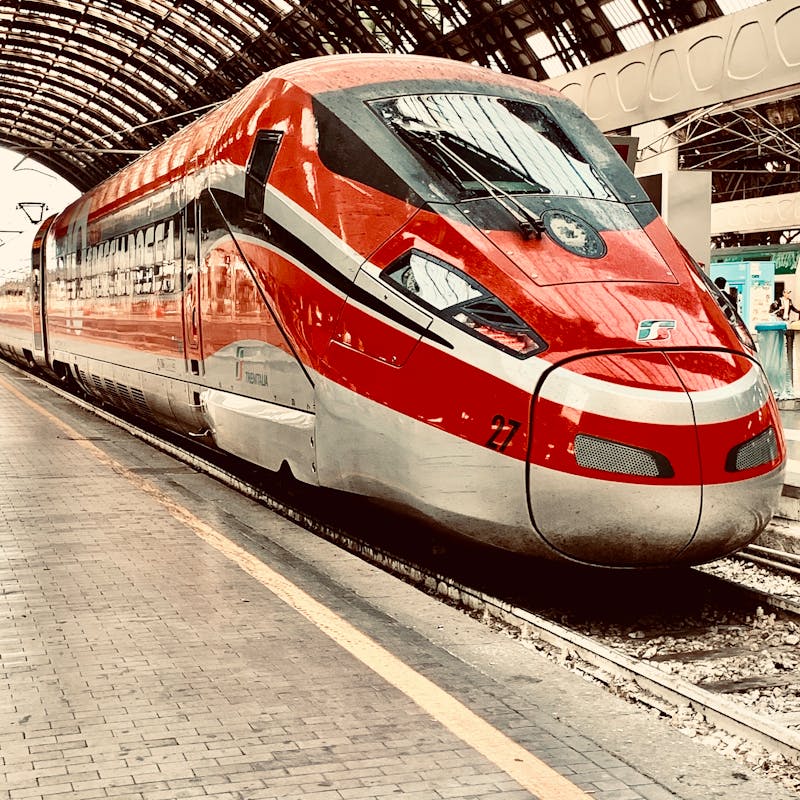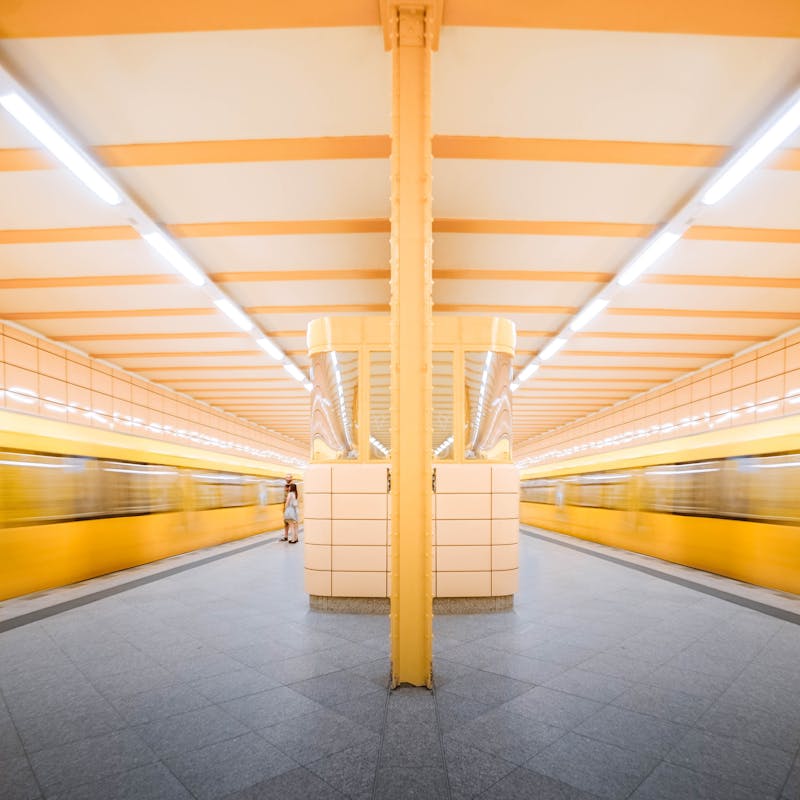
Between one set of doors closing and the next opening, the mind edits the day.
The small corridor of time
A commute looks like dead space on a calendar, but it rarely feels empty from the inside.
Between two ordinary stops there’s a peculiar corridor of time: long enough for a worry to bloom, short enough that it never becomes a plan. You settle into a seat or brace yourself by a pole, and the world narrows to a window’s reflection, a stranger’s shoe tapping, the flicker of tunnel lights.
It’s the in-between that makes commuting interesting. Not the origin or the destination, but the stretch where you’re technically going somewhere while emotionally suspended.
People talk about commutes as if they’re simply endured. Yet most commuters can remember tiny details from a ride years ago—an overheard sentence, a look exchanged, the exact way a winter scarf smelled like detergent and cold air. At the same time, they can’t recall what they were thinking yesterday between the same two stops.
Memory behaves differently when the scenery repeats.
What the body remembers without asking
Commuting teaches the body a choreography. You remember where to stand so the door won’t smack your shoulder. You remember how to angle a bag so it doesn’t bump knees. You learn the unspoken pace at which a platform moves.
This is not the memory of stories; it’s the memory of muscle and timing.
A regular rider can tell when the train is running late before the announcement comes, just from the rhythm of acceleration. A bus commuter senses the driver’s temperament by the first brake. A person who takes the same route for years can step off at the right stop even while half-asleep, guided by vibration, turns, and the slight drift of air when doors open.
The strange thing is how invisible this competence becomes. You don’t congratulate yourself for it. It hides under the feeling that you’re doing nothing at all.
The mind’s filing system: spikes and blanks
If you ask commuters what they remember between two stops, they tend to offer extremes.
They recall interruptions: a sudden delay, a loud argument, a musician who made a familiar song sound new. They remember a packed car that forced everyone into unwanted intimacy, or an almost empty one that felt like an unexpected gift.
They also remember firsts. The first day of a new job. The first commute after a breakup. The first morning after a sleepless night with a newborn at home. Those rides turn ordinary infrastructure into an emotional amplifier.
What they forget are the countless “normal” spans of time where nothing spiked high enough to earn a file folder in the brain.
Between two stops, your mind performs triage. It keeps the odd and discards the routine. The result is that your commuting life, in retrospect, becomes a highlight reel of disruptions surrounded by blank tape.
The quiet theater of other people
Even when no one speaks, commuting is social.
There’s the familiar face you don’t know—the person with the same transfer, the same impatience at the same bottleneck, the same habit of checking the door as it closes. You notice them in a way that’s almost tender and almost meaningless. If they disappear for a week, you wonder, briefly, if they’re okay.
There are the small negotiations: someone shifts to make room; someone refuses. Someone plays audio out loud as if the car is their living room. Someone offers a seat without making a show of it. Someone stares too long and the air changes.
These moments are often remembered not as full scenes but as sensations: relief, irritation, gratitude, a sudden spike of alertness.
Between two stops, you become a reader of micro-gestures because there’s not much else to do. The mind gathers data even when it insists it’s bored.
Phone screens and the outsourced memory
The modern commute is full of attention split into thin strips.
A commuter can be physically present while mentally elsewhere, thumb-scrolling through headlines, messages, short videos, the day’s weather as if it’s new information each time. The phone offers a portable elsewhere, a way to step out of the shared space without leaving.
But this comes at a cost: if your attention is always rented out, the ride collapses into a blur. You arrive without a sense of having traveled.
Sometimes the forgotten space is exactly what you want. After a hard day, the numbing scroll can be a shield. After a stressful morning, it can be a way to keep anxiety from finding a foothold.
Other times, it quietly steals from you. Not productivity—commuting was never an ideal workspace—but texture. The mind needs stretches where it can drift, recombine thoughts, and notice its own mood. Between two stops, without distraction, a person can sometimes hear themselves.
The accidental confessional
Public transit has a way of pulling private life into public.
You overhear a phone call about a sick parent, a rent increase, a friend who stopped responding. The details arrive uninvited, and you’re left holding a sliver of someone’s reality.
Most of the time, you forget the specifics quickly. What lingers is the emotional tone: the tightness in a voice, the forced calm, the laugh that doesn’t quite match the words.
These snippets can make a commute feel heavier or strangely connective. For a few minutes, the city feels less like a mass of strangers and more like a web of fragile stories moving in parallel.
Between two stops, empathy can show up without ceremony.
When repetition becomes a kind of shelter
The same route, day after day, can be suffocating. It can also be stabilizing.
There’s comfort in knowing the turns. Comfort in predicting the swell of bodies at a certain station, the cold draft near a particular door, the moment sunlight breaks through at the edge of downtown.
For some commuters, the route becomes a ritual boundary between roles. Home self on one side, work self on the other. The in-between provides a buffer, a place to put on a professional face or peel it off.
This is why a disrupted commute can feel like more than a logistical problem. It’s not just late; it’s a torn seam in the day. When the system changes, people feel oddly disoriented, as if the city rearranged its furniture overnight.
The memory here isn’t dramatic. It’s environmental. It’s the remembered comfort of predictability.
The moments that refuse to be forgotten
Certain things imprint because they carry surprise or meaning.
A stranger helps lift a stroller without being asked, then steps back into anonymity. Someone drops a wallet and three people react at once, a brief coordination that feels like proof of decency. A child narrates the ride in a stage whisper, and the whole row softens.
Even small beauty can stick. A sunrise reflected in a window at just the right angle. Snow falling so heavily that the usual skyline blurs. A bus interior glowing warm against a dark, wet street.
These are not grand events. They’re reminders that ordinary motion can hold actual life.
Between two stops, a person can be startled into presence.
What gets forgotten is not always lost
Forgetting the ride might seem like a failure of attention, but it can also be a sign of efficiency.
The brain conserves energy by compressing repeat experiences. It’s why you can’t replay every morning in detail, why weeks can pass in a haze when routine is heavy. Your mind decides that familiar intervals don’t need full storage.
But there’s a difference between forgetting because you were safe and forgetting because you were absent.
The commute can be a daily chance to practice a gentler kind of noticing—nothing intense, nothing performative. Just the shape of a thought. The way your shoulders release when you finally sit. The way the city smells after rain. The way impatience rises, and then, if you let it, ebbs.
You don’t have to document it. You don’t have to optimize it. You just have to be there for a few seconds at a time.
A reflective ending at the next stop
The doors open, and everyone pretends they weren’t sharing a room.
People step out with the practiced neutrality of commuters: eyes forward, bodies angled toward the future. And yet, if you look closely, you can see what the ride did to them. Someone is calmer. Someone is more wound up. Someone is carrying an invisible sentence they overheard. Someone is still thinking about the email they drafted in their head but didn’t send.
Between two ordinary stops, commuters remember what pierces the routine and forget what blends into it.
But the forgotten stretches aren’t nothing. They’re the soft material of a life in motion—minutes that don’t announce themselves, but still shape the day. If you’ve ever arrived somewhere and felt as if you materialized there without traveling, you’ve felt the cost of that forgetting.
And if you’ve ever stepped off the train with a strange clarity—no new information, no solved problems, just a sense of being newly awake—you’ve felt what it means to remember the in-between.