The mind believes the sentences we repeat in silence.
There’s a quiet moment most days when you catch your own inner narrator mid-sentence. It might happen while you’re waiting for the kettle to boil, scrolling without thinking, or staring at an email you’re avoiding. The story is usually familiar: I’m behind. I always mess this up. Other people have it figured out.
We often treat those lines as observations, like weather reports. But they’re more like drafts—editable, revisable, and surprisingly influenced by small, unglamorous habits.
The stories we tell ourselves aren’t only built from big events. They’re reinforced by what we do when nothing dramatic is happening: how we start the morning, how we respond to minor mistakes, how we speak to ourselves in the three seconds after an awkward interaction. The good news is that the same smallness that makes these stories feel inevitable also makes them changeable.
The hidden power of repetition
A self-story is rarely a single thought. It’s a pattern.
Your brain doesn’t just catalog what happens; it tries to predict what will happen next. It looks for evidence, even in tiny moments, to support whatever framework it’s currently using. If your framework is “I’m unreliable,” your mind will spotlight the one forgotten errand and blur the ten things you followed through on.
That’s not moral failure; it’s mental efficiency. The brain likes coherence. The problem is that coherence can become a cage.
Small daily habits matter because they create repeated experiences your mind has to account for. The goal isn’t to force positive thinking, as if you could plaster a motivational quote over a leaking pipe. The goal is to introduce new data—gentle, believable data—that gradually changes what your inner narrator finds plausible.
A two-minute promise you actually keep
Grand promises tend to backfire. They create a dramatic contrast between intention and reality.
A small promise, kept consistently, does something different. It builds a quiet identity: I follow through.
This can be as simple as choosing one daily action that takes two minutes and is almost too easy to fail. Stretch for the length of one song. Put one dish away. Walk to the mailbox and back. Write one sentence in a journal.
What matters is not the productivity of the act. What matters is the internal record it creates. Each time you keep that tiny promise, your mind has to update its model of you. Not with fireworks—just with a subtle recalibration.
And if you miss a day, the habit still teaches you something valuable: you practice restarting without drama. That, too, is a new story.
The micro-pause after a mistake
Most self-stories harden in the seconds immediately following a slip.
You spill coffee, forget a name, misread the room, send a message too fast. The event is small, but the interpretation can be brutal. It’s rarely, “That happened.” It becomes, “I’m so careless,” or “I always ruin things.”
A rewiring habit is to insert a micro-pause—just one breath—before the verdict.
In that breath, you name what happened plainly. I spilled coffee. Not I’m a disaster.
This sounds almost simplistic, but it separates behavior from identity. Over time, that separation changes the tone of your inner narrator. Your mind learns that mistakes are events to respond to, not evidence for a lifelong prosecution.
A daily “evidence log” that isn’t corny
The inner narrator is an attorney, not a historian. It cherry-picks.
If you’re trying to change the story, you don’t need affirmations that feel fake. You need a small habit of collecting evidence that’s easy to believe.
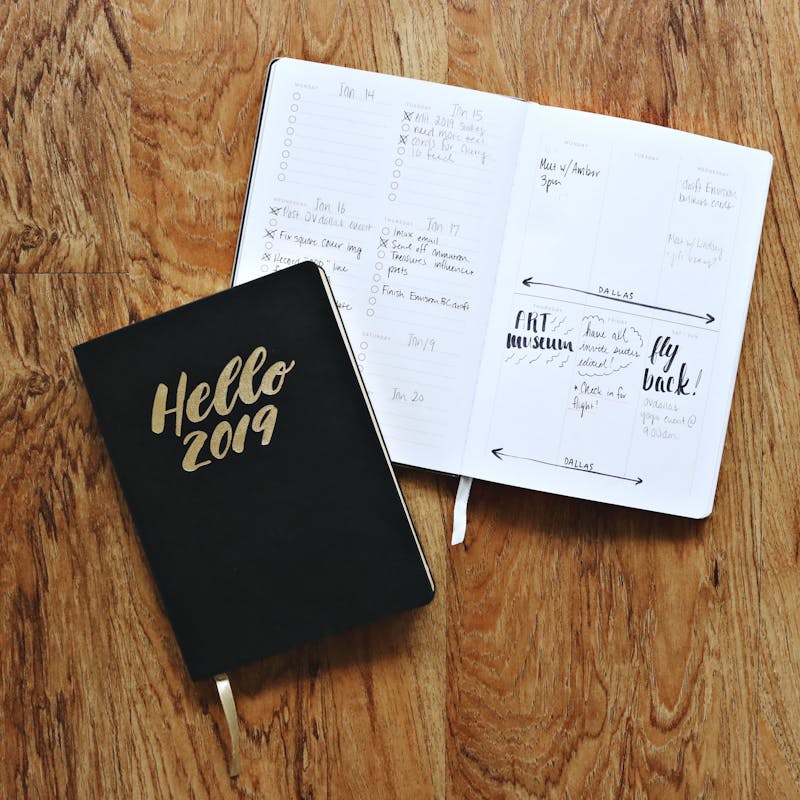
Once a day—ideally at the same time—write down one specific thing you did that aligns with the person you want to be. Keep it concrete.
“Answered the email I was avoiding.”
“Texted my friend back even though I felt low.”
“Turned off my phone while I ate.”
This isn’t about bragging. It’s about making the invisible visible. Without this kind of record, your mind will default to whatever it already believes.
A week later, you can reread the list and feel something shift—not necessarily confidence, but credibility. The new story has receipts.
The language you use when you’re tired
Self-talk becomes most revealing when your energy is low.
When you’re tired, your inner narrator tends to go for absolutes: always, never, everyone, no one. Those words create a tight world with no exits.
A small daily habit is to swap absolutes for specifics.
Instead of “I never do anything right,” try “That meeting didn’t go the way I hoped.”
Instead of “I always fall behind,” try “This week is heavy, and I’m feeling it.”
This isn’t spin. It’s accuracy.
Precision softens self-judgment without denying reality. It also creates a story with movement. A precise sentence implies possibility: if this week is heavy, another week might not be.
The way you end your day sets tomorrow’s script
Many people fall asleep reviewing their failures like a late-night highlight reel.
If the last thing you tell yourself is a list of shortcomings, your brain has eight hours to marinate in it. You wake up already on trial.
A gentler habit is a short “closing statement” before bed. Not a gratitude performance, not an elaborate ritual. Just a brief recap that includes completion.
Name one thing you handled.
Name one thing you’re carrying.
Name one thing you’ll let be unfinished.
It can sound like: “I took care of the essentials. I’m stressed about money. The rest can wait until tomorrow.”
This doesn’t solve your problems. It changes the emotional posture you bring to them.
Small acts of self-respect that don’t look like self-care
The internet has made self-care look like a lifestyle brand.
But self-respect is often ordinary. It’s choosing not to abandon yourself in the small moments.
Drink water before the second coffee. Put your phone across the room while you work for ten minutes. Eat something with actual substance. Step outside for sixty seconds and look at the sky like you mean it.
These actions whisper a message that many people aren’t used to hearing from themselves: I’m worth basic maintenance.
When repeated, that message becomes less like a whisper and more like a baseline.
The habit of asking one better question
A self-story is shaped by the questions you repeatedly ask.
If your default question is “What’s wrong with me?” your mind will produce an answer. It will rummage around for evidence until it finds something that fits.
A daily habit is to replace the question with one that invites complexity.
“What happened, and what do I need?”
“What am I assuming here?”
“What would I say to someone I care about?”
These questions don’t erase accountability. They widen the frame so your inner narrator can tell a story that includes context, needs, and choice.
Letting the new story be quiet at first
When people try to change their self-story, they often expect a dramatic emotional payoff.
They want the new narrative to arrive like a movie montage: suddenly confident, suddenly unbothered, suddenly healed. But real rewiring is subtler. It’s more like moving into a new neighborhood where the streets feel unfamiliar at night.
At first, the new story won’t feel like truth. It will feel like something you’re trying. That’s normal.
The point of small daily habits is that they don’t require you to fully believe in yourself before you begin. They let you behave your way into a more accurate identity.
A person who keeps a two-minute promise, who pauses before self-attack, who gathers real evidence, who speaks with precision when tired, who ends the day without a courtroom drama—that person doesn’t need to declare a new story loudly.
Over time, the story changes because it has to.
A reflective ending: what you repeat becomes your reality
If you listen closely, you’ll notice your inner narrator is not always cruel. Sometimes it’s simply scared, trying to prevent disappointment by predicting it first.
Small daily habits don’t fight that fear head-on. They reassure it with experience. They show your mind, gently and repeatedly, that you can be trusted with your own life.
The most powerful stories aren’t written in one sitting. They’re revised in the margins of ordinary days.
And if you’re wondering whether something as small as a two-minute habit can matter, consider this: your harshest self-beliefs were likely built from repetition, too. Changing them doesn’t require a personality transplant. It requires a new pattern—quiet, consistent, and kind enough to stick.