Revolutions don’t always shout; sometimes they steep, sting, and scroll.
Some of the biggest cultural shifts of the last decade have arrived without a manifesto.
They’ve shown up as a kettle clicking off in a shared kitchen, a new tattoo peeking from a cuff at work, and a looping video watched in the soft glow of a phone at 1:00 a.m.
Tea, tattoos, and TikTok might sound like a random trio, but together they sketch a portrait of how change looks now: intimate, aesthetic, highly personal, and strangely collective.
The quiet revolution as a lifestyle choice
We often imagine revolutions as loud and coordinated, with clear leaders and obvious demands.
But many of today’s shifts happen through habits—what people buy, share, wear, sip, and display.
A person switching from energy drinks to matcha isn’t overthrowing a government.
Still, they’re participating in an evolving idea of wellness, identity, and taste, shaped by a web of influences that didn’t exist in the same way twenty years ago.
The quiet revolution is less about storming buildings and more about changing norms until the old ones feel faintly embarrassing.
It spreads through dinner tables, break rooms, comment sections, and the unspoken rules of what seems “normal.”
Tea: a small ritual with big meaning
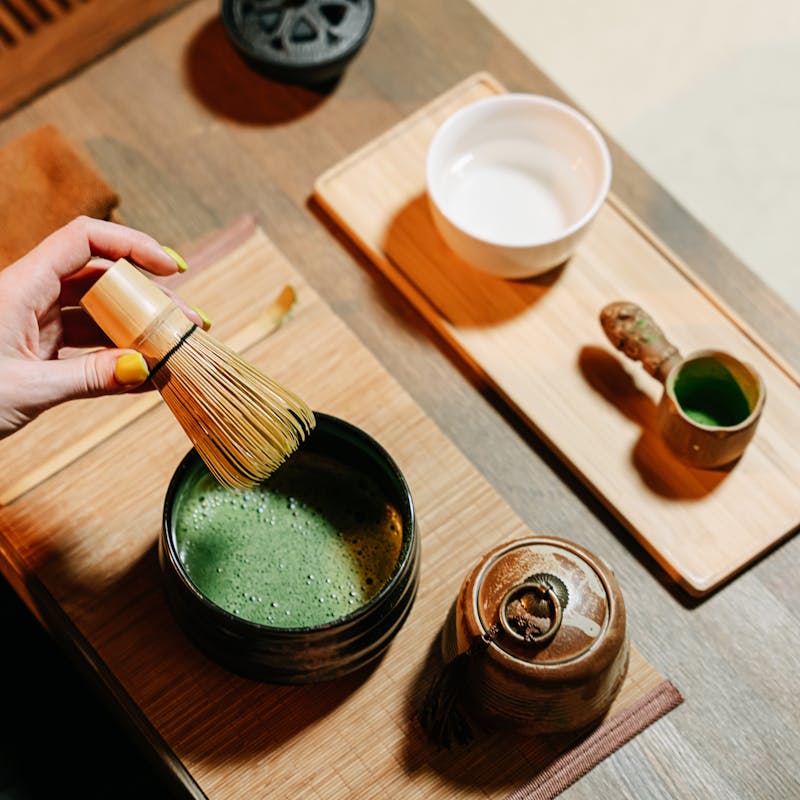
Tea is ordinary until it isn’t.
It can be a cheap box of bags in a pantry or a carefully sourced tin with tasting notes that read like wine.
Either way, tea has become a vehicle for something modern people crave: a pause that feels chosen.
For some, the ritual is sensory.
The steam, the warmth in the hands, the first bitter edge smoothing into something floral.
For others, it’s the story attached to it: heritage, travel, the idea of ancient wisdom carried in leaves.
In a world that rewards speed, tea offers slowness without demanding an entire lifestyle overhaul.
You can make it in a studio apartment, an office kitchenette, or a dorm room.
You can do it even when life is messy.
That accessibility matters, because the quiet revolution tends to thrive on options that feel manageable.
Tea also reflects a shift in how people talk about health.
The modern wellness conversation isn’t only about medicine; it’s about mood, sleep, digestion, focus, and the hope that small adjustments can make life feel less jagged.
Sometimes that hope is realistic, sometimes it’s marketing, and often it’s both at once.
Yet the impulse behind it—wanting agency over one’s body and mind—is unmistakably cultural.
Tattoos: the body as a public diary
Not long ago, tattoos carried a narrow set of assumptions.
They could signal rebellion, toughness, or a particular subculture, and they often came with a warning about “regret.”
Now tattoos are everywhere, including places that once quietly banned them.
A fine-line constellation on a wrist.
A full sleeve that disappears under a blazer.
A small symbol that only means something to the person who has it.
This isn’t just a trend toward body art.
It’s a shift in who gets to be legible, and how.
Tattoos have become one way people claim narrative control.
They turn the body into a kind of autobiography—selective, stylized, and sometimes deliberately opaque.
A tattoo can mark grief or recovery, love or rupture, belonging or refusal.
It can also be purely aesthetic, which is its own kind of statement in a culture that constantly demands meaning.
The normalization of tattoos has also softened the old hierarchy between “professional” and “personal.”
The modern workplace often pretends it wants the whole person, but on its own terms.
Visible tattoos complicate that bargain.
They insist that people are not just neutral units of productivity.
They have histories, loyalties, and private weather.
And increasingly, society has learned to live with that fact.
TikTok: the new town square, built on loops
TikTok doesn’t feel like a town square in the classic sense.
It’s more like walking into an endless party where each room is playing a different song.
You don’t choose the rooms so much as the algorithm ushers you through them.
And yet it has become one of the most influential spaces for culture-making, especially among people who were raised online.
What makes TikTok revolutionary isn’t just that it spreads content quickly.
It changes who gets to speak and what counts as expertise.
A teenager can explain a historical event with surprising clarity.
A nurse can describe the emotional texture of a hospital shift.
A home cook can make a dish go viral and alter grocery shopping patterns overnight.
The platform rewards clarity, charisma, and speed, but it also rewards honesty—at least the kind that fits into a minute.
It has produced new dialects of humor, new ways of telling stories, and new forms of activism that don’t always resemble older models.
Some of it is shallow.
Some of it is transformative.
Most of it is both, depending on where you land.
TikTok is also a factory for micro-identities.
People don’t just watch videos; they find niches that feel like home.
That can be comforting for someone who feels out of place offline.
It can also be destabilizing, because identity becomes something you can try on, refine, and discard at high speed.
When these three collide in everyday life
Picture an ordinary afternoon.
Someone makes iced tea in a mason jar because they saw it in a video and it looked calming.
They add a syrup they didn’t know existed a week ago.
They film the process, not because they’re chasing fame, but because documenting life now feels like a form of participation.
Later, they schedule a tattoo appointment.
It’s small, tucked near the collarbone, meant to be for them.
But they also know it will appear in photos and that it will shape how people read them.
They’re not naive about that.
They’re choosing it anyway.
In that simple sequence—brew, scroll, mark—there’s a cultural logic.
People are building meaning through rituals and symbols.
They’re curating the self, not just for performance, but for coherence.
And they’re doing it in public, even when they think it’s private.
Agency, aesthetic, and the search for control
One thread connecting tea, tattoos, and TikTok is the desire for agency.
Modern life can feel like a system of invisible pressures: economic uncertainty, political volatility, constant updates, constant comparison.
When big structures feel immovable, people reach for smaller levers.
They choose what they can choose.
Tea is a controllable ritual.
You can decide the temperature, the steep time, the flavor.
You can make something gentle on purpose.
A tattoo is a controlled permanence.
It’s a way of saying, “This matters enough to stay.”
It’s also a negotiation with time, a refusal to treat the body as a temporary container that should remain blank to be acceptable.
TikTok is a controlled feed, at least in theory.
You train it with likes and scrolls, shaping what comes next.
In practice, it’s also controlling you, pulling attention into a loop.
That tension—between shaping and being shaped—is one of the defining feelings of the moment.
Aesthetic plays a role too.
We live in an era where taste is a kind of currency.
The right mug, the right tattoo style, the right sound on a video.
None of these are trivial when they become the language people use to recognize each other.
Aesthetic is how subcultures signal belonging without having to explain themselves.
The hidden costs of a quiet revolution
Quiet revolutions are easy to romanticize because they look gentle.
But they have shadows.
Wellness culture can slip into moralism, where health becomes a badge and illness feels like failure.
Tea can become less a comfort and more a product ladder, where the “right” choice is always slightly more expensive.
Tattoos can become mandatory self-branding.
What began as freedom can become expectation: show your story, prove your authenticity, make your body a canvas that others can read.
And TikTok, for all its creativity, can flatten attention.
It can make nuance feel slow.
It can make solidarity feel like a trend that expires.
It can also amplify misinformation with the same force it amplifies joy.
The quiet revolution isn’t automatically good.
It’s simply real.
And it asks for a kind of literacy—an ability to notice what is changing us while we’re busy enjoying it.
What we’re really tracing when we trace these shifts
Tea, tattoos, and TikTok are not the revolution.
They’re evidence of it.
They show how people are renegotiating identity, comfort, community, and power.
They show how the private self has moved closer to the public eye, and how public life has become more intimate.
They show how culture now travels: not top-down, not always institutionally approved, but through networks of influence that feel personal.
A friend recommends a tea that helped their anxiety.
A coworker reveals a tattoo and suddenly the office feels less formal.
A video explains a concept in a way that clicks, and you carry that new understanding into the real world.
These are small moments.
But stacked together, they become a pattern.
A softer kind of becoming
If you want to find the future, you don’t only look at elections, boardrooms, or headlines.
You look at what people do when they’re alone, and what they share when they want to be seen.
You look at the rituals they build to make the day feel inhabitable.
You look at the symbols they choose to keep close.
You look at the platforms they can’t stop checking, and what those platforms teach them to value.
The quiet revolutions around us rarely ask permission.
They don’t wait until society is ready.
They arrive in the ordinary, and then the ordinary changes shape.
And one day you realize that what once felt like a niche—cold-brewed tea, visible tattoos, a world explained in short videos—has become the atmosphere.
Not because someone declared it so.
Because millions of people, in millions of small decisions, decided to live differently.