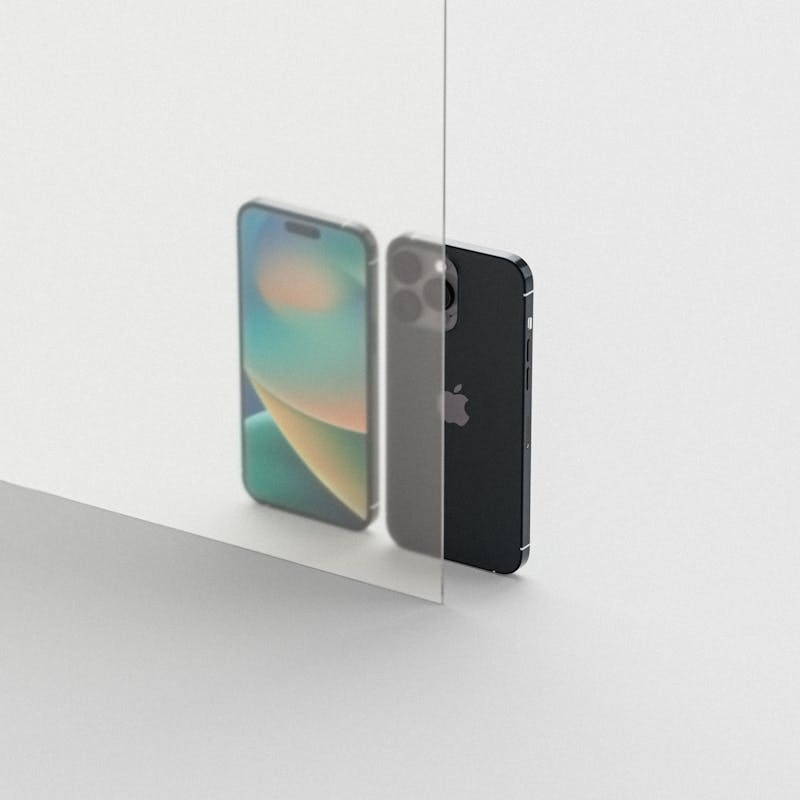
A small rectangle can hold a whole life, and still leave it feeling strangely thin.
The quiet trade we keep making
There’s a particular kind of light that doesn’t warm a room. It doesn’t flicker like a candle or flare like a streetlamp. It just sits there—steady, patient, and a little too persuasive.
Most of us carry it now. Not as a tool we pull out for emergencies, but as something closer to a body part. The glow in the hand is easy to mistake for connection. It looks like communication. It sounds like laughter, urgency, news, love.
And yet, little by little, it rearranges the shape of attention until you can’t remember what unbroken focus felt like. Not because anything dramatic happened, but because the changes were incremental. Attention isn’t stolen in one clean heist; it’s traded away in tiny, reasonable installments.
Attention as a place you used to live
Before it became a resource to optimize, attention was simply where you went to meet your life. You gave it to a conversation and felt the room become fuller. You gave it to a task and felt time move differently—sometimes slowly, sometimes in a satisfying rush.
There was boredom too, but boredom used to be a threshold rather than a failure. It was the hallway you walked through to get to curiosity.
Now, boredom is treated like a fire to extinguish immediately. The glow is always within reach, offering an exit ramp. And the more often you take that ramp, the more foreign it feels to remain where you are.
The most believable interruptions
The phone doesn’t usually interrupt with force. It interrupts with plausibility.
A notification sounds like responsibility. A vibrating pocket feels like a social obligation. A quick check feels efficient, even virtuous, as if staying informed is the same as staying awake.
The trouble is that the interruption doesn’t end when the screen goes dark. It lingers as residue. You return to your original thought, but the thought has lost its edges. You reread the same sentence. You walk into a room and forget why. You look for a feeling you had a moment ago, and it’s been replaced by something blander.
This is what makes the disassembly so hard to notice. Nothing is forcibly removed; it’s loosened. A screw here, a hinge there.
A thousand tiny scene changes
Scroll for a minute and you’ll see what your brain is being trained to accept as normal: constant novelty, rapid shifts, zero time to metabolize what you just saw.
A friend’s new baby. A stranger’s rage. A funny clip. A tragedy. A recipe. A headline that implies disaster. A photo that implies a better life.
In older forms of media, even the fast-paced ones, you had fewer scene changes. There was a frame, a length, a beginning and an end. The glow offers something closer to an endless hallway of doors, all cracked open just enough to invite you in.
When attention lives in that hallway long enough, it starts to expect life itself to behave that way. If a conversation doesn’t deliver a payoff soon, you feel restless. If a book takes a page to set a mood, you get impatient. If a moment doesn’t announce itself as meaningful, you suspect it isn’t.
The emotional cost of constant partial presence
There’s a specific ache to being everywhere and nowhere at once.
You can be with someone you care about and still feel a tug toward the device—toward the other people, the other conversations, the other possible selves you could be performing online. Even when you resist looking, part of your attention is spent resisting.
This is not the same as being curious or socially active. It’s a condition of partial presence.
Partial presence is when your mind keeps a suitcase packed. It never fully unpacks into the moment because it’s prepared to leave at any second.
Over time, that affects intimacy. It’s hard to feel deeply seen when your attention is trained to flit. It’s hard to see others deeply when you keep checking the door.
The seductive feeling of being “caught up”
The glow sells the promise of catching up.
There is always something you haven’t read, someone you haven’t replied to, some trend you haven’t noticed yet. The feed is designed to make “just a little more” feel reasonable. You don’t binge exactly; you hover.
But the sense of being behind is not an accident. It’s a feature. If you were ever truly caught up, you might put the device down and feel satisfied. Satisfaction is dangerous to a system that thrives on continued engagement.
So you keep checking. Not because you’re weak, but because the environment is built to reward checking.
How the glow changes thinking, not just time
People often talk about phone habits as a time-management problem. But the deeper shift isn’t only in how minutes are spent. It’s in how thoughts form.
Deep thinking requires continuity. A thought has to stretch out, test itself, contradict itself, circle back. It needs quiet to develop character.
The glow is not hostile to thinking in an obvious way; it’s hostile in a subtle one. It offers micro-doses of stimulation that fracture the long arc of a thought into smaller and smaller pieces.
Eventually, you may find yourself preferring thoughts that resolve quickly. You may gravitate toward opinions that arrive prepackaged. You may feel allergic to complexity, not because you can’t handle it, but because you’ve grown unused to the sensation of staying with something that doesn’t reward you immediately.
The body keeps score in small ways
The disassembly isn’t purely mental. It shows up in the body.
Shoulders raised slightly too often. A thumb that scrolls without permission. A neck that leans forward as if pulled by gravity.
It shows up as a jittery kind of tiredness—fatigue without the dignity of having done something substantial. You can spend an hour on a phone and feel as if you’ve both done a lot and done nothing. The mind was busy; the soul wasn’t fed.
Even sleep becomes porous. The device is the last light you see, and it leaves the mind humming. Not always with anxiety, sometimes just with unresolved noise.
What we lose when every pause gets filled
The most important things often arrive in pauses.
A memory surfaces when you’re doing the dishes. A decision clarifies during a walk. A subtle feeling finally becomes nameable while you stare out a window, doing nothing that can be shared or posted.
When the glow fills every pause, you don’t just lose time. You lose the conditions under which inner life speaks up.
There is a reason people describe creativity and insight as if they are visited by something. They require openness. They require stillness. They require that you are not already full.
The phone makes you full all the time—full of headlines, clips, messages, opinions, faces. It’s not that any one piece is terrible. It’s that there’s no room left.
Small rebellions that feel almost old-fashioned
The antidote to disassembled attention is rarely dramatic. It looks ordinary.
It looks like leaving the phone in another room while you eat, and noticing how long the first minute feels. It looks like reading a few pages and allowing the initial restlessness to pass without negotiating with it.
It looks like talking to someone and letting silences happen without reaching for a screen to smooth them over. It looks like taking a walk with no audio, hearing your own thoughts like footsteps.
These are not productivity hacks. They’re forms of respect—toward your mind, toward your relationships, toward the reality that a life is not meant to be consumed in fragments.
The deeper question beneath the habit
At some point, the issue stops being about phones and becomes about what kind of attention you believe your life deserves.
If attention is the act of saying, “This matters,” then constant distraction isn’t only a personal inconvenience. It’s a worldview. It’s a way of living that suggests nothing is worth full devotion for very long.
And that’s a bleak bargain.
Many people are not trying to escape their lives as much as they are trying to soften them. The glow offers comfort—instant, reliable, always available. It makes loneliness less sharp. It makes waiting less empty. It makes hard feelings easier to outrun.
But what we outrun doesn’t disappear. It waits. And it often returns in the form of a vague dissatisfaction, a sense that days are moving but not landing.
Living with the glow without being owned by it
It’s unrealistic to pretend the device can be banished. For many, it’s tied to work, family, navigation, safety, and genuine community.
The more honest aim is sovereignty: using the glow as a tool rather than living as its attachment.
Sovereignty can start with a simple observation: the impulse to check is often not about need. It’s about discomfort with the in-between moment.
If you can stay in that moment—just once, then again—you begin to rebuild a capacity that was never truly lost, only neglected. Attention is resilient. It returns when it is welcomed back.
A softer ending than the feed ever gives
The feed never ends in a way that feels complete. It trails off into more.
Real life has a different rhythm. A conversation ends, and you feel the aftertaste of it. A book chapter closes, and you carry a sentence with you. A day ends, and you can name what mattered.
The glow in your hand will keep offering itself as the next thing. It will keep insisting that you are one tap away from something urgent, something funny, something essential.
But there is another kind of essential: the slow return of your mind to itself.
Not as a grand gesture, not as a dramatic detox, but as a quiet choice repeated until it becomes a stance. Until you can sit through a pause and discover it wasn’t empty at all.
Until your attention, once disassembled, begins to feel whole enough to hold your life again.