It happened quietly at first.
The noise of normal life
The future rarely arrives the way people imagine it. It does not always come in a shining capsule, a grand unveiling, or a moment that forces everyone to stop and stare. More often, it slips in while attention is elsewhere. The new thing becomes the familiar thing before anyone has found language for it.
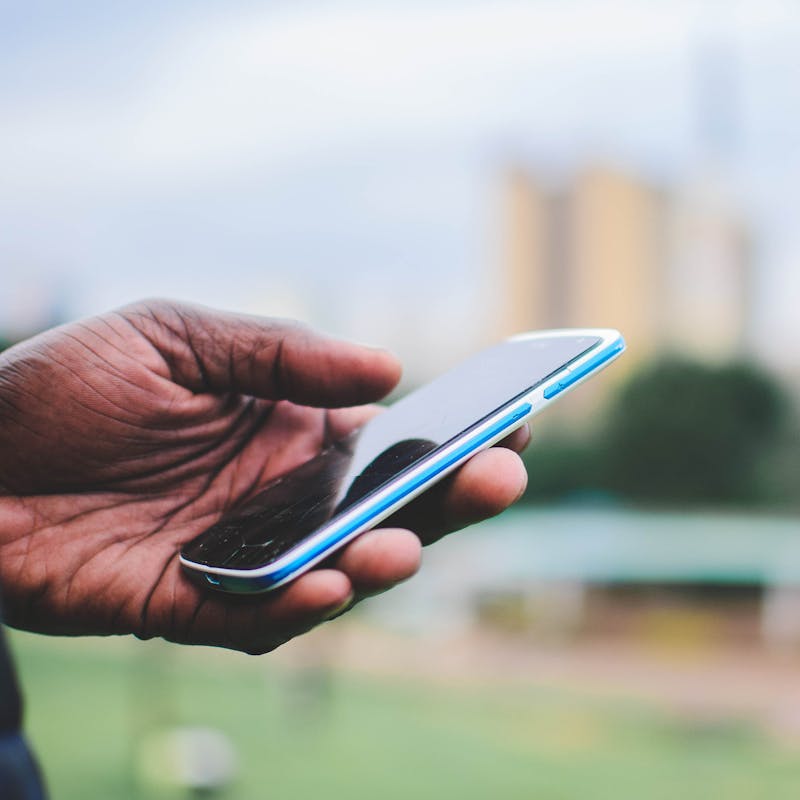
That is part of why so many people feel a strange disorientation right now. The world did not transform in one dramatic instant. It accumulated. Phones became extensions of memory. Screens became workplaces, classrooms, theaters, and companionship. Algorithms began shaping what we notice before we could even agree on what they were. By the time the change became obvious, the habits around it were already deeply settled.
The title feels true because it captures a modern contradiction: the future did arrive loudly. It just did not arrive as a single announcement. It arrived as a persistent volume, an unignorable hum, a constant stream of notifications, updates, alerts, recommendations, and demands for attention. And because the sound became part of everyday life, nobody quite looked up.
Attention as the new frontier
There was a time when the most important resources seemed physical: land, oil, steel, labor. Those things still matter, of course, but attention has become the invisible currency that governs much of modern life. What we focus on shapes what we believe, what we buy, how we vote, and even how we imagine ourselves.
That is why the loudness matters. Not literal loudness alone, though there is plenty of that. The real issue is the way systems compete to occupy the mind before the mind has a chance to reflect. A person can go through an entire day technically connected to everything and meaningfully present to almost nothing.
This is not simply a failure of discipline. It is the environment. The architecture of digital life rewards interruption. It favors speed over depth, reaction over reflection, and constant motion over sustained thought. The result is a strange kind of exhaustion: the feeling that life is full, yet somehow thin.
When the new becomes invisible
The most unsettling changes are often the ones that no longer feel new. Once a technology becomes ordinary, people stop noticing its effects, even when those effects are profound. That is how the extraordinary becomes background noise.
Consider how quickly habits shift. A tool meant for convenience becomes a place where friendships are maintained. A device meant for communication becomes a repository for identity. A platform meant for entertainment becomes a source of news, political tension, commerce, and self-worth. Each step seems manageable on its own. Together, they quietly reshape the structure of daily experience.
This is how the future tends to work now. It does not break through the door. It redecorates the house while everyone is inside, then asks whether the new arrangement feels more efficient.
A culture built for speed
Many of the pressures people feel today come from a simple mismatch between human nature and the systems surrounding it. Human beings are not built for infinite updates. We are not optimized for perpetual comparison, instant response, or the emotional whiplash of absorbing the entire world in fragments.
Yet speed has become a cultural ideal. Fast shipping. Fast answers. Fast opinions. Fast reinvention. The pace creates the illusion of progress, but not all movement is meaningful. Sometimes speed is just distraction wearing the costume of advancement.
There is a hidden cost to always being in a rush to the next thing. When life is organized around immediacy, patience starts to look inefficient. Ambiguity feels intolerable. Silence feels suspicious. Deep work, deep relationships, and deep understanding all require a kind of slowness that our current systems often treat as inconvenience.
And still, people keep trying to make room for it. They step away from their phones during dinner. They put on headphones to create a pocket of concentration. They seek parks, books, workshops, and conversations that are not optimized for engagement. These small acts matter because they are not just preferences. They are forms of resistance.
The strange loneliness of being constantly connected
It would be easy to say that connection has made people less alone. In some ways, that is true. Distance has collapsed, and communities that once would have remained isolated can now find each other quickly. Old friendships can survive geography. New ones can form across borders and time zones.
But connection at scale has not solved loneliness. In some cases, it has deepened it by replacing presence with access. People can be reachable and still feel unseen. They can be surrounded by messages and still lack conversation. They can receive endless signs of attention while starving for real recognition.
There is a profound difference between being noticed and being known. The future has made it easier to be noticed. Being known remains difficult, and perhaps more valuable because of it.
That tension may explain why so many modern experiences feel both expansive and hollow. We have more ways to speak, yet less confidence that anyone is listening with full attention. We can broadcast our thoughts to the world and still wonder whether our inner life has any place in it.
The future is not only technological
When people talk about the future, they often mean devices, software, machines, and science. But the future is also social. It is the set of assumptions that gradually becomes normal. It is the new baseline for what people tolerate, expect, and ignore.
A generation grows up assuming that every moment can be recorded. Another assumes that every answer can be searched. Another assumes that private life will be negotiated in public. These are not just technical developments; they are shifts in the shape of consciousness.
The loud arrival of the future is not only about machines becoming smarter. It is also about human behavior becoming more predictable, more measurable, and in some cases more manipulable. When systems learn how people respond to prompts, incentives, and fears, they can influence behavior without ever appearing forceful. That may be the most powerful kind of noise: the kind that feels like choice.
What gets missed while everyone is watching
Looking up is not just a metaphor for paying attention. It is a reminder that some things can only be seen when people stop staring straight ahead at the nearest distraction.
While attention narrows, other changes unfold in plain sight. Skills are redefined. Work becomes more fragmented. Knowledge becomes more accessible and less stable. Privacy is recast as a luxury. Trust becomes harder to sustain because so much of daily life is mediated by systems that are efficient but opaque.
The danger is not that the future will replace everything familiar overnight. The danger is that it will rearrange the terms under which life is lived, one small normalization at a time. By the time people realize the rules have changed, they may already be adapting to them.
And yet, adaptation is not always surrender. Sometimes it is wisdom. Human beings have always adjusted to new realities. The real question is whether they are adapting intentionally or merely drifting.
Remembering how to notice
There is still power in noticing. Noticing interrupts momentum. It makes room for judgment. It allows people to ask whether a thing is useful, beautiful, corrosive, or simply loud.
To notice does not mean rejecting modern life. It means refusing to live entirely inside its reflexes. It means asking whether every demand for attention deserves an answer. It means recognizing that a life fragmented into constant responses is not necessarily a life well lived.
The future will keep arriving. That much is certain. It will continue to come through screens, systems, cultural shifts, and quiet changes in what people accept as normal. The question is whether people can develop the habit of looking up before the noise becomes the whole landscape.
That may begin in small ways. A deliberate pause before reacting. A walk without headphones. A conversation that is not interrupted by the urge to check something else. A willingness to sit with uncertainty instead of filling it immediately.
These gestures can seem minor, but they restore a lost scale. They remind people that a meaningful life cannot be assembled entirely from alerts. It must be noticed into being.
A quieter kind of future
The future did arrive loudly, and that is part of its problem. Loud systems tend to colonize the senses before the mind can evaluate them. They offer convenience, novelty, and constant engagement, then slowly make those things feel necessary.
But there is another possibility. A future that does not merely accelerate everything, but helps people recover depth. A future that supports focus instead of eroding it. A future that uses technology without surrendering attention to it. A future where being human does not require a retreat, only a more deliberate way of living.
That kind of future will not announce itself loudly. It may begin as a preference for silence, for slowness, for presence, for limits. It may look less impressive at first glance. It may not trend.
But it might be the first future worth looking up for.