You can’t taste what’s changing your water.
Turn on the tap, fill a glass, and the story feels simple: clear water, clean enough to drink, reliably there. But the modern reality is murkier in a way that’s hard to sense. The concern around microplastics in drinking water isn’t just about a new contaminant—it’s about how daily convenience, industrial materials, and aging infrastructure quietly intersect in the most ordinary place: your kitchen sink.
This topic matters because people aren’t only asking “Is it safe?” They’re asking what the tradeoffs are, which sources are most likely, what filtration can realistically do, and how to make choices without spiraling into fear or false certainty.
What “microplastics” really means when it’s in a glass
Microplastics are tiny plastic particles, typically smaller than five millimeters, that come from the breakdown of larger plastic items or from materials designed to shed small fragments. Think packaging, synthetic fabrics, and even the wear-and-tear of everyday consumer products.
In water, these particles don’t behave like a single pollutant. They vary in size, shape, and polymer type, and they can carry residues from manufacturing or pick up other chemicals as they move through the environment. That variety is part of what makes the issue difficult: the word “microplastics” sounds singular, but the exposure is a spectrum.
How microplastics in drinking water gets there
The path into drinking water usually isn’t one dramatic failure. It’s accumulation.
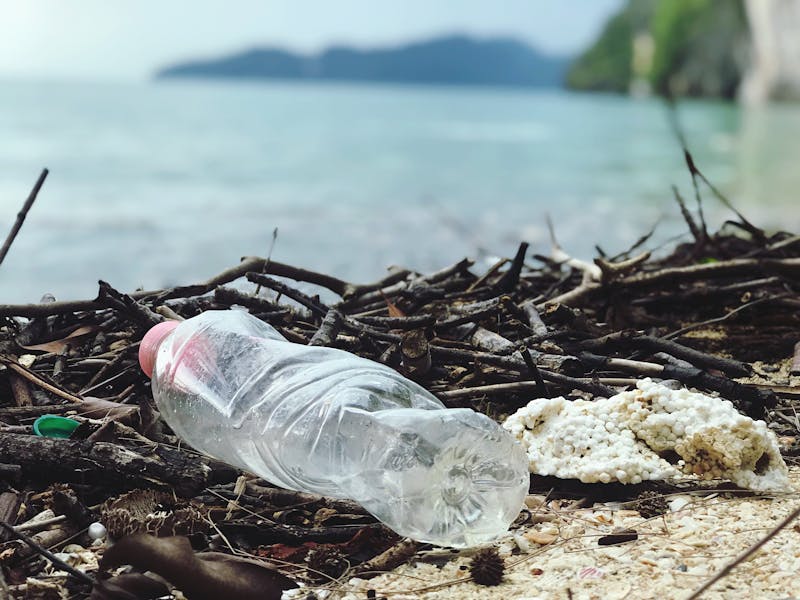
Source water—rivers, lakes, and reservoirs—can receive plastic debris from stormwater runoff, wastewater discharge, and litter that slowly fragments. Treatment plants are built to remove pathogens and sediments, and many systems can capture a portion of small particles along the way, but “portion” isn’t the same as “all.” Removal rates depend on the treatment steps used, the size of particles, and how well the system is operated and maintained.
Then there’s distribution. Water that leaves a plant in good shape still travels through miles of pipes. Aging infrastructure, construction disturbances, and biofilms inside pipes can change what happens between the plant and the tap. Even household plumbing and fixtures can contribute particles over time.
And finally, there’s the home itself. Some microplastic exposure can come from items that touch water: certain plastic kettles, storage containers, or filter housings that wear with use. None of this means your tap is “plastic soup,” but it does explain why measurements can differ from one place to another—even within the same city.
The hidden tradeoff: confidence versus complexity
Public health progress trained us to expect a clear answer: safe or unsafe, pass or fail. Microplastics resist that framing.
On one side, drinking water regulation has delivered enormous benefits by targeting what clearly causes harm—microbes, lead, and known chemical contaminants. On the other, microplastics introduce a newer category of concern where the science is still evolving: particles with variable chemistry, variable behavior in the body, and variable measurement methods.
The tradeoff is psychological as much as technical. We want the reassurance of a single number and a single threshold. What we often get is a set of estimates, imperfect sampling, and changing detection methods that improve faster than our ability to interpret what the numbers mean.
What science can—and can’t—say about health risk
Researchers are still mapping how different particle sizes move through the body and what outcomes matter most. Larger particles are more likely to pass through the digestive system, while very small particles may interact differently with tissues. Some studies look at inflammation, oxidative stress, or the ability of particles to carry other substances.
But “possible mechanisms” aren’t the same as confirmed population-level risk. Human exposure also comes from food, air, and dust, making drinking water one slice of a bigger picture.
The most honest stance today is: concern is reasonable, complacency is unwise, and certainty is premature. The scientific effort isn’t just to detect particles—it’s to understand which particles are most relevant, what dose and duration matter, and how to translate lab findings into real-world guidance.
Filtration choices: what helps without magical thinking
If you’re trying to reduce microplastics without turning your home into a lab, focus on practical improvements.
Many common filtration approaches can reduce particles, but performance depends on the filter type, pore size, maintenance, and how well the device is certified and used. Pitcher filters vary widely. Under-sink systems can be more consistent when properly installed and maintained. More advanced methods such as reverse osmosis tend to remove a broad range of small contaminants, but they come with cost, wastewater, and upkeep considerations.
The quiet pitfall is assuming a filter is “set and forget.” A poorly maintained filter can lose effectiveness and create other water quality problems. The most sustainable option is the one you’ll actually maintain on schedule.
Also worth remembering: filtration is only one lever. Reducing plastic shedding in the household—avoiding repeated heating of water in worn plastic containers, replacing degraded parts, and storing water in glass or stainless steel when practical—can be a low-drama complement.
What to ask your water utility (and what to watch for)
Even when microplastics aren’t listed on standard consumer reports, utilities can still offer clues about overall water stewardship.
Look for how your system describes source water protection, treatment steps, and infrastructure investments. Ask what upgrades are planned and how the utility monitors emerging contaminants. A utility that communicates clearly about known risks, corrosion control, and maintenance is often better positioned to adapt as microplastics monitoring becomes more standardized.
This is where the “hidden tradeoff” becomes civic: water quality is partly personal (filters, habits) but mostly collective (watershed protection, wastewater management, and pipe replacement). The best long-term reduction comes from keeping plastic out of waterways in the first place.
Living with an invisible issue—without letting it run your life
The most unsettling part of microplastics in drinking water is the way it asks for attention without offering a sensory cue. You can’t smell it. You can’t spot it. You can’t boil it away with the satisfying logic we use for germs.
Still, there’s a grounded way to respond: treat it as a signal to tighten the whole chain of water care, from upstream pollution prevention to better treatment technology to smarter household choices. The goal isn’t to chase purity. It’s to reduce needless exposure while supporting systems that make clean water resilient.
A glass of water should feel like a small act of trust. Keeping it that way will take curiosity, better measurement, and the patience to make improvements even when the problem is too small to see.