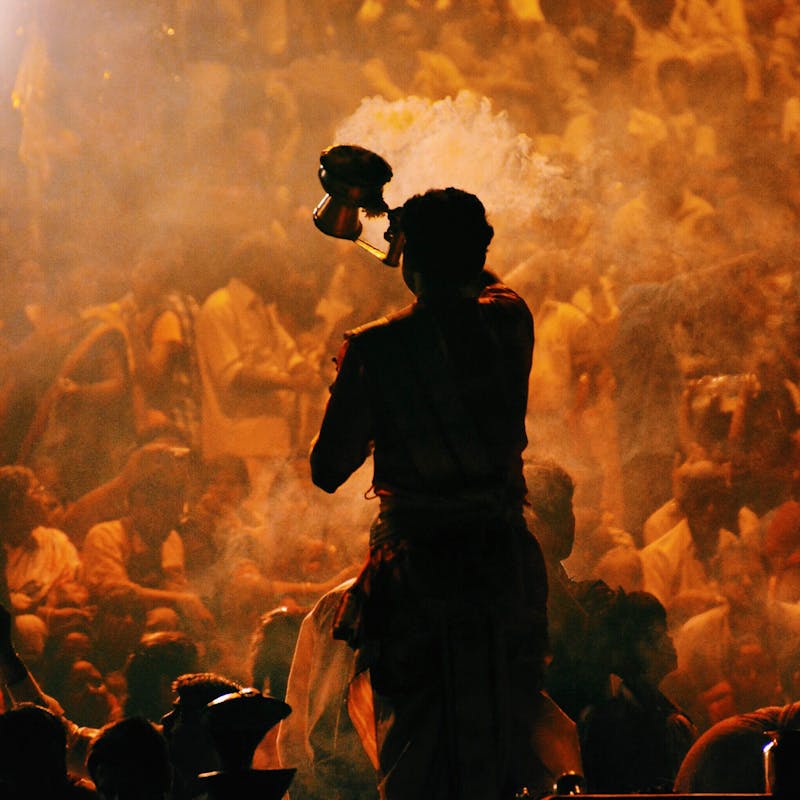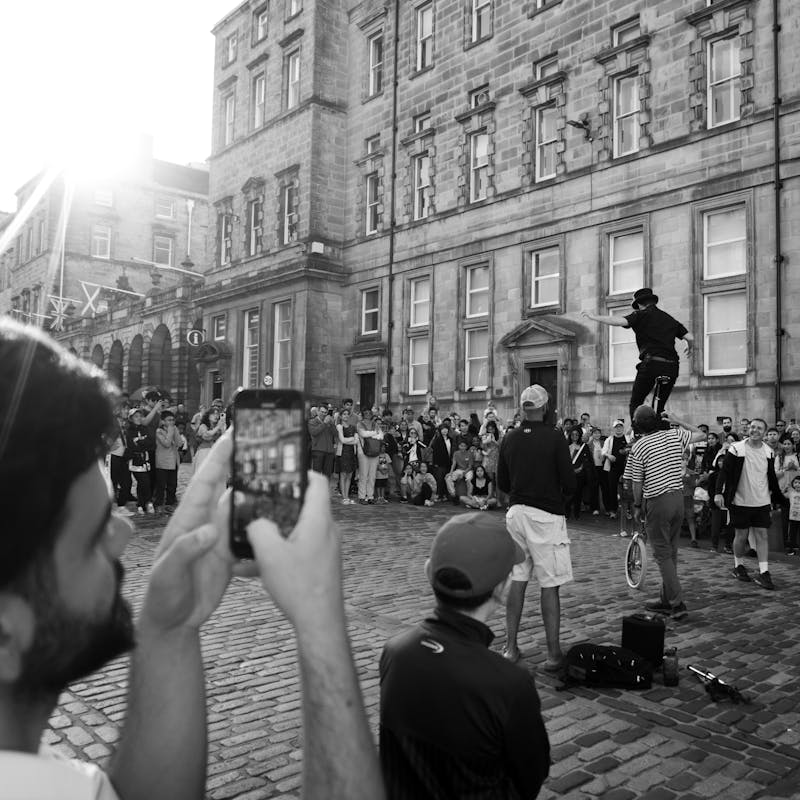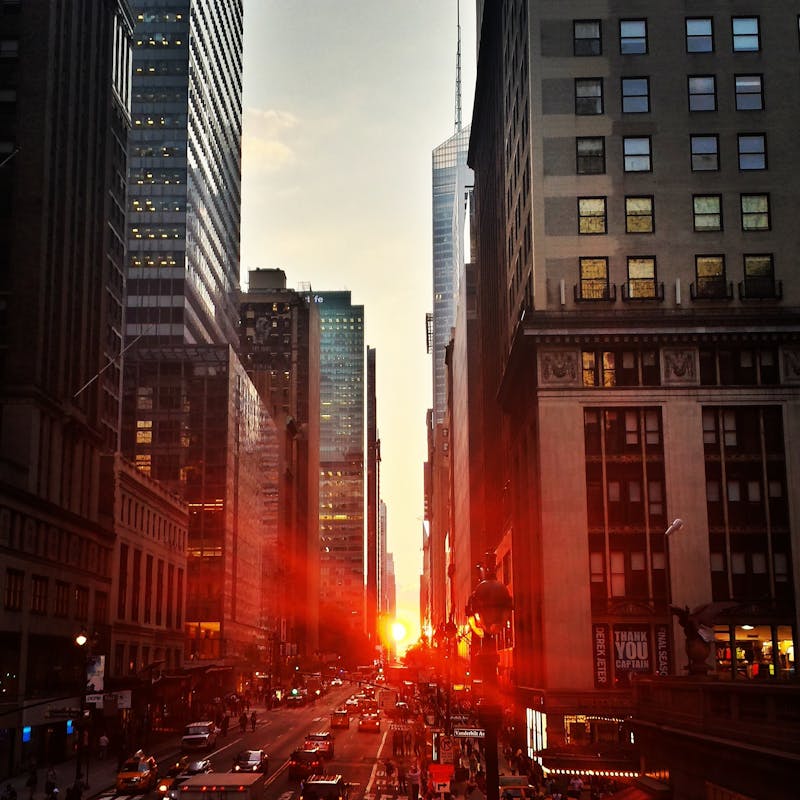
Somewhere between a bus brake and a distant song, the past keeps pace with us.
A city can feel like pure forward motion—steel cranes, delivery scooters, condos rising where small shops used to be. But if you slow down, even briefly, you can hear older rhythms under the noise. They don’t announce themselves with plaques or curated tours. They show up in how people move, what they carry, what they refuse to let disappear.
Tradition in a modern city isn’t always the obvious kind: costumes, parades, heritage festivals. More often it’s a quiet habit that survived three generations and a zoning change. It’s a recipe guarded in a walk-up apartment, or a phrase spoken at the corner store that doesn’t quite translate into English but somehow communicates everything.
New streets don’t erase old traditions. They rearrange them.
The city as a palimpsest
Walk through almost any dense neighborhood and you’ll notice the layering: a sleek café beside a long-standing tailor, a new mural painted over faded signage, a luxury building that kept the old brick facade like a souvenir. Cities overwrite themselves constantly, but the earlier text rarely vanishes completely.
Sometimes tradition clings to physical things. A carved lintel above a door. A church basement that hosts community dinners after Sunday service. A narrow storefront that has survived because the landlord is someone’s aunt who believes in keeping it “for the neighborhood.”
Other times it clings to routes. People still take the same shortcut through the park, the same path to the train, the same Friday evening loop that ends at the bakery window. Even when the storefronts change, the patterns of movement persist like footnotes.
Urban planners talk about infrastructure. Residents talk about “the way we’ve always done it.” Both are describing a kind of map.
Food carts, steam tables, and the logic of memory
If you want to find tradition without trying too hard, follow the smell.
There’s a particular kind of city lunch—quick, inexpensive, eaten standing up—that carries old worlds into the middle of a workday. A food cart vendor might offer a dish that originated in a village kitchen, adapted to a sidewalk schedule. A cafeteria line might serve a stew that tastes like someone’s childhood, even if the ladle is now in a stainless-steel pan under fluorescent lights.
What survives in these meals isn’t only flavor. It’s timing and ritual.
There’s the mid-morning coffee that isn’t just caffeine but a checkpoint. There’s the late-night bowl of something salty and restorative after a shift ends. There’s the shared understanding that certain foods belong to certain days—Sunday soup, holiday sweets, the snack you buy only after the first cold week of the year.
Cities speed up eating, but they also concentrate it. One block can hold five versions of the same tradition, each with tiny differences that matter deeply to the people who grew up with them.
Languages that bend without breaking
On a crowded train, you’ll hear language doing what it has always done: evolving to survive.
An older person might speak in a dialect that younger family members understand but don’t use. The younger ones reply in a mix—half heritage language, half American slang, stitched together with an ease that looks like improvisation but is really competence.
This isn’t “losing” tradition so much as reshaping it. City life demands speed and flexibility. People translate on the fly, switching registers depending on who’s listening. A phrase from a grandparent becomes a joke among cousins, then becomes a marker of belonging. A word that meant one thing in the old country takes on new meanings here, shaped by the neighborhood and the internet and whatever the kids are saying at school.
In many cities, bilingualism isn’t a special skill. It’s background noise. And in that noise, traditions survive in short, sturdy phrases: the greeting that carries respect, the blessing murmured over a meal, the scolding that lands harder in the language it was born in.
Faith in plain clothes
Old traditions often hide in ordinary outfits.
Look closely at the daily choreography around houses of worship. It’s not only about the service. It’s the way people arrive early to set up chairs, the way someone always brings extra food “just in case,” the way announcements turn into a web of mutual aid.
In modern cities, religious practice can look quiet—less like spectacle, more like structure. A synagogue hosting a daycare. A mosque offering tutoring. A church serving as a community bulletin board, a job network, a place where newcomers learn how to navigate paperwork and schools.
The tradition isn’t just the theology. It’s the social technology.
Even for people who don’t identify as religious, the inherited cadence of holidays can remain. They might not attend services, but they still gather. They still light candles, cook the old dish, avoid certain foods for a few days, or take a long call with relatives they don’t see often. The city provides the anonymity to step away from tradition, but it also provides the density to rebuild it in new forms.
Craft, repair, and the dignity of knowing how
A city street will teach you what a culture values by showing you what it keeps fixing.
In some neighborhoods, there are shops that feel out of time: cobblers, watch repair, seamstresses, locksmiths who seem to know everything. These places are living archives of skills that were once common and are now rare enough to be considered charming.
But for many residents, repair is not nostalgia. It’s necessity and pride.
Knowing how to mend a coat, sharpen a knife, or restore a chair carries a kind of dignity that resists the disposable logic of modern consumption. It says: this object has a story; it deserves more time. And often, the person behind the counter learned the skill from someone older, who learned it from someone older still.
The city may change the economics of craft—higher rents, fewer apprentices—but it also creates new demand. In a world of fast fashion and cheap replacements, a perfectly hemmed pant leg can feel like a small rebellion.
The pressure of change and the art of adaptation
There’s a reason traditions feel more visible when neighborhoods change quickly. When rent rises and familiar storefronts disappear, the remaining signs of the old life take on a sharper emotional edge.
Gentrification isn’t just an economic shift; it’s a shift in what a street is for. A block once oriented around daily needs might pivot toward lifestyle and leisure. That can bring investment, better lighting, cleaner parks. It can also bring displacement and a quiet sense that the neighborhood’s original residents are being treated like a temporary phase.
In that tension, traditions become anchors.
You’ll see it when a long-standing restaurant keeps its menu the same even as everything else updates. Or when a community group fights to keep a festival on the calendar. Or when families insist on gathering in the old apartment for one more holiday because the new place “doesn’t feel right.”
Adaptation becomes its own tradition. People learn to keep what matters while changing what they must.
A neighborhood may lose a beloved market, but a new one opens a few blocks away, run by a former employee. A dance tradition moves from a community center to a school gym. A recipe changes because ingredients are different, but the act of cooking it—the stirring, the tasting, the storytelling—remains.
Street corners as informal museums
Cities have official museums, but the most honest exhibits are uncurated.
A barber shop where the same men have argued about sports and politics for decades. A stoop where elders sit in folding chairs on summer evenings, watching kids run up and down the sidewalk. A park where families gather for weekend picnics that stretch into dusk.
These places keep traditions alive through repetition. Nothing needs to be announced. Everyone just shows up.
And newcomers, even if they don’t share the tradition, absorb it. They learn what to expect: the music that plays at a certain time of year, the smell of grilling meat on the first warm weekend, the way a block gets louder when a big game is on.
In this way, tradition becomes a neighborhood’s atmosphere. It’s not owned by one person. It’s practiced by many, sometimes unconsciously.
What we inherit when we don’t notice
There’s a particular moment that happens in every city: you walk down a street you’ve taken a hundred times and suddenly realize you’ve been passing something precious without seeing it.
Maybe it’s the bakery that still makes the same sweet bread every morning, even though the sign is faded. Maybe it’s the small grocery that stocks a spice blend you can’t find anywhere else. Maybe it’s the sound of a language you don’t speak, and the sudden awareness that it has been part of the neighborhood’s soundtrack the whole time.
Traditions don’t always demand attention. They’re not always dramatic. Often they’re simply consistent.
And consistency is a kind of courage in a city that changes by the week.
To trace the echoes of old traditions in new streets is to admit that modern life isn’t a clean break from what came before. It’s a negotiation. The city teaches people how to compress their histories into portable forms—into food, phrases, gestures, routes, songs.
If you listen closely, you can hear it: the old world’s heartbeat synced to the crosswalk signal.
The past isn’t behind the city.
It’s under it, beside it, and sometimes—when you least expect it—walking right in front of you, carrying groceries home.