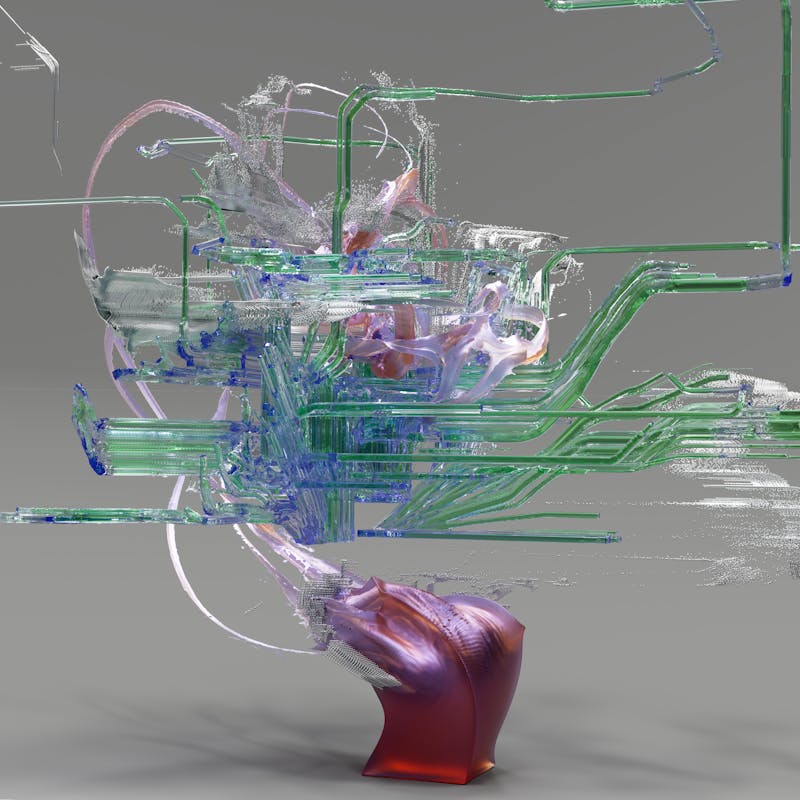
A border is a question disguised as a line.
Some lines on maps look like confident strokes, as if someone simply decided where one country ends and another begins. But the moment you approach a border in real life—on foot, by car, with a passport in hand—you feel how artificial and how absolute that line can be at the same time.
Crossing borders doesn’t just move you through space. It presses on the edges of who you think you are.
The strange intimacy of a checkpoint
A checkpoint can be oddly personal. You hand a stranger the small book that proves your right to pass, and for a moment you’re reduced to a photo, a date of birth, a stamp.
It’s hard not to notice the quiet power in the ritual. Your story becomes legible only in the categories that the border recognizes.
And yet the experience can also be disarming in its ordinariness. Fluorescent lights, a bored officer, a line of tired travelers shifting their bags. The machinery of a nation sometimes feels less like a fortress and more like a workplace.
That mix—total authority delivered through everyday routines—sets the tone for what borders teach: identity is both deeply felt and bureaucratically assigned.
Identity looks sturdier from the inside
When you live within one place for long enough, identity can feel like architecture. Language is the air you breathe. Social norms become invisible, the way you stop hearing a refrigerator hum.
You don’t think of yourself as “from” somewhere as much as you think of yourself as simply being.
Then you cross a border and suddenly you are “an American,” or “a visitor,” or “foreign.” Even if you’ve never used those labels internally, they arrive as external facts. You find yourself representing a whole place in someone else’s imagination.
A casual question—“So what are people like where you’re from?”—can land with unexpected weight. You may answer lightly, but part of you is already negotiating: which version of home do I offer? Which version will be understood?
The passport is not the person
There’s a particular kind of humility in realizing how much your freedom of movement is attached to a document you didn’t earn.
Some passports open doors with the ease of a familiar face. Others are treated like suspicious objects, even when held by someone who is exhausted, gentle, and utterly ordinary.
This isn’t an abstract political argument so much as a lived feeling: the world is not equally available to everyone.
At a border, identity becomes transactional. You are granted passage not because of your character or your intentions but because your nationality has been judged in advance. The self you’ve cultivated—your work, your relationships, your values—can become secondary to the country printed on the cover.
For many travelers, that’s a moment of discomfort that fades after a few hours.
For others, it’s a recurring reminder that the “edges of identity” aren’t philosophical. They’re enforced.
Language as a mirror that slightly distorts
Crossing borders changes your relationship to words.
In your native language, you can be precise without trying. You can be sarcastic, tender, ambiguous. You can stumble and still be understood.
In a second language, you might become a simplified version of yourself. Not because you’re less intelligent, but because nuance is expensive when every sentence requires calculation.
A person who is quick-witted at home may sound cautious abroad. Someone who is emotionally articulate may suddenly seem blunt.
And sometimes the opposite happens: in a new language, you gain a strange freedom. You can choose a different rhythm, a different tone. You’re not as trapped by the habits people expect from you.
That’s one of the border’s quieter lessons: personality isn’t only internal. It’s also a collaboration with the language available to you.
The moment you realize you are visible
In some places, you blend in. In others, you become a signal.
It might be your accent at a coffee counter, the clothes you wear, the way you gesture when you talk. It might be the fact that you don’t know what you’re “supposed” to do in a grocery line. Suddenly you are noticeable in ways you never had to consider.
That visibility can be harmless and even funny. You laugh at yourself for standing on the wrong side of the escalator.
But visibility can also sharpen into vulnerability. People stare longer. Someone asks where you’re “really” from. A joke lands with an edge.
Borders teach that identity isn’t only self-definition. It’s also what the room decides you are.
Culture shock is often a shock of assumptions
Culture shock is usually described as encountering different customs. But the deeper jolt is the realization that your default assumptions aren’t universal.
You may be used to directness and find indirectness confusing. Or you may come from a place where politeness is an art form and feel bruised by casual bluntness.
Even small things—how close people stand, how quickly a conversation becomes personal, whether silence is comfortable—can make you feel like you’re misreading reality.
When your instincts fail, you become more aware of having instincts at all.
That awareness can be unsettling. It can also be liberating. You start to see your own culture not as “normal” but as one way among many ways.
That shift is one of the most valuable things borders can give: a chance to notice the water you’ve been swimming in.
Belonging is a moving target
There’s a romantic idea that travel makes you “a citizen of the world.” Sometimes it does expand your sense of kinship.
But crossing borders also reveals how much belonging depends on repetition. The neighborhood you know by heart. The jokes you don’t need explained. The holidays that feel like yours without effort.
You can love a place and still feel like you’re standing slightly outside it, looking in.
At the same time, returning home after being away can bring its own disorientation. You notice things you didn’t notice before: the tempo of conversation, the particular kind of optimism or cynicism, the way people talk about strangers.
You may find yourself defending home to outsiders—and criticizing it privately.
This tension doesn’t mean you’re ungrateful or confused. It means identity is elastic. It stretches with experience, and it rarely snaps back perfectly to its original shape.
The border inside the mind
Not all borders are between nations.
There are the borders between past and present selves. Between who you were taught to be and who you’ve become. Between the identity you inherited and the one you choose.
Physical borders make these internal borders easier to feel. When your environment changes suddenly, your habits and values rise to the surface.
You might notice, for instance, how quickly you decide what is “rude” or “efficient” or “safe.” Those judgments often arrive wearing the costume of common sense.
But common sense is frequently cultural sense.
Crossing borders can help you examine your reflexes rather than obey them. It doesn’t automatically make you wiser, but it does offer a rare opportunity: to watch yourself in motion.
What we owe each other across lines
Borders can be necessary tools of governance, but they also shape moral imagination.
When you cross a border with ease, it’s tempting to see movement as a personal choice rather than a privilege. When you cross with difficulty—or watch others be questioned more harshly—it becomes harder to pretend that the world is arranged according to merit.
Travel exposes inequalities without requiring a lecture. You feel them in waiting rooms, in paperwork, in the nervous carefulness of people who cannot risk a mistake.
That awareness can curdle into guilt or defensiveness.
Or it can become a quieter, more useful form of responsibility: paying attention. Listening longer. Resisting the lazy story that people are where they are because they deserve it.
A border is not just a place. It’s a relationship between those who pass through and those who cannot.
Carrying a larger self back home
The most lasting impact of crossing borders is rarely the landmark you photographed or the meal you can’t stop describing.
It’s the way your sense of self becomes less singular.
You realize you can be different versions of yourself without being fake. You can be quieter in one place, bolder in another, more patient in a third. You can learn new manners without betraying your old ones.
The edges of identity, it turns out, are not failures of consistency. They’re where growth happens.
And perhaps that’s the border’s final lesson: you don’t cross a line and remain untouched.
You return with a slightly altered map of what is possible—of who you can understand, what you can tolerate, what you can learn to love.
Not because the world is simple, but because it is wider than whatever story you started with.