A moving room full of silent agreements.
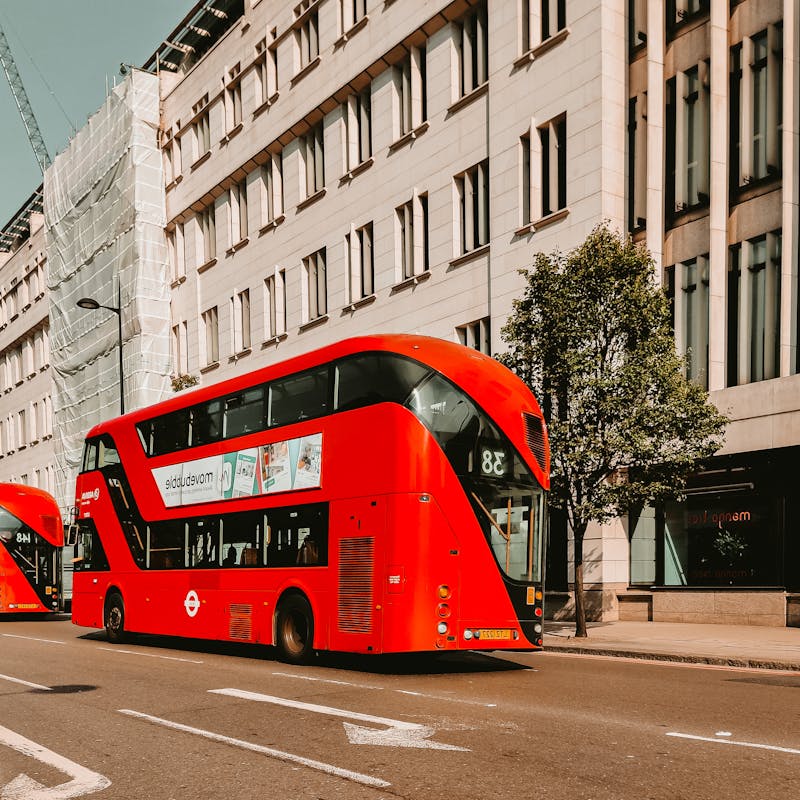
A city bus is the kind of place where you learn how people really live together.
Not in speeches or policies or grand visions—just in the small choreography of knees pulling in, backpacks rotating to the front, eyes lifting for half a second to gauge whether someone needs a seat more than you do.
If you ride often enough, the bus begins to feel like a stack of letters you never asked to receive. Each trip delivers a new page of civic handwriting: the unwritten rules that keep strangers from becoming enemies, and sometimes—quietly, briefly—turn them into something like neighbors.
The bus as a classroom no one enrolled in
The bus teaches without permission.
You step into it with your own story already running—late for work, tired, overstimulated, thinking about dinner—and immediately you are asked to revise that story to include other people.
The first lesson arrives at the door. There’s a line, sometimes neat, sometimes jagged, and everyone pretends it’s not a test. But it is. The test is whether you can move with a group of strangers without turning it into a competition.
You learn quickly that efficiency is not the same as speed. The best boarders have a rhythm: tap the card, keep walking, don’t freeze at the fare box like the machine asked for a personal essay.
And if you do freeze, the rule isn’t “never make mistakes.” It’s “don’t make your mistake everyone’s problem.” Step aside. Let the line keep breathing.
The first unwritten rule: make yourself smaller—politely
A bus is a finite space with infinite human needs.
So we practice a soft kind of shrinkage. Not in dignity, but in footprint.
Bags come off shoulders because they swing like inattentive elbows. Knees angle inward. Coats get unzipped so they don’t balloon across the aisle. People tuck themselves into corners like they’re folding origami out of their own bodies.
This isn’t self-erasure. It’s mutual recognition.
When someone doesn’t do it—when a bag stays on and bumps a seated rider in the face, when a leg stretches into the aisle like a claimed territory—the air changes. Not dramatically. Just enough that you feel the collective recalculation: Are we going to have to enforce the rule?
Most of the time, enforcement is subtle. A look. A shift. A pointed silence.
Occasionally, someone says, “Can you move your bag?” and the whole bus listens, not because it’s entertainment, but because it’s governance in real time.
Seats: the quiet moral economy
Seats aren’t just furniture on a bus. They’re a kind of currency.
The moral economy is mostly understood: older riders, pregnant riders, riders with canes or visible pain, parents juggling a child and a stroller—they get priority. It’s not only about courtesy. It’s about acknowledging that bodies carry different burdens.
But what’s interesting is how rarely the rule is spoken.
You’ll see someone glance up from their phone, take inventory of the standing crowd, and stand without making a performance of it. The seat transfer happens like a secret handshake.
And sometimes, the opposite happens: the need is obvious, and yet no one moves. That’s when the bus becomes a mirror you didn’t want. You can feel your own hesitation—Maybe someone else will. Maybe it’s not my job.
The unwritten rule reveals itself in those moments: the city runs on volunteers. Not official ones, but everyday volunteers who decide, over and over, to be slightly inconvenienced so the system stays humane.
The choreography of standing
Standing on a moving bus is its own language.
The experienced riders know where to place their feet, how to bend their knees, how to hold a pole without gripping it like a lifeline. They sway with the driver’s habits, anticipating the sudden brake that will turn a casual stance into an accidental lunge.
There’s an unwritten map in the aisle.
Don’t block the back door if you’re not getting off. Don’t stand in the stairwell like it’s a balcony. Don’t plant yourself directly in front of the “please move to the rear” sign while refusing to do exactly that.
And when the bus gets crowded, there’s a quiet obligation to keep moving inward, even if the back feels darker and less comfortable. The middle is a bottleneck. The front is a choke point. The back is where the bus becomes a real community—compressed, but functioning.
You can tell the difference between someone who doesn’t know and someone who doesn’t care.
The first is forgiven. The second is remembered.
Eye contact: used sparingly, like hot sauce
On a bus, eye contact is a tool, not a default.
Too little, and you become an obstacle. Too much, and you become a threat.
The unwritten rule is about calibration. A quick glance to signal “I’m getting off soon.” A flicker of acknowledgment when someone steps aside. A look away to grant privacy to a stranger who’s arguing softly into a phone.
People underestimate how much peace is made out of those micro-decisions.
Sometimes you watch someone choose not to stare at a person who looks different, who is dressed in a way that invites judgment, who is exhausted in public. That decision—small, invisible—keeps the bus from turning into a courtroom.
And sometimes you watch a stare linger too long, and you feel the whole row tighten. The bus doesn’t have walls thick enough for that kind of tension.
The soundscape we negotiate together
There’s always noise on a bus. The engine’s low growl. The hydraulic sigh of doors. The beep of fare cards. The occasional rattle that makes you wonder what’s loose.
What we negotiate is the optional noise.
The unwritten rule isn’t “be silent.” It’s “don’t hijack the shared space.”
Most riders understand the difference between living out loud and forcing an audience. Headphones are a peace treaty. Phone calls are allowed, but the volume matters. So does the content, though no one will say it.
You can feel collective gratitude when someone lowers their voice without being asked.
You can also feel the bus’s quiet despair when someone scrolls videos at full volume, as if the rest of the passengers are background characters in their personal feed.
And yet even then, the bus often chooses restraint. People endure. They look out the window. They tighten their focus. There’s a lesson in that, too—about what city life requires, and what it costs.
Food, scent, and the boundaries of tolerance
Every bus rider has a memory of a smell that changed the whole ride.
Sometimes it’s benign—someone’s takeout filling the aisle with garlic and fried onions, making the bus feel briefly like a street fair. Sometimes it’s harsh—an overflowing gym bag, a cigarette smoke jacket, a sour reminder that not everyone has access to a shower whenever they want.
The unwritten rule about food and scent is complicated because it touches dignity.
Don’t eat messy things. Don’t spill. Don’t bring an entire feast that requires elbows and napkins and confidence. But also: don’t publicly shame someone whose life shows on their clothes.
The bus forces you to practice empathy as a form of self-control.
You can dislike a smell without turning it into cruelty. You can open a window, shift your body, breathe through your mouth, and still let the other person remain a person.
The driver: an authority figure and a human being
Bus drivers operate in a strange role.
They are tasked with keeping time, enforcing rules, managing safety, and absorbing the public’s moods—while navigating traffic that treats their vehicle like an inconvenience.
The unwritten rules around drivers are simple and surprisingly powerful.
Say hello if you can. Say thank you when you get off. Don’t argue at the front while everyone else waits behind you. If there’s a problem, don’t make it a spectacle.
A bus driver is not the city. They are a person hired to operate a difficult machine within a difficult system.
When someone yells at a driver for being late, it’s like blaming a cashier for inflation. The bus hears it, and the bus remembers.
And when a driver waits ten extra seconds for a sprinting passenger—an act of mercy that bends the schedule—the gratitude is immediate. You’ll see a rider nod, another mutter “good looks,” someone else smile without showing teeth. Tiny acknowledgments, but they matter.
When things go wrong: the emergency etiquette
Every regular rider has lived through a disruption.
A bus breaks down. A rider gets sick. An argument flares. A sudden stop sends someone’s coffee into a stranger’s lap. The air shifts into a different mode: alert, careful, watchful.
The unwritten rule in these moments is not heroism. It’s steadiness.
Give space. Don’t crowd. Offer help if you can help, not if you want to be seen helping. Let the driver do their job. Let people exit without turning it into a stampede.
Even conflict has its own etiquette.
Most riders avoid escalation because everyone understands the stakes. There’s nowhere to retreat. There’s no private corner. You’re all inside the same moving box.
So the bus teaches emotional restraint—not as repression, but as community survival.
The unexpected tenderness of ordinary rides
For all its friction, the bus also holds quiet grace.
A teenager gives up a seat without being asked. A woman steadies a stranger’s stroller as the driver pulls away. Someone taps another rider’s shoulder to say, “Your stop is coming.”
These moments are not dramatic. They’re not viral.
They are, however, the closest thing many of us experience to a shared civic spirit. Not the kind you declare, but the kind you practice.
The unwritten rules aren’t only about avoiding harm. They’re about creating a thin layer of trust in a place where trust is always at risk.
And the remarkable thing is how often it works.
What the bus writes back to us
If the bus were truly a letter, it wouldn’t flatter you.
It would point out the ways you take up space without noticing. The ways you assume someone else will do the decent thing. The ways you retreat into your phone to avoid the fact that you are part of a living crowd.
But it would also remind you of what you’re capable of.
Of how quickly you can adjust, how naturally you can cooperate, how easily you can offer dignity in small doses. It would show you that “community” isn’t always a friendship. Sometimes it’s just the willingness to behave as if other people’s comfort matters.
When you step off the bus, the city rushes back in—louder, wider, less contained.
Yet the bus leaves a residue, a faint awareness that you have been practicing a kind of citizenship. Not the grand kind that belongs to history books, but the quiet kind that keeps a Tuesday morning from collapsing into chaos.
The unwritten rules remain unwritten because they’re fragile.
They survive only if enough of us keep agreeing to them, trip after trip, stop after stop—reading the room, adjusting our bodies, lowering our voices, offering our seats, and choosing, in a hundred small ways, to live together on purpose.