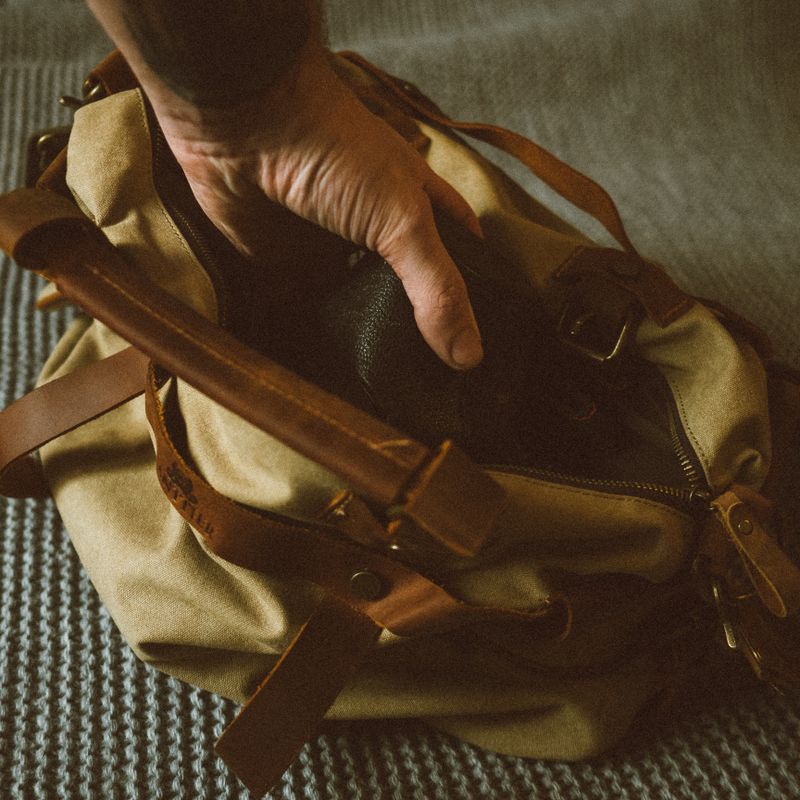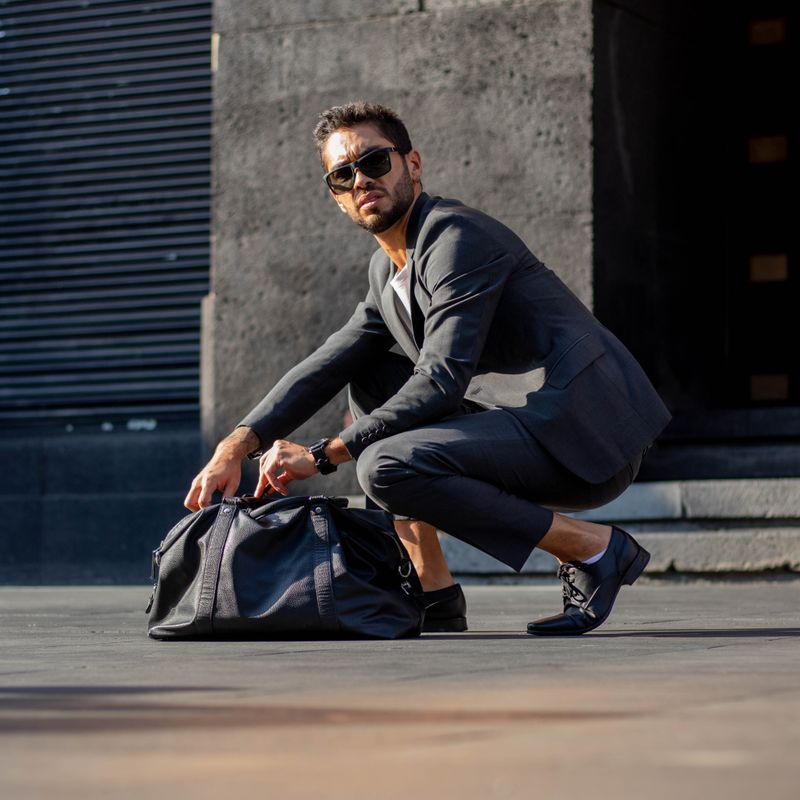
The difference between a smooth boarding and a gate-side scramble is often one zipper away.
Good carry-on packing tips aren’t about cramming more into a bag—they’re about making the trip feel lighter from the moment you leave home. This guide breaks down five common mistakes travelers still make, why they happen, and what to do instead, with practical tactics that work across airlines, climates, and trip lengths.
Travel has quietly changed in the last few years. Planes are full, overhead bins fill fast, and many airlines enforce stricter size and weight rules than people expect. Add in security screening and the reality of lost checked bags, and the carry-on isn’t just a convenience—it’s your continuity plan.
Mistake #1: Treating the carry-on like a smaller checked bag
If your carry-on is packed like a miniature suitcase, you’ll pay for it in time and stress. You’ll dig for essentials, wrinkle what you need, and still arrive feeling under-prepared.
The temptation is understandable: you want options. But carry-on packing works best when it’s modular, not maximal.
What to do instead: pack for outfits, not items
Think in complete looks and repeatable layers rather than individual pieces.
- Choose a base color family (two neutrals plus one accent) so everything mixes.
- Build 2–3 “core” outfits and rotate tops.
- Add one layer that handles temperature swings (light sweater, overshirt, or thin puffer).
A small reality check helps: a 2023 survey from the International Air Transport Association (IATA) reported airlines mishandled tens of millions of bags globally that year. Even if your checked bag usually arrives, the carry-on should cover the first 24 hours without making you feel like you’re moving apartments.
Mistake #2: Packing liquids like it’s still 2012
Many travelers still pack toiletries as if security screening is an afterthought—then end up repacking in line, tossing items, or holding up the conveyor belt.
In the U.S., the Transportation Security Administration’s 3-1-1 liquids rule remains a common friction point: liquids, gels, and aerosols in 3.4-ounce containers, all inside one quart-sized bag, separated for screening. (Other countries have similar rules, with variations.)
What to do instead: engineer your “liquid strategy”
Aim to reduce liquids first, then make what remains easy to screen.
- Replace where you can: shampoo bar, solid deodorant, powder sunscreen, laundry sheets.
- Use travel-size containers only for what truly must be liquid.
- Put your liquids bag at the top of the carry-on or in an exterior pocket.
Here’s a simple comparison that can save minutes at security:
| Approach | Security experience | Risk of leaks | Best for |
|---|---|---|---|
| Loose liquids scattered | Slow, repacking likely | High | Nobody, realistically |
| Single quart bag on top | Fast, predictable | Medium | Most travelers |
| Mostly solid toiletries | Fastest, simplest | Low | Frequent flyers, one-bag trips |
One more detail people miss: pressure changes can push product out of half-empty bottles. Fill containers more fully, or tape the lid seam and stash them inside a small zip pouch.
Mistake #3: Ignoring the “airport layer” and overpacking clothing
The airport is its own climate: early-morning chill, warm terminals, cold cabins, and the sudden heat of baggage claim. Overpacking clothing is often a reaction to discomfort rather than genuine need.
The better move is to wear your bulkiest pieces and pack lighter ones. A jacket on your body doesn’t count toward suitcase volume, and it keeps you comfortable through the temperature roulette.
What to do instead: build a wearable comfort system
A reliable system looks like this:
- Wear: sneakers, jeans or travel pants, top, mid-layer, and your largest jacket.
- Pack: lighter tees/tops, one nicer outfit, and compact layers.
Fabric choice matters more than most people admit. Quick-dry synthetics can be great, but they can also hold odor; merino blends often perform well for re-wear. The key is to pack fewer pieces that tolerate repetition.
If you want a rule that actually holds up: pack for a week, do laundry for longer. A sink wash, a travel clothesline, or a laundromat visit often beats hauling a second pair of shoes “just in case.”
Mistake #4: Forgetting that weight and access matter as much as space
Many carry-on packing tips focus on fit—will it all physically go in? But the real pain often comes from a bag that’s too heavy, unbalanced, or impossible to navigate while standing in a narrow aisle.
An overstuffed bag also draws attention at the gate. If an airline is enforcing sizers, a rigidly packed carry-on that can’t compress is more likely to be flagged.
What to do instead: pack by zones (and keep one zone empty)
Think of your bag as three zones:
- Fast-access zone (top/exterior): passport/ID, charger, headphones, meds, snack, pen.
- In-flight zone (middle): sweater, eye mask, toothbrush, wipes.
- Stay zone (bottom): clothes, shoes, secondary items.
Then leave a small buffer—an “airport margin”—so you can stuff a jacket, a water bottle you forgot to empty, or a last-minute purchase without turning everything into a wrestling match.
A quick checklist that works for most travelers:
- Put heavy items closest to the wheels (or lowest part) for better rolling.
- Keep a flat pouch for documents so they don’t disappear into corners.
- Pack a compact tote or foldable day bag for destination use.
- If you’re using packing cubes, limit yourself to 2–3; too many becomes its own clutter.
Mistake #5: Packing “for security” but not “for real life”
Some travelers pack in a way that performs well at the checkpoint but fails the moment they arrive: no clean shirt accessible after a red-eye, no backup glasses, no plan for a delayed room, no medication separated from the main pile.
This mistake shows up most painfully when something goes slightly wrong—because travel is mostly a series of slight wrongs.
What to do instead: define your “minimum viable arrival”
Ask one question: If I land and can’t access anything else for 12 hours, what do I need to feel human?
For most people, it’s:
- One fresh outfit (including underwear and socks)
- Basic toiletries (toothbrush, deodorant, face wipe)
- Medications and a small first-aid strip kit
- Power: charging cable + wall plug (and a power bank if you rely on your phone)
- A snack and an empty bottle to fill after security
Keep those items together—either in a small packing cube or a pouch—so you can pull them out without detonating your whole bag.
If you wear contacts, consider traveling with glasses as well. If you’re prone to headaches, pack your preferred remedy in the easy-access zone. These are small choices that prevent the feeling of being stranded in your own itinerary.
Carry-on packing tips that actually reduce stress (not just volume)
The best carry-on packing tips are the ones you can repeat without thinking. They work because they’re less about “packing hacks” and more about decisions made once.
Here’s a simple system you can reuse:
- Start with constraints: airline size rules, trip length, weather range.
- Pick a capsule: 2–3 outfits plus layers, one nicer piece if needed.
- Choose shoes early: one walking pair; add a second only if the trip truly requires it.
- Solve liquids deliberately: minimize, consolidate, place on top.
- Create an arrival kit: one outfit + toiletries + power + meds in one place.
- Leave margin: a little space and mental room for the trip to be imperfect.
To sanity-check your bag before you zip it:
| Quick test | If you fail it | Fix |
|---|---|---|
| Can you lift it overhead comfortably? | Too heavy | Remove redundancies; wear the heaviest layer |
| Can you reach charger/ID in 10 seconds? | Poor access | Move essentials to the top pocket |
| Can it compress into a sizer? | Too rigid | Loosen packing cubes; remove hard items near edges |
| Do you have 24 hours covered? | Vulnerable to delays | Add arrival kit essentials |
This approach also tends to improve your experience beyond the airport. When you arrive at a hotel or rental, you’re not “unpacking,” you’re simply moving modules into drawers.
The quiet benefit of packing well: you travel differently
Overpacking isn’t just a luggage problem—it’s a mindset. A bag stuffed with “maybe” items can make you feel like you’re bracing for the trip instead of being in it.
When your carry-on has a clear logic, you stop negotiating with your stuff. You stop doing the anxious pre-meeting hunt for the one shirt that didn’t wrinkle. You stop standing in a security line thinking, I hope they don’t make me open this.
And perhaps most importantly, you become more present. You notice the small moments: the way the terminal coffee smells at 6 a.m., the relief of boarding with everything you need, the lightness of walking out of the airport without waiting for a carousel.
If you’re refining your own approach, try changing just one thing on your next trip—liquids on top, an arrival kit, or a wearable comfort system—and see how it affects the entire day. Good packing rarely feels dramatic. It just makes everything else easier.