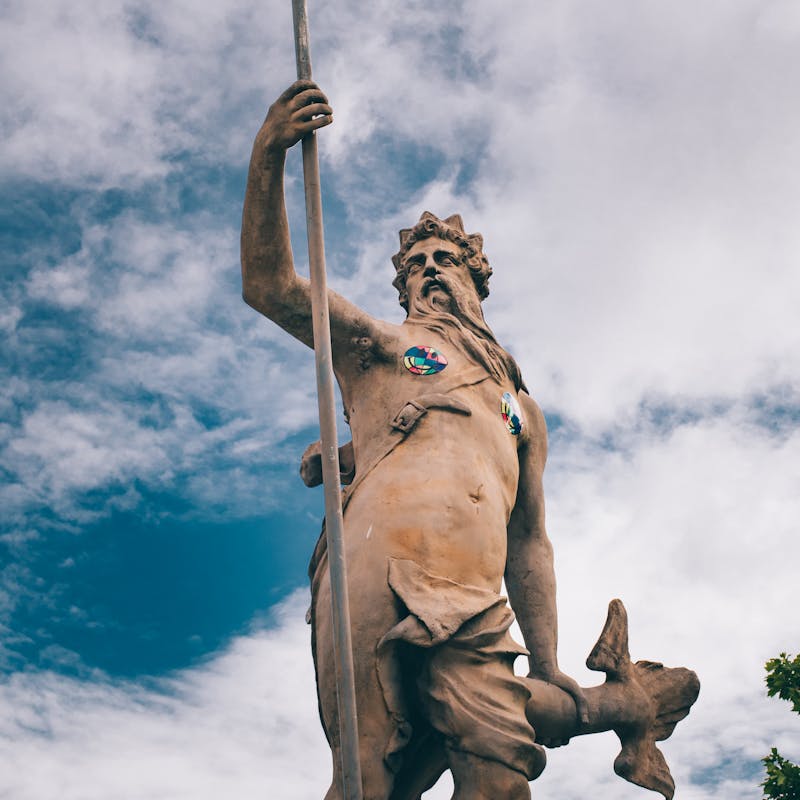
We don’t stop believing in myths; we just change their costumes.
A friend mentions they’re “manifesting” a new job, and no one blinks. A politician is framed as a savior or a villain before they’ve even finished a sentence. A brand’s logo becomes a kind of shorthand for what sort of person you are. None of this feels like ancient storytelling, yet it carries the same electricity: the sense that the world is shaped by narratives bigger than any single day.
Modern culture likes to describe itself as rational, data-driven, and disenchanted. But walk through a city, scroll a feed, sit through a game, or listen to a pop song, and you can feel the old machinery humming. We still run on shared legends—stories that explain who “we” are, what matters, what’s possible, and what’s forbidden.
The need for a story doesn’t disappear
Humans don’t experience life as raw information. We experience it as meaning.
The brain can track facts, but the heart wants a plot. When events don’t naturally form one, we supply it. We look for origins, motives, turning points, and endings. Even personal memory works like this; we don’t recall everything, we recall what fits the story we tell about ourselves.
Shared legends are simply that instinct, scaled up. They offer a common script that helps strangers coordinate without negotiating every value from scratch.
Legends are social glue in a fragmented world
For all our talk of individuality, modern life is atomizing. People change cities, jobs, and online identities quickly. Communities form and dissolve at the speed of a group chat.
Shared legends compensate. They give people a sense of belonging that doesn’t require intimacy. You can show up to a concert with thousands of strangers and feel, for two hours, like you’re part of something coherent. The lyrics become a communal language, the artist a symbolic figure, the night a ritual.
Sports work the same way. The game is real, but the meaning is legendary. Teams become inheritors of long-running sagas. Fans pass down origin stories, grievances, and miracles—moments that are retold until they become almost sacred.
Brands, fandoms, and movements as modern mythmakers
It’s tempting to treat branding as mere marketing, but the most powerful brands don’t just sell products. They sell a world.
A sneaker isn’t only a shoe; it’s a story about ambition, style, rebellion, discipline, or belonging. A phone isn’t only a device; it’s a story about creativity, taste, or freedom. These stories work because they tap into archetypes: the hero, the outsider, the innovator, the caretaker.
Fandoms do something similar, but with a more explicit narrative engine. Superhero universes, fantasy epics, and even reality shows generate lore. Fans become archivists and interpreters, debating canon the way earlier cultures debated theology. It sounds dramatic, but the pattern is familiar: shared texts, shared symbols, shared arguments about what counts as “true.”
Social and political movements, too, rely on legend. Every cause has its founding moments, its martyrs, its cautionary tales, its promised future. People don’t mobilize around spreadsheets. They mobilize around stories of injury and dignity, betrayal and hope.
The algorithm doesn’t kill legend; it accelerates it
We often blame technology for making culture shallow, but what it really does is make culture fast.
Online, a compelling story spreads because it can. It travels through shares, screenshots, stitched videos, and reaction clips. The most “viral” narratives tend to be legible and emotionally charged: a clear hero, a clear villain, a twist, a moral.
That structure is not new. What’s new is the speed at which it hardens into collective belief.
A rumor can become a legend in a weekend. A single photo can turn into an emblem. A phrase can become a creed. The internet doesn’t replace mythology; it industrializes it.
Shared legends help us manage anxiety
Modern life is full of invisible systems: markets, supply chains, institutions, code. Many of the forces that shape our lives are too complex to hold in the mind.
Legends simplify without necessarily lying. They offer a handle.
Think of the way people talk about “the grind,” “hustle culture,” or “quiet quitting.” These aren’t just workplace terms. They’re narrative frames that tell you what kind of era you’re living in and what kind of character you need to be to survive it.
Or consider how wellness culture turns health into a morality play. Food becomes “clean” or “guilty.” Habits become “disciplined” or “lazy.” The body becomes a stage where virtue is performed. It’s not purely scientific; it’s symbolic.
Legends reduce chaos into something you can act on. Even when they distort reality, they can feel stabilizing.
The danger: legends can harden into cages
A shared legend is powerful precisely because it’s shared. It can coordinate people toward generosity, courage, and repair.
But it can also become a trap. When a legend is treated as unquestionable, it starts demanding loyalty over truth. It turns disagreement into heresy. It can flatten complex people into caricatures.
You can see this in how quickly public figures become symbols instead of humans. The celebrity becomes a vessel for moral panic or moral longing. The discourse isn’t about what they did; it’s about what they represent. That’s myth logic at work: the person as a sign.
The same logic can shrink our personal lives. If your culture’s legend says success looks one way—fame, wealth, constant optimization—then an ordinary, decent life can feel like failure. When the legend becomes a measuring stick, it quietly steals your ability to notice what already matters.
Living with legends without being ruled by them
The goal isn’t to purge legend from modern life. That would be like trying to purge music or metaphor.
A better goal is literacy: noticing when a story is shaping your perception, and asking what it’s leaving out. Who benefits from this legend? Who is missing from it? What emotions does it reward? What behaviors does it excuse?
Shared legends will keep emerging because people keep needing shared meaning. They help us feel less alone, give shape to our values, and offer courage when the world feels too big.
The question is whether we can hold our legends with open hands—cherishing their comfort and beauty, while staying alert to the moment a story asks us to stop seeing one another clearly.