Somewhere between the front door and the street, a neighborhood learns how to breathe.
There’s a particular kind of space that doesn’t show up in real estate listings. It isn’t a backyard or a porch, not quite a hallway and not quite a room. It’s the wedge of life that collects under a staircase—cool in summer, drafty in winter, dim enough to feel private but open enough to invite company.
In a lot of neighborhoods, that space becomes a stage without anyone admitting it. You hear it before you see it: a low hum of conversation, the soft tap of a shoe on concrete, a few notes of a song that someone half-remembers. Nothing official, nothing planned, yet it repeats with the steadiness of a tide.
“Songs beneath the staircase” sounds poetic, but the truth is more practical. Quiet rituals are how people make a place livable. They’re the small acts that smooth the sharp edges of city life, the daily gestures that turn strangers into familiar figures you can nod at without thinking.
The overlooked architecture of belonging
Most neighborhoods are designed around movement. Sidewalks point you somewhere. Crosswalks hurry you across. Lobbies funnel you in and out. Even parks, for all their openness, tend to encourage passing through rather than lingering.
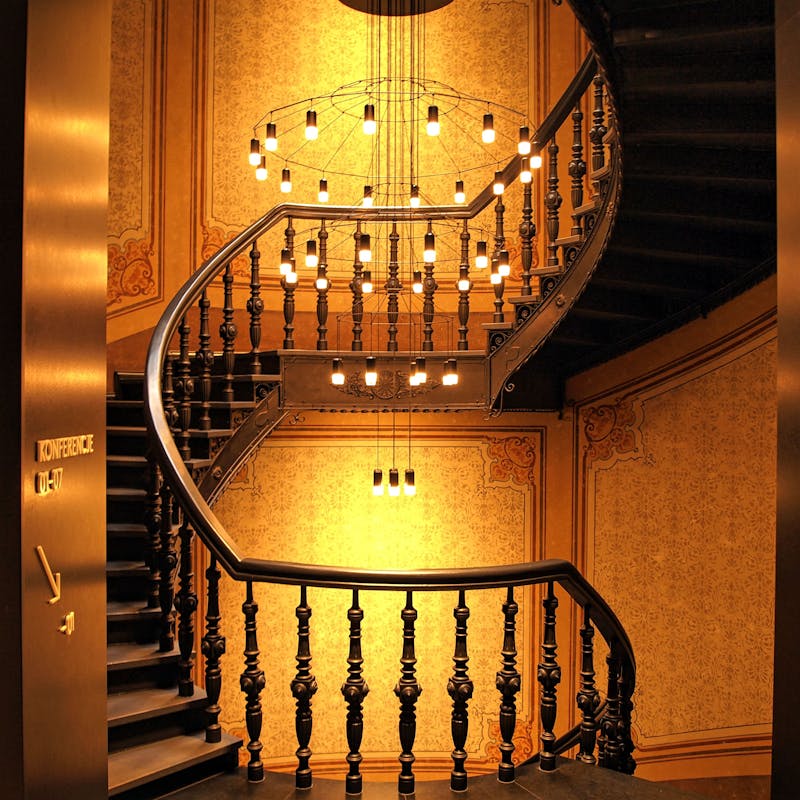
A staircase—especially an exterior one—does the opposite. It creates a pocket. It slows people down. You step carefully, you look where you’re going, you pause. Under it, the air feels slightly different, as if the building is holding its breath.
That pause is everything.
A neighbor leaning against the railing to finish a phone call isn’t trying to start a community. The kid sitting on the lowest step tying a shoe isn’t hosting a gathering. But these moments accumulate. They stack, day after day, until the staircase becomes a kind of informal bulletin board—one made of voices and glances instead of paper.
You begin to recognize patterns. The dog that always hesitates at the first step. The older man who carries groceries one bag at a time, refusing help until the third trip. The teenager who pretends not to notice anyone but never misses a beat when returning a greeting.
Belonging often arrives that way: not as a grand welcome, but as repetition.
How a neighborhood learns its own soundtrack
The “songs” are rarely performances. They’re fragments—choruses that drift out of open windows, radio stations bleeding through thin walls, someone practicing guitar and stopping every time they hit the same wrong note.
Under the staircase, those sounds gather.
In some buildings, the acoustics turn the space into a modest amplifier. A laugh bounces off brick. A whistle finds an echo. A phone speaker, tinny and too loud, becomes communal whether anyone asked for it or not.
Over time, a neighborhood develops a soundtrack that has little to do with taste and everything to do with proximity. You might not choose the music your neighbor plays while cooking, but you’ll start to associate it with the hour of the day when the light goes amber and the street smells like dinner.
You might not love the oldies station drifting from the second-floor window, yet it becomes oddly comforting—proof that someone is home, that the building isn’t just a container for private lives but a living thing with shared rhythms.
And every so often, the songs become literal.
A birthday candle gets blown out on the steps because the apartment is too crowded. A small group sings softly, not wanting to make it a spectacle. A kid learning a school concert piece practices under the staircase because it’s the one spot where the sound feels safe.
Nobody applauds. Nobody needs to. The song does its work anyway.
The rituals nobody schedules
Quiet rituals aren’t the same as events. Events require planning, invitations, and the soft pressure to show up.
Rituals happen whether you show up or not.
There’s the morning exchange: two neighbors who don’t know each other’s last names but trade the same greeting every day. It’s brief, almost mechanical, and yet it stitches the day together. If one of them isn’t there, the absence registers like a missing step.
There’s the unspoken rule about packages. Somebody tucks deliveries under the staircase where they’re less visible from the street, not as a heroic act but as a matter of habit. Later, the recipient finds the box and feels an unexpected, wordless gratitude toward a person they may not even be able to identify.
There’s the seasonal shift, too. In summer, someone drags a folding chair outside and sits under the stairs to catch shade. In winter, the same spot becomes a windbreak where people stamp snow off their boots. The staircase witnesses the year like a calendar made of small weather-related decisions.
These rituals don’t look like “community” in the way people talk about it at meetings. They look like life being managed thoughtfully.
And that’s what they are: a collective decision, made unconsciously, to soften the world for one another.
Small scenes that carry big meaning
Picture a late afternoon when the sky can’t decide whether to rain.
A neighbor stands under the staircase holding a bag of takeout, fumbling for keys. Another neighbor comes in behind them, arms full of laundry. They don’t have time for a conversation. Still, there’s a moment—an instinctive shift to make space, a quick “go ahead,” a shared sigh about the humidity.
It lasts ten seconds.
But those ten seconds are the neighborhood doing its quiet work.
Or consider the kid who’s been told to stay close to home. The staircase becomes a boundary line that still feels like freedom. They sit with a notebook, drawing crooked superheroes, watching the street like it’s a movie. Adults pass by and glance down, not suspiciously but attentively. Not monitoring, exactly—more like keeping the thread unbroken.
That’s what a lot of neighborhoods run on: casual watchfulness. The kind that doesn’t announce itself as safety but ends up being it.
Even conflict fits into this.
Under a staircase, arguments tend to get smaller. Not because people are better behaved, but because the space itself discourages theater. It’s too intimate for a big blowup, too public for cruel words. You can talk, you can vent, but you can’t fully perform.
The architecture nudges people toward repair.
The hidden economy of favors
In many places, money isn’t the only currency. Favors circulate quietly.
Someone lends a screwdriver. Someone else carries a stroller up the steps. A neighbor watches a kid for five minutes while a parent runs back inside to grab a forgotten backpack.
None of these acts are dramatic. In fact, the more a neighborhood depends on them, the more invisible they become.
Under the staircase, favors are exchanged in plain sight. You see who shows up. You see who doesn’t. You learn, without formal agreements, where reliability lives.
This matters more than people like to admit.
In a world that increasingly pushes us toward self-sufficiency—order online, work remotely, avoid inconvenience—the subtle economy of neighborhood life offers something different. It says: you don’t have to do everything alone. Not because someone is rescuing you, but because you’re part of a web that makes the hard parts lighter.
And it doesn’t require perfect closeness. It doesn’t demand that everyone become friends.
It only requires a shared willingness to notice.
When quiet rituals get disrupted
You feel the importance of these rituals most clearly when they’re interrupted.
A staircase gets renovated, fenced off, wrapped in plastic. The under-stair space disappears, and suddenly the casual pauses don’t have a place to land. People move faster. Conversations shrink. Eye contact becomes optional again.
Or the building changes hands. New tenants arrive with different schedules, different assumptions about privacy, different tolerances for noise. The old rituals don’t vanish overnight, but they wobble. The soundtrack changes. The familiar faces become less predictable.
Sometimes the disruption is more subtle: a neighbor who used to sit outside stops coming down. The dog that always barked once and then wagged its tail is gone. Someone you didn’t realize you depended on has moved away, and the staircase feels oddly empty.
Grief in a neighborhood is often like that. It shows up as silence where there used to be sound.
But neighborhoods also adapt.
A new person takes the old person’s spot—not as a replacement, but as a continuation. A different song drifts through the air. A new habit forms: someone starts leaving a small plant near the steps, and soon it becomes part of the scenery, tended by more than one pair of hands.
The rituals evolve, not by committee, but by living.
What these rituals ask of us
Quiet rituals don’t demand that we become extroverts. They don’t require constant friendliness or forced togetherness.
They ask for something simpler and, in its own way, harder: presence.
Presence means looking up from your phone long enough to see the person holding the door. It means learning the rhythm of your building and not treating it like a hotel. It means understanding that small spaces—the underside of a staircase, the strip of sidewalk in front of your door—can carry communal weight.
Presence also means allowing yourself to be known in tiny ways.
Not with big disclosures, but with consistent signals: the same hello, the same wave, the same patience when someone is moving slowly. Over time, these signals become a language. They tell others, “You’re not alone here.”
And maybe, quietly, they tell you the same thing.
A reflective ending beneath the steps
If you want to understand a neighborhood, don’t start with its headline features. Don’t begin with the best coffee shop or the newest development or the complaint that gets the most traction.
Stand near the staircase when people are coming home.
Listen to the soft choreography: keys, footsteps, brief greetings, a song leaking from somewhere above. Watch the way strangers share space without negotiating it out loud. Notice the tiny repairs people make to one another’s day.
It won’t look like a movement. It won’t look like a plan.
It will look like almost nothing.
And yet, beneath that staircase, you can hear the neighborhood holding itself together—one quiet ritual at a time.