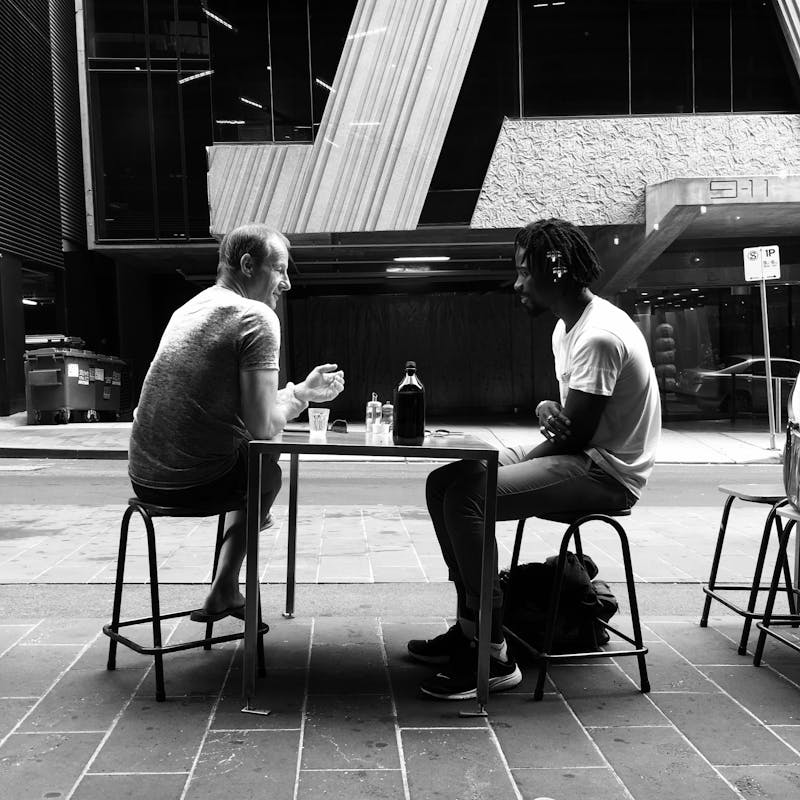
Sometimes the biggest changes arrive without a marching band.
The revolutions that don’t announce themselves
Most people can recognize a revolution when it’s loud—when streets fill, slogans sharpen, and the news can’t look away.
But the revolutions reshaping daily life often move like groundwater. You notice the shift later, when the floor feels different under your feet and you can’t remember exactly when it happened.
These quieter revolutions don’t always have heroes or villains. They’re made of small decisions repeated at scale: how we work, who we trust, what we share, where we gather, and what we expect from one another.
In a way, they’re revolutions of arrangement. Not necessarily changing human nature, but changing the containers we live inside.
The new neighborhood is a schedule
A century ago, “community” was frequently a place. It was bounded by geography, reinforced by routine, and maintained through repetition.
Today, community is just as likely to be a calendar. It’s the Thursday video call with friends from three cities, the group chat that lights up during a game, the coworking space you drop into twice a week.
This isn’t inherently worse. It’s different.
Place-based belonging can be deep, but it can also be restrictive. Schedule-based belonging can be flexible, but it can also be fragile.
When your “neighbors” are people you see through screens or in rotating spaces, the ties can become optional in a way that physical proximity never allowed. If something gets awkward, you don’t have to walk past it on the way to the mailbox.
The quiet revolution here is not technology itself. It’s the shift in what we consider normal: relationships that persist without shared streets, and shared streets that don’t necessarily create relationships.
Work stopped being a location—and started being a mood
The modern workplace used to provide more than a paycheck. It offered structure, casual companionship, an identity you could shorthand at a party.
As work has become more distributed and more digital, it’s also become more psychological. People talk about “bandwidth” and “energy” as much as tasks.
In the best cases, this is an overdue honesty. The old model often demanded performance: commuting while exhausted, pretending focus in a cubicle, measuring seriousness by how late your car remained in a parking lot.
In the worst cases, work seeps into everything. The same device that holds family photos holds the Monday morning meeting. The same room that hosts rest hosts metrics.
That changes how we live together. When households become offices, relationships inherit new negotiations: who gets quiet, who gets space, who absorbs interruptions.
Even friendships shift. Instead of venting about a boss in a break room, you might type a sentence into a chat and delete it. Or you might say nothing at all, because there is no shared in-between space where talk can wander.
The revolution is subtle: we’re learning to build boundaries without the physical boundaries that once built them for us.
Trust is being rewired in public
Trust used to accumulate slowly, like varnish. You’d watch a person over time and decide whether they were steady.
Now trust is often mediated by systems: ratings, reviews, verification badges, background checks, social proof. A stranger with five stars might feel safer than a neighbor you’ve never spoken to.
This has practical benefits. It can reduce risk and expand access.
But it also trains us to outsource judgment. We lean on platforms to do what communities once did through observation and accountability.
At the same time, public trust has grown more brittle. When information arrives in floods, suspicion becomes a coping strategy.
That brittleness shows up in everyday interactions: the tense pause when someone brings up the news, the way conversations skate around topics that might break the social surface.
Living together requires a minimum of shared reality. The quiet revolution is the struggle to maintain it without feeling coerced into it.
The rise of micro-care and the decline of default care
For generations, default care was often built into family structure and local culture. It wasn’t always fair, and it wasn’t always kind, but it was expected.
Now, care is being renegotiated—sometimes expanded, sometimes narrowed.
You see it in how people talk about boundaries and burnout. You see it in mutual aid groups that form after a crisis. You see it in friends who share childcare in creative rotations, and in adult children coordinating elder care across states.
At its best, this renegotiation is liberating. People are less willing to accept roles they never chose.
At its hardest, it exposes what the old expectations once covered: a lack of public infrastructure, the cost of healthcare, the scarcity of time.
The result is micro-care—small, intentional acts that require planning. A meal dropped at a doorstep. A fundraiser shared among friends. A scheduled check-in.
Micro-care can be tender. It can also be exhausting, because it demands constant intention.
We are becoming a society where care increasingly has to be designed rather than assumed.
Privacy became a shared resource
Privacy isn’t just individual anymore. It’s communal.
If one person in a friend group tags photos, everyone’s location history gets more legible. If a family member posts a child’s image, that child’s digital footprint begins before consent is possible.
Households now have privacy negotiations the way they once had chore negotiations. Some are explicit—rules about cameras, devices, and sharing.
Most are implicit. A partner glances at a screen and learns something they weren’t meant to know. A smart speaker sits in a living room like furniture, quietly changing what “private conversation” means.
This affects how we live together because privacy is one of the foundations of intimacy. It gives people room to be imperfect offstage.
When the offstage shrinks, people can become more performative—or more guarded.
The quiet revolution is learning how to protect one another’s privacy without turning relationships into contracts.
The public square is now a patchwork
There was a time when many towns had a small set of shared spaces: a library, a local diner, a few parks, a school auditorium.
Those spaces still exist, but the “public square” has become a patchwork of semi-public zones.
Some are digital. Some are commercial. Many require a purchase or a membership, even if the cost is subtle—attention, data, or the feeling that you should belong to a certain aesthetic.
You can see this patchwork in the modern weekend. People drift between coffee shops, gyms, group fitness studios, farmers markets, and online communities.
This can be vibrant. It can also be isolating.
When public life becomes fragmented, it’s harder to meet across difference. You bump into people who share your taste and your schedule.
The quiet revolution is the slow substitution of common space with curated space—and the social consequences that follow.
Identity became both freer and more demanding
One of the most meaningful shifts of recent decades is that more people can name themselves on their own terms.
That freedom matters. It can be lifesaving.
But there is also a new pressure: to continually articulate identity, to place yourself in the right language, to signal membership in a way that will be interpreted correctly.
This plays out at dinner tables and in workplaces, in classrooms and online profiles.
Sometimes it creates empathy. Sometimes it creates fatigue.
Living together requires a tolerance for complexity: the willingness to let people be inconsistent, in process, occasionally wrong.
The quiet revolution is the expanding expectation that we must understand each other quickly, even as identity becomes more nuanced and personal.
The family unit is quietly diversifying
Family used to be described as if it had one primary shape.
In reality, it always came in variants—extended households, blended families, informal guardianship, chosen kin.
What’s changing is visibility and legitimacy. More people openly build support networks outside traditional templates.
Friends become emergency contacts. Roommates become long-term partners in stability. Co-parents coordinate without romance. Grandparents raise children while parents work.
This diversification is practical, not just ideological. Housing costs, mobility, childcare, and longevity all push people toward new arrangements.
It also changes the emotional logic of living together. Commitment is less assumed and more negotiated.
That negotiation can deepen bonds, because it makes them conscious. It can also make them feel conditional.
The quiet revolution is that “home” is increasingly a structure we design, not merely inherit.
Small scenes from a shifting world
A young couple eats dinner while one person answers messages from three time zones. They laugh, but the phone stays on the table.
A retired neighbor joins a local walking group because the old social ties dissolved when longtime friends moved closer to their kids.
A parent hesitates before posting a photo, thinking about future privacy, then sends it to a smaller group instead.
A group of coworkers who rarely meet in person plan a yearly retreat with the seriousness of a holiday.
These are not dramatic scenes. That’s the point.
The revolutions are quiet because they’re made of ordinary moments—moments that accumulate until the culture shifts.
What we might owe each other now
If the old forms of togetherness are thinning, it raises a difficult question: what replaces them?
Not grand ideologies. Not forced unity.
Something smaller, steadier, and more deliberate.
We might owe each other clearer boundaries, expressed without cruelty. We might owe each other the patience to stay present when conversations get complicated. We might owe each other better-designed public spaces, both online and off.
And we might owe ourselves the recognition that loneliness is not always a personal failure. Sometimes it’s an architectural problem—a mismatch between human needs and the systems surrounding us.
The quiet revolutions reshaping how we live together are not finished. They are still being written in apartment leases, in workplace policies, in the design of apps, in the habits of families, in the courage of people who keep reaching out.
If you listen closely, you can hear them in the everyday: a new etiquette forming, a new kind of neighborhood taking shape, a new definition of belonging—less inherited, more chosen, and still very much up for negotiation.