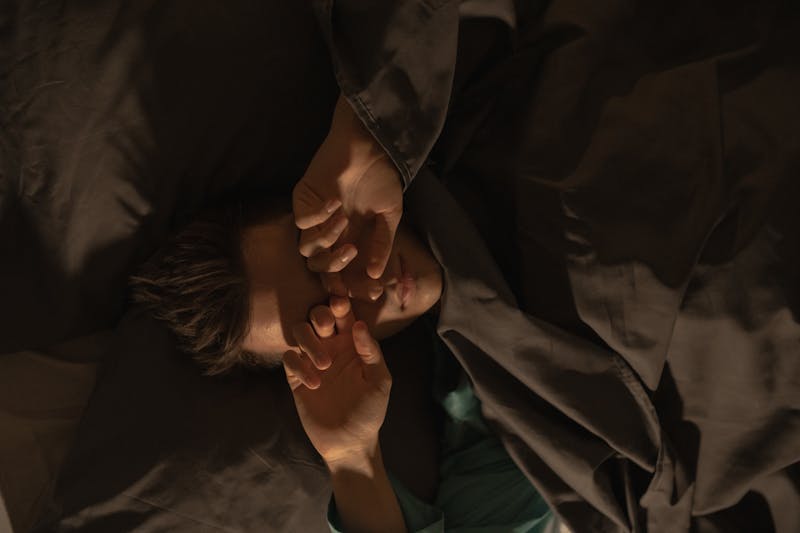
Night makes everything louder—the clock, your thoughts, and the pressure to finally fall asleep.
Sleep is supposed to be the day’s soft landing, yet for many people it becomes a performance with stakes that feel absurdly high. Sleep anxiety is that tense, anticipatory worry around going to bed or not sleeping “well enough,” often paired with physical restlessness and a racing mind. Understanding why it tends to worsen at night can make it feel less mysterious—and can point you toward gentler, more effective ways to respond.
Why sleep anxiety feels worse after dark
At night, your world gets smaller. Emails slow down, other people become less available, and distractions thin out. What’s left is you, a quiet room, and the expectation that you should be able to drift off. That pressure turns bedtime into a test.
There’s also a practical reality: sleep is time-sensitive. If you glance at the clock and see 12:47 a.m., you can immediately calculate the consequences. That math—“If I fall asleep now, I’ll get five hours”—invites urgency, and urgency is the opposite of what sleep requires.
What makes sleep anxiety different from everyday worry?
Sleep anxiety is worry that’s tied to a specific biological process you can’t force. You can work harder at a project or rehearse for a presentation, but you can’t muscle your way into sleep without creating more arousal.
That’s why it can feel so frustrating: the very strategies that help in daylight (problem-solving, planning, controlling variables) can backfire at night. You may start scanning for “signs” of sleep—heavy eyelids, slower thoughts—and the monitoring itself keeps your brain alert.
The brain’s nighttime shift: fewer distractions, more rumination
Daytime worry often has an outlet. You can talk to someone, take a walk, or get absorbed in tasks. Night removes those buffers, and the mind can default to rumination—repetitive loops about the past or hypothetical futures.
Many people notice a particular flavor of thinking after dark: unresolved conversations replayed in high definition, worries about health or work expanding in size, or a sudden urge to “fix” life. This isn’t a moral failing or a sign you’re broken. It’s a predictable response to stillness plus a brain that’s learned bedtime is a place where thinking happens.
Hyperarousal: when your body treats bedtime like a threat
A central mechanism in sleep problems is hyperarousal, a state where your nervous system stays activated when it’s meant to downshift. If you’ve had a few rough nights, your body can start associating the bed with struggle.
Then bedtime cues—getting under the covers, turning off lights—trigger alertness rather than relaxation. You might feel a faster heart rate, shallow breathing, muscle tension, or a wave of dread. The body is essentially saying, “Pay attention,” even though the real need is to let go.
The clock-checking trap and the “I must sleep” rule
Few habits intensify nighttime worry like checking the time. The clock becomes a scoreboard, and each look can spike adrenaline: you’re reminded that sleep is not happening, and you start negotiating with tomorrow.
Alongside that is a rigid internal rule: “I must get eight hours” or “If I don’t sleep, tomorrow will be ruined.” Sleep is important, but these rules create catastrophic stakes. The result is a cycle: fear of consequences fuels arousal, arousal blocks sleep, and the poor night “proves” the fear.
A more accurate statement is often quieter: “I function better with good sleep, but I can still get through a tired day.” That realism takes oxygen away from the panic.
Stress, hormones, and why nights amplify vulnerability
Even if your daytime stress seems manageable, it can show up at night because your coping resources are depleted. Decision fatigue, social strain, and constant stimulation can leave your nervous system primed.
Some people are also more sensitive to internal sensations in the dark. A skipped heartbeat, a warm flush, or a brief dizzy feeling can become a focus point, especially for those with panic tendencies. When the room is quiet, the body becomes the loudest thing to listen to.
Substances matter here too. Late caffeine, alcohol used as a sedative, or certain medications can fragment sleep and increase nighttime awakenings—moments when anxious thinking rushes in because consciousness has returned.
Rebuilding safety at bedtime without turning sleep into a project
The goal isn’t to “win” sleep. It’s to reduce the struggle so sleep has space to arrive.
Start by treating wakefulness as normal rather than dangerous. If you’re awake for a while, consider getting out of bed briefly and doing something dim and boring—reading a familiar book, folding laundry, listening to a calm podcast at low volume—then returning when sleepiness shows up. This helps retrain the bed as a cue for sleep rather than effort.
Light matters more than most people expect. Bright screens and overhead LEDs can push your brain toward daytime mode. Softer lighting in the last hour can support the natural wind-down without requiring a perfect routine.
Most importantly, shift from control to permission. Instead of chasing sleep, aim for conditions that make rest more likely: a consistent wake time, a bedroom that feels neutral (not like a battleground), and a mindset that allows a “good enough” night.
When to seek help for sleep anxiety
If sleep problems persist for weeks, affect your mood, or lead to dread around bedtime, professional support can be transformative. Cognitive behavioral therapy for insomnia (CBT-I) is a structured, evidence-based approach that targets the thoughts, habits, and physiological arousal that keep the cycle going. If anxiety or panic is a bigger umbrella issue, therapy can address the underlying patterns while also working on sleep.
The quieter truth about nights
Night doesn’t create your worries from nothing; it concentrates them. In the dark, the mind tries to protect you by staying vigilant, even when vigilance isn’t useful. When you recognize that pattern, you can respond with less fear and more skill.
And sometimes the most sleep-friendly thought is also the most humane: tonight might be imperfect, but you don’t have to fight it. Rest is still possible—even if it arrives in pieces.