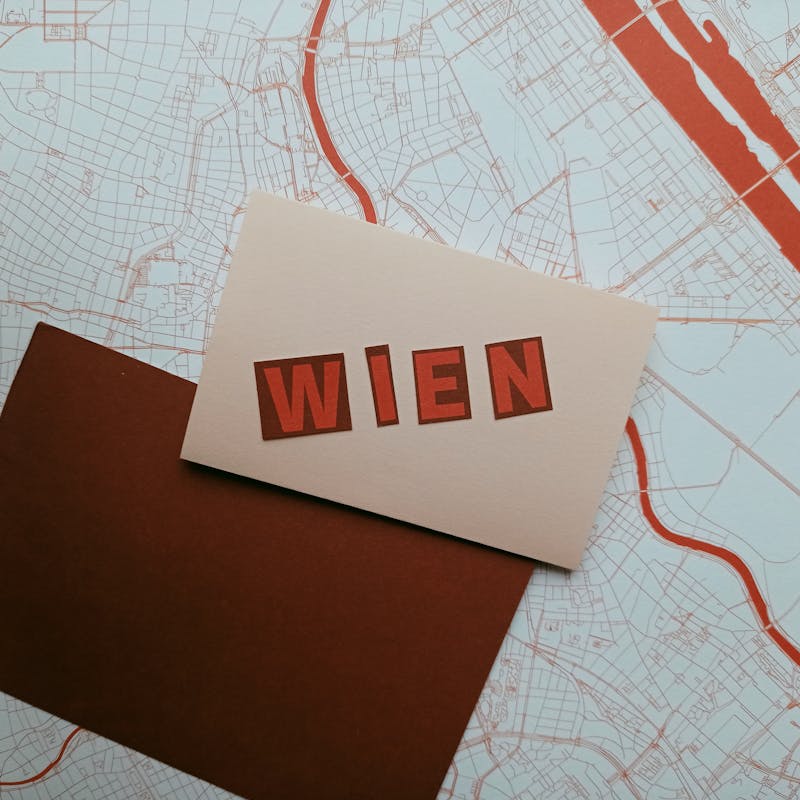
A paper map is a promise that gets creased by living.
There’s a particular sound a well-used map makes when you unfold it—less a crisp snap than a soft, tired exhale.
The folds remember what your memory won’t: the hurry at a gas station, the elbow on a picnic table, the way wind worries at the corners while you pretend you aren’t lost.
And sometimes that map isn’t even yours.
The quiet intimacy of secondhand directions
A map pulled from a thrift-store book or found in a borrowed glove compartment carries a strange intimacy.
It’s not like inheriting jewelry or furniture, objects that announce themselves as heirlooms.
A map is modest, practical, and slightly embarrassing in an age of glowing turn-by-turn instructions.
Yet when it’s folded into a worn pocket—softened by sweat, weather, and time—it becomes a kind of diary without words.
The creases mark choices. The stains tell you where the day got long. A rip repaired with tape suggests someone once insisted, stubbornly, that this thing was still useful.
You hold it and, without trying, you start to imagine the hands that held it before.
Summers that linger in paper fibers
Summer has its own texture: sunscreen, lake water, dust from a gravel turnout.
A map that’s traveled in July and August tends to collect those textures in subtle ways.
It might be speckled from a strawberry eaten too fast. It might smell faintly of pine if it sat open on the dashboard while someone argued about whether to take the scenic route.
The romance of it isn’t in the accuracy.
It’s in the fact that someone once trusted this rectangle of paper to translate the world into something manageable.
When you find a map already worn, you inherit not just a route but the residue of a season.
Other people’s summers aren’t transferable in any literal way. You can’t put on their nostalgia like a jacket.
But a used map comes close, offering a physical reminder that the world has been navigated—happily, clumsily, hopefully—by countless strangers.
The language of circles, stars, and underlines
There are people who can’t look at a map without marking it.
A pen appears, and suddenly the clean geometry becomes personal.
A shaky circle around a beach. A star beside a diner with “best pie” written in the margin. An underline beneath a town name that means nothing to you but clearly meant something to someone.
These marks are small acts of confidence.
They say: this mattered enough to remember. This was worth pointing to.
Sometimes the annotations are practical—“closed Mondays,” “watch for elk,” “steep grade.”
Sometimes they’re tender in a way that feels almost intrusive to read: “first night,” “sunset here,” “don’t tell Mom.”
You can’t know the whole story, and that’s part of the pull.
A map invites speculation while refusing to confirm it.
Getting lost on purpose, and the courage it takes
Digital maps have made getting lost feel like a mistake rather than a possibility.
The blue dot is always there, patient and judgmental.
A paper map doesn’t chastise you in real time. It simply waits.
You can stand at a fork in the road with nothing but your sense of direction and a guess about scale.
That’s not just quaint; it’s psychologically different.
With paper, you’re forced to hold the whole landscape at once.
You see the river you might follow, the mountain range that could slow you down, the long white space that means “probably nothing here.”
You make decisions with incomplete information, like you do in the rest of life.
And when the map is secondhand, the experience deepens.
Somebody else’s fold patterns hint at the choices they made before you.
Maybe they avoided the highway. Maybe they kept returning to the same coastal stretch, wearing out that section until it thinned.
You can follow their habits or resist them, but either way you’re in conversation with an unknown traveler.
The pocket as a kind of archive
A worn pocket is not a neutral container.
It’s a place where objects become familiar through friction: coins that smooth down, keys that polish a hole, a map that conforms to the curve of a hip.
To carry a map in your pocket is to keep the possibility of elsewhere pressed against your body.
It’s private in a way a phone isn’t.
A phone announces itself with light and sound, always part of a network.
A map is silent, offline, and stubbornly physical.
Pulling it out feels like admitting you don’t know everything.
Folding it back up—never quite the way it was originally—feels like acknowledging that knowledge is always temporary.
When the map belonged to someone else, that pocket archive becomes layered.
Your lint mixes with their creases.
Your sweat softens paper already softened by another summer.
You’re not just using an object; you’re adding yourself to it.
The ethics of nostalgia you didn’t earn
There’s a risk in romanticizing artifacts that aren’t yours.
Other people’s summers can become props if you treat them as aesthetic rather than lived.
A stranger’s handwriting can look poetic when you don’t have to carry the consequences.
The charm of a circled motel can eclipse the reality that the motel might have been chosen because it was cheap, because there was nowhere else, because someone needed a place to stop crying.
A worn map can tempt you into a curated nostalgia—one that picks only the golden parts.
But the best way to honor a secondhand map is not to pretend you’ve inherited the feelings attached to it.
It’s to respect the fact that you haven’t.
The map becomes meaningful not by borrowing someone’s story, but by reminding you that your own story is one among many.
That humility is rare and valuable.
Small scenes: a glove box, a ferry line, a late afternoon
Picture the map in a glove box under insurance papers, its edges curled like dried leaves.
Someone pulls it out while waiting in a ferry line, the car idling, the air thick with sunscreen.
They spread it across their lap, and a gust from the open window lifts a corner.
They press it down with a forearm, squinting at tiny print.
A passenger points, and the driver nods as if the act of pointing is enough to make the route certain.
Now imagine that same map months later.
It’s at the bottom of a donated backpack, or slipped between pages of a used travel book, or forgotten in a rental cabin drawer.
You find it on a dull day when you weren’t looking for anything romantic.
You unfold it, and for a moment the room feels larger.
Not because you’re suddenly transported into someone else’s vacation, but because you’re reminded the world keeps offering more than your current coordinates.
What paper maps teach that screens don’t
Screens excel at immediacy.
They are ruthless about the next step.
Turn left in 300 feet. Merge. Recalculate.
A paper map cares about the relationship between places.
It asks you to consider distance, terrain, time, and your own tolerance for uncertainty.
It encourages daydreaming: If we cut through here, what would we see?
It also quietly teaches patience.
You have to stop to read it. You have to admit you might be wrong.
And when it’s marked by someone else, it teaches another kind of patience: the willingness to let mysteries remain.
You won’t know who wrote “watch the tide” or why a certain overlook is circled twice.
You can be curious without becoming entitled.
That’s a skill, too.
The map as a collaborative object
A used map often looks like a collaboration across time.
One person’s handwriting intersects with another’s.
A route highlighted in yellow is later crossed out in blue.
A margin note is smudged by rain, then rewritten more clearly.
You start to see how travel is rarely solitary, even when you go alone.
We rely on what others have learned—where to stop, what to avoid, which road is prettier even if it takes longer.
Sometimes that knowledge is passed down directly, through recommendations.
Sometimes it’s passed down accidentally, through a map forgotten in a pocket.
In both cases, it’s a form of community built from small, practical kindnesses.
Folding the world back up
There’s a ritual to refolding a paper map, especially one that resists.
The creases don’t obey you; they insist on their old logic.
You try to impose neatness, but the paper drifts toward the shape it already knows.
That’s the most honest metaphor in the whole experience.
We like to think we can organize life into clean panels, return everything to its original order after we’ve used it.
But lived experience creates its own folds.
A summer changes you in ways you can’t flatten out.
So does reading the traces of someone else’s summer and realizing that their days—ordinary, vivid, maybe difficult—were real in the same way yours are.
In the end, the map goes back into the pocket.
Not as a relic, not as a trophy, but as a companion to uncertainty.
And maybe that’s why these maps feel so loaded with emotion: they’re proof that the world is bigger than our plans, and that other people have wandered through it with their own hopes, stopping to circle places that mattered to them.
You don’t carry their summer.
You carry the evidence that it happened—and the invitation to have your own.