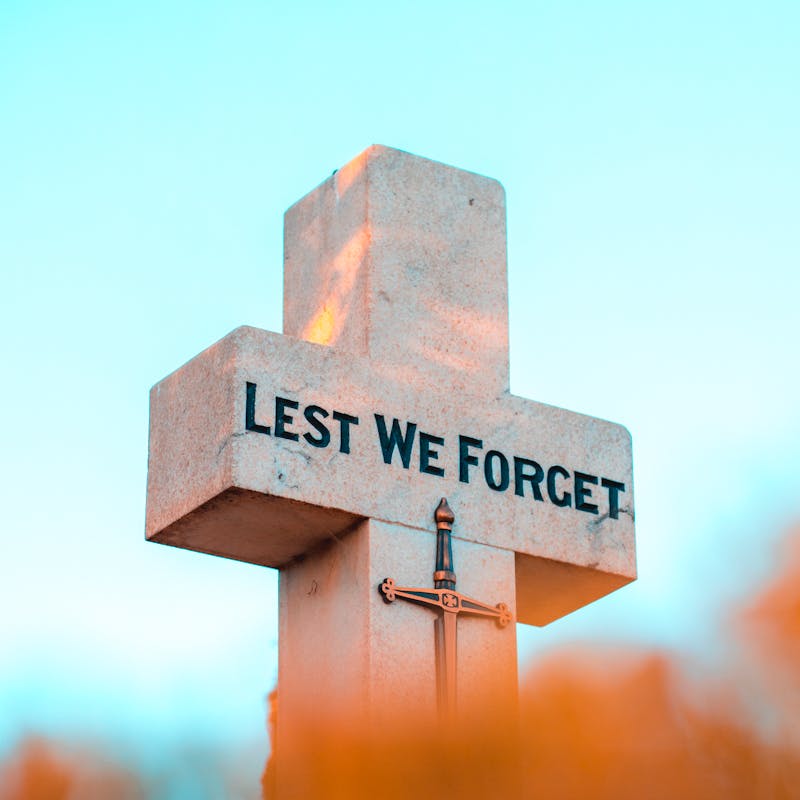
The past doesn’t stay behind us; it keeps its hands on the steering wheel.
Some days, the influence is loud—a familiar song that drops you into a year you thought you’d outgrown. Other days it’s quiet, almost polite, like a preference you can’t explain or a habit you defend without knowing why.
We like to imagine we’re self-made in the present tense, built from fresh choices and clear intentions. But our lives are stitched together with older material: phrases we inherited, fears we learned, loyalties we never consciously signed up for.
The strange part is how ordinary it feels. We call it “personality” or “just how I am,” and rarely stop to ask what’s underneath.
The Everyday Evidence We Ignore
You can see the invisible threads in small moments—how you react when someone interrupts you, how quickly you apologize, how hard you push yourself when nobody is watching.
In a meeting, one person speaks with calm certainty, even when they don’t have the answer. Another hedges every point, cushioning it with qualifiers. These aren’t simply communication styles; they’re often echoes of earlier environments. A childhood where certainty was rewarded. A home where being wrong carried a cost.
Even our sense of what “normal” looks like has a history. A messy kitchen might feel like freedom to one person and danger to another. A quiet room might feel peaceful, or it might feel like the calm right before someone gets angry.
We don’t all carry the same memories, but we all carry some—and they shape how we interpret the present.
Memory Is Not a Storage Unit
We tend to picture memory like a box of files: one event, one folder, one accurate record. But memory is more like a living draft.
It changes as we change.
A story you once told as a funny mishap might later feel like a warning sign you missed. A strict teacher you resented might, years later, look like the first adult who truly noticed you. The event didn’t change, but the meaning did—and meaning is the part that keeps tugging on the thread.
This isn’t just about nostalgia or regret. It’s about the quiet ways our brains keep updating our past to match our current beliefs. When we’re thriving, we edit old hardships into evidence of resilience. When we’re stuck, we interpret the same moments as proof that nothing ever works out.
The past is not only what happened. It’s what we decided it meant.
The Stories We Live Inside
If you listen carefully to how people talk about their lives, you can hear the scripts.
“I’m the responsible one.”
“I always mess things up.”
“I’m not someone who needs help.”
These aren’t just self-descriptions; they’re roles. Many of us learned them early, in families, schools, communities, or friendships where certain parts of us were welcomed and others were inconvenient.
A kid who got praise for being “mature” may grow into an adult who can’t rest without guilt. A kid who learned that anger was dangerous may become an adult who can’t advocate for themselves without shaking.
The scripts are sticky because they once worked. They helped us belong, avoid conflict, win approval, or feel safe.
But the world changes, and we often keep running the same program long after the original problem has disappeared.
Inheritance That Doesn’t Show Up on Paper
We inherit more than objects and genetics. We inherit coping strategies.
Some families pass down the art of not talking about anything that hurts. The silence becomes a family language, taught through glances and subject changes. In other families, emotional intensity is the norm, and calm conversation feels unfamiliar—almost suspicious.
We also inherit thresholds: what counts as “success,” what counts as “lazy,” what counts as “respect.” Those standards can become internal judges that follow us from one stage of life to the next.
Sometimes the inheritance is a gift—humor in hard times, devotion to community, a knack for hospitality. Sometimes it’s a burden—scarcity thinking that turns every purchase into a moral decision, or distrust that makes intimacy feel like a trap.
What makes it complicated is that inherited patterns can be both. A tough-minded resilience can help you survive, and later keep you from admitting you’re tired.
The Body Keeps Its Own History
Not all memory is verbal.
You can “know” you’re safe and still feel your chest tighten when someone raises their voice. You can logically understand that a mistake won’t ruin your life and still feel an urge to hide.
That’s not weakness; it’s history stored in the nervous system.
Over time, the body becomes a prediction machine. It learns what tends to happen next and prepares accordingly—sometimes accurately, sometimes not. A person who grew up walking on eggshells may become exquisitely sensitive to shifts in tone. That sensitivity can look like intuition, and sometimes it is. But it can also be an old alarm system ringing in a new building.
This is one reason “just get over it” is such an empty instruction. Getting over something isn’t a switch; it’s often a retraining. It’s learning, through repeated evidence, that the present is not the past.
When the Present Reopens Old Doors
Certain experiences act like keys.
Becoming a parent can reopen childhood, not as a memory but as a mirror. Suddenly you’re negotiating bedtime and realizing you’re using the same phrases you swore you’d never repeat.
Falling in love can do the same. Intimacy brings out old attachment patterns like they’ve been waiting in the wings. The desire to merge, the fear of being left, the impulse to leave first—these reactions often arrive with a sense of urgency that doesn’t match the moment.
Career transitions, illness, moving to a new city, losing someone—big changes tend to pull old material to the surface. Not because life is punishing us, but because uncertainty activates whatever we once used to survive uncertainty.
If you’ve ever wondered why you reacted “too strongly” to something small, it might be because you weren’t only responding to the present event. You were responding to its resemblance.
The Quiet Power of Noticing
There’s a moment that can change everything: the moment you catch yourself mid-pattern.
It might happen in a kitchen argument when you realize you’re not angry about the dishes. You’re angry about feeling unseen. It might happen at work when you notice you’re over-explaining because you expect to be doubted.
Noticing doesn’t instantly fix the pattern, but it creates space around it.
And space is where choice lives.
Without space, we react. With space, we can ask, What am I protecting? What am I trying to prevent? Who taught me this was necessary?
These questions aren’t about blaming the past. They’re about understanding the architecture of the present.
The Difference Between Loyalty and Repetition
Many people repeat patterns not because they want to, but because stopping feels like betrayal.
If your family handled pain by staying busy, slowing down can feel disloyal—as if rest implies judgment. If your community prized toughness, admitting fragility can feel like stepping out of line.
But loyalty doesn’t have to mean repetition.
You can honor where you came from without reenacting every survival strategy that once made sense. You can be grateful for what protected you and still choose something gentler now.
This is one of adulthood’s most delicate tasks: separating love from imitation.
Rewriting Without Erasing
There’s a common fear that if we reinterpret our past, we’re rewriting history. But reflection isn’t erasure; it’s integration.
You can acknowledge that someone did their best and still name what it cost you.
You can appreciate your younger self’s strategies and still recognize they’re outdated.
You can keep the good—resourcefulness, grit, humor—while letting go of the parts that shrink your life.
Rewriting, at its healthiest, is not inventing a new story. It’s telling the same story with more honesty, more context, and more compassion.
The Threads We Choose to Strengthen
Not all invisible threads are traps. Some are lifelines.
A grandparent’s habit of greeting neighbors by name can become your own instinct to build community. A friend who once listened to you with patience can become the model for how you show up for others. A teacher who treated you like you were capable can become the voice you borrow when self-doubt starts talking.
We often focus on the painful inheritances because they demand attention. But there are quieter legacies, too—moments of being understood, skills learned in the background, small kindnesses that formed your sense of what people can be.
The present is not only shaped by what hurt us. It’s also shaped by what helped.
Living With the Past, Not Under It
The goal isn’t to cut every thread.
Some connections to the past are necessary. They root us. They explain us. They give our lives continuity rather than chaos.
The goal is to stop being pulled by threads we never agreed to hold.
That shift can be subtle. It might look like pausing before you people-please. It might look like letting someone be disappointed without rushing to fix it. It might look like allowing yourself to want something without immediately arguing yourself out of it.
It might also look like grief—the honest kind that appears when you realize how long you’ve been living in response to an old fear.
And then, slowly, something else becomes possible: a present that isn’t merely a reenactment.
The invisible threads don’t disappear. But with attention, you can feel which ones are tightening and which ones are guiding.
And in that feeling—quiet, steady, and surprisingly practical—you begin to recognize a different kind of freedom: not freedom from your history, but freedom to live beyond its default settings.