Most days are built from tiny interruptions we barely name.
A city block can feel like a whole biography if you walk it slowly enough. There’s the uneven sidewalk that forces your attention down to your feet, the neighbor who always waves as if you’ve been in each other’s lives longer than you have, the delivery truck idling like a tired animal at the curb. Nothing announces itself as meaningful. And yet the day keeps leaving fingerprints.
Everyday life has a shape, even if it doesn’t look like one. It’s molded by small negotiations—where to step, when to yield, what to say, what to swallow. The glamorous storylines get all the shine, but most of us live in the middle of the frame, where the potholes are literal and the poetry is accidental.
The Street as a Quiet Teacher
Potholes are a kind of civic punctuation. They slow sentences down.
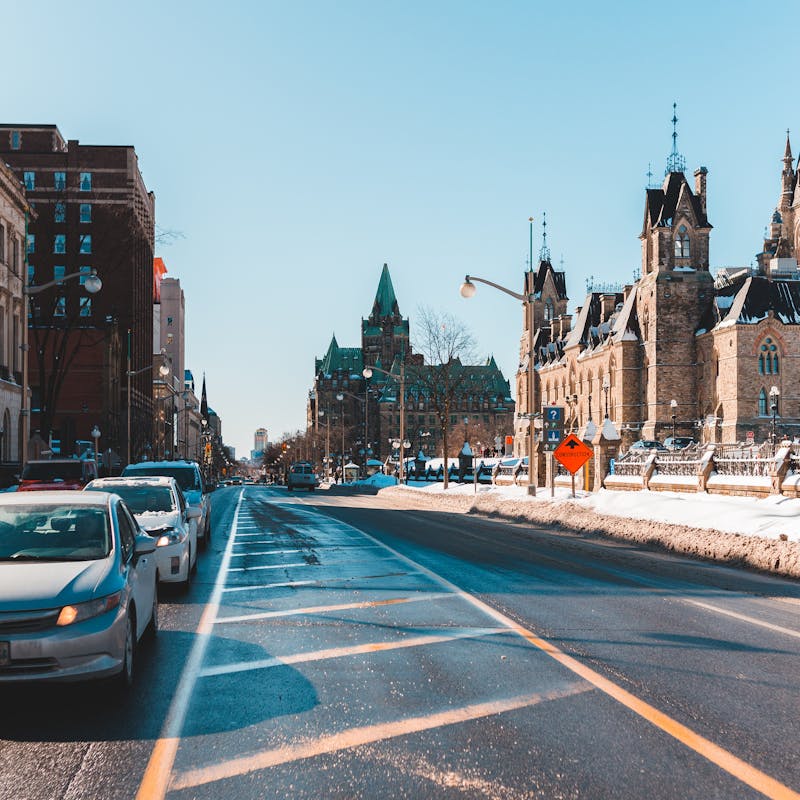
You can tell where a neighborhood has been injured by the way cars drift a few inches left, then right, in choreographed avoidance. Drivers learn the terrain by repetition, the way you learn a friend’s moods. A new pothole changes the rhythm of a whole intersection. People brake earlier. Cyclists choose the longer route. A bus jolts, and suddenly strangers steady themselves on the same metal pole.
There’s something intimate about that shared flinch. It’s a reminder that the world we inhabit isn’t abstract. It has edges and dents. It pushes back.
The pothole also exposes a truth about how we adapt. After a while, you stop noticing the detour you’ve built into your body. Your ankle anticipates the dip. Your shoulders brace before the bump. You become fluent in inconvenience.
People as the Moving Infrastructure
The human part of the city is never finished, either. It repaves itself daily through habit.
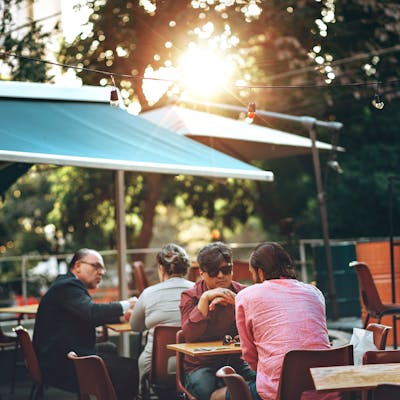
There’s the barista who remembers you take oat milk and doesn’t comment when you switch to drip because you’re rushing. The older man who sits on the same bench each afternoon, watching the dog walkers pass like a slow parade. The teenager practicing skateboard tricks in a parking lot, persistence disguised as play.
These aren’t dramatic relationships, but they do something durable. They make the day feel held.
It’s easy to think community is built only through big gestures, but more often it’s assembled through repetition. The nod that says, “I see you.” The held door that costs nothing but attention. The moment you pick up someone else’s dropped keys without making a production of it.
We talk about cities as if they’re made of concrete and policy. But much of what makes a place livable is the soft labor of people choosing not to be strangers.
The Ordinary as Raw Material
Poetry doesn’t always arrive in a notebook. Sometimes it’s in the way the afternoon light hits the dust on a dashboard.
A person stepping around a pothole can look like a small dance. A child in rain boots finds a puddle and turns it into an event. The bus window frames a woman laughing into her phone, and for a second the whole street seems lighter.
The trick is not that these moments are rare. It’s that they’re easy to miss.
We’re trained to scan life for headline-worthy meaning. But the day’s most honest lines are often unpolished, spoken under the breath. The phrase you catch from a stranger—“I can’t do this again”—and the tenderness of someone replying, “Not alone.” The small comedy of a grocery cart with one wobbly wheel, making a humble argument for patience.
Poetry, in this sense, isn’t a genre. It’s a way of noticing. It’s attention with a pulse.
What the Cracks Reveal
Potholes aren’t just nuisances; they’re clues. They tell a story about stress, weather, neglect, and time.
When asphalt breaks, it’s because water got in, froze, expanded, and pried something open. It’s a simple physics lesson with a social aftertaste. Maintenance is never only technical. It’s also a decision about what gets cared for, and when.
The same is true of people.
You can go a long time without noticing what someone is carrying until a minor bump makes it spill. A missed train, a sharp email, a sick kid, an unexpected bill. The surface holds—until it doesn’t. And then the crack is visible, and we learn what was underneath.
A compassionate city, like a compassionate household, isn’t the one that never breaks. It’s the one that repairs without blaming the broken for being breakable.
The Small Ethics of Getting Through the Day
Everyday life is full of tiny moral choices that don’t feel like morality.
Do you speed past a cyclist because you’re late, or do you wait for the lane to widen? Do you let the stressed cashier go at her pace, or do you stack your impatience on the counter like extra items? Do you step around the pothole and keep going, or do you report it, knowing you might never see the fix?
None of these acts will be remembered by history. But they create a weather system.
When enough people choose care in the small moments, the air changes. The day becomes less sharp. You can feel it on a block where drivers actually stop for pedestrians, where the corner store owner greets kids by name, where someone chalks a hopscotch grid on broken pavement as if to say the damage won’t get the last word.
A Shape You Can Live Inside
If you look closely, the day isn’t formless. It’s a landscape of adjustments.
We learn to step over what’s cracked, to speak to who’s near, to make meaning out of whatever we can carry. We do it again and again, not because we’re heroic, but because life asks for continuity.
And sometimes, without trying, we leave a line of poetry behind.
It might be the way you slow down so an elderly neighbor can cross. It might be the brief pause you take to watch a sparrow splash in a curbside puddle. It might be the decision to fix something small before it becomes a crater.
The shape of everyday life is made from people and potholes, yes. But also from the quiet insistence that what happens in ordinary minutes matters—because those minutes are the ones we actually inhabit.