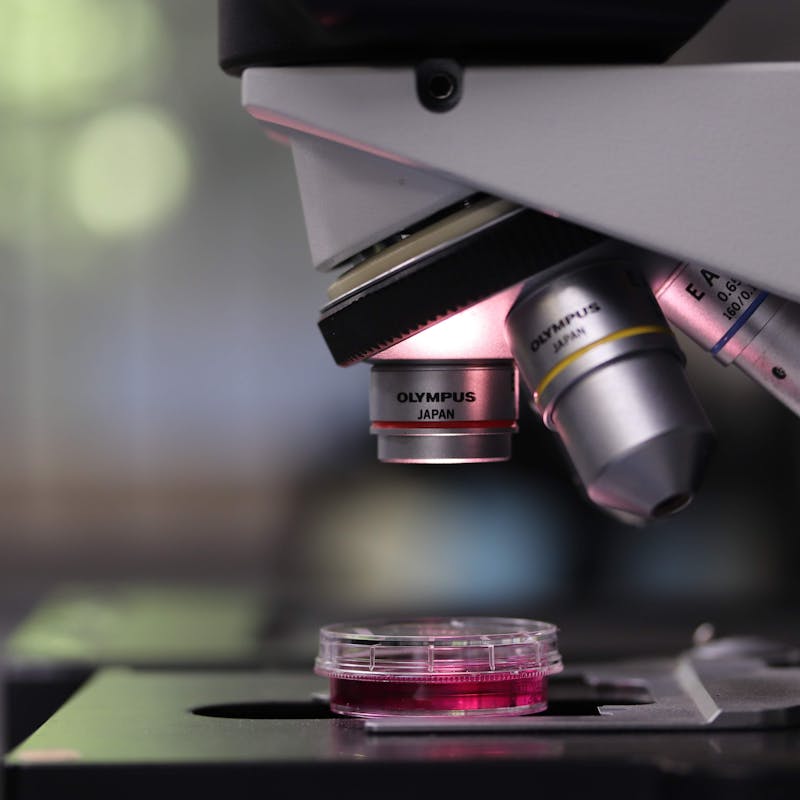
The future of nature is being negotiated under fluorescent lights.
There’s a particular quiet that lives inside a lab at night.
It’s not silence, exactly—more like a controlled hush, punctuated by the soft churn of ventilation and the occasional beep of a machine that refuses to be ignored. In that hush, people in gloves and goggles make small, precise motions that can add up to something immense: a new way of farming, a revived species, a redesigned microbe, a reimagined relationship with the living world.
For most of human history, “nature” has been the backdrop. We adapted to it, fought it, worshipped it, exploited it, and—when we could afford the sentimentality—romanticized it.
Now, in labs scattered across universities, startups, government agencies, and private research institutes, nature is becoming a collaborator. Or a patient. Or an editable draft.
When the Outdoors Becomes an Interface
We used to encounter nature through seasons and weather, through soil on our hands and the stubbornness of pests.
Today, many researchers meet the natural world first as data. A rainforest can arrive in the form of satellite imagery. A coral reef can be translated into heat maps. A population of bees can be reduced to a dataset of movements, temperatures, and viral loads.
This isn’t inherently cold.
In some labs, that translation is an act of attention. Sensors placed in forests can tell the story of drought stress in trees before leaves visibly droop. Acoustic monitoring can detect the return—or the absence—of bird species in places where humans no longer pass through.
But interface changes the relationship. What you can measure starts to feel like what matters.
And what you can control starts to feel like what you should.
The New Promise: Repair, Not Just Restraint
Environmentalism, in its modern form, has often leaned on restraint: consume less, extract less, emit less.
Those are still necessary. Yet in many labs, the moral posture is shifting from restraint toward repair.
Researchers are building microbes that can break down pollutants into less harmful components. They’re refining methods to remove excess nutrients from waterways to limit algal blooms. They’re developing new materials that mimic biological structures, hoping to replace plastic packaging with substances that can safely return to the earth.
The tone here matters.
Repair feels active, even hopeful. It suggests that damage is not only something to regret but something to address. It also invites a dangerous comfort: if repair is possible, perhaps the pressure to prevent harm softens.
In a lab, optimism can be engineered as easily as organisms.
Editing Life and the Question of Permission
Some of the most consequential work involves genetic tools that allow scientists to alter living organisms with unprecedented accuracy.
In practical terms, that can mean crops that require fewer chemical inputs, or trees that might better endure drought. It can mean mosquitoes modified in ways that reduce their ability to spread disease. It can mean bacteria redesigned to produce useful compounds, shifting parts of manufacturing away from fossil fuels.
Every one of these possibilities contains a quiet question: who granted permission?
Nature does not sign consent forms. Ecosystems don’t convene ethics committees.
So humans do what humans always do—we create institutions to approximate permission. There are review boards, regulatory agencies, public comment periods, and layers of oversight.
Yet in practice, the power imbalance remains. The capacity to intervene is concentrated in places with funding, infrastructure, and specialized training.
A lab may be sterile, but its decisions are not isolated. They ripple outward into farms, forests, rivers, and neighborhoods.
Conservation, Reimagined as Engineering
There’s a newer vocabulary around conservation that sounds less like protecting a fragile museum and more like maintaining a complex system.
In some research programs, conservation is becoming a form of engineering: assisted migration for species whose habitats are shifting, captive breeding paired with sophisticated genetic management, habitat restoration guided by models that can simulate future climate conditions.
This can look like humility—an acknowledgment that the world is changing too fast for “leave it alone” to be enough.
It can also look like audacity.
To “manage” an ecosystem implies a kind of mastery. Even the most careful scientists are working with limited knowledge, because ecosystems aren’t machines. They’re histories. They’re relationships. They’re feedback loops that can surprise you after a decade of calm.
The lab’s confidence meets the planet’s unpredictability.
The Strange Intimacy of Synthetic Biology
One of the most intimate shifts is happening at the microbial level.
To redesign microbes is to redesign the unseen engines of life. Microbes ferment food, cycle nutrients, form the foundation of soils, and live inside our bodies. They are both ancient and astonishingly adaptable.
In labs working on synthetic biology, researchers treat cells like programmable units, hoping to coax them into producing medicines, fuels, or biodegradable materials.
The romance of it is easy to feel: instead of digging and drilling, we could grow what we need.
But there’s also a subtle philosophical reversal.
For a long time, the natural world has been described as something separate from the human world, with boundaries that needed defending. Synthetic biology blurs those boundaries. It suggests that “natural” and “made” are not opposites but points along a continuum.
If a yeast strain is redesigned to produce a fragrance compound that once came from rare plants, is that a victory for conservation—or a new kind of extraction, only cleaner and more abstract?
The answer depends on who benefits, who loses, and how the rest of the system responds.
The Lab as a Cultural Space
It’s tempting to imagine laboratories as neutral zones where objective minds pursue truth.
In reality, labs are cultural spaces. They have hierarchies, incentives, politics, and pressures. They are shaped by what gets funded, what gets published, what gets patented, and what gets celebrated.
That matters because the story we tell about “fixing nature” influences which fixes are pursued.
A solution that can be packaged as a product often moves faster than one that requires changing behavior, policy, or economics. A technology that scales quickly may be rewarded even if it introduces new dependencies.
Even language can steer choices.
Calling an ecosystem “resilient” can hide the fact that it’s already suffering. Describing an intervention as “natural” can make it feel safer than it is. Saying “restoration” can suggest a return to a past that may no longer be reachable.
The lab doesn’t just test hypotheses. It produces narratives.
What Happens When Nature Becomes a Design Problem
Design culture has a particular rhythm: identify a problem, prototype a solution, iterate.
When that rhythm enters environmental work, it can be powerful. It can also be incomplete.
Nature isn’t only a set of problems waiting for clever fixes. It’s a living context with its own meaning. People don’t just rely on rivers and forests materially; they belong to them emotionally and culturally.
You can see this tension in debates over interventions like rewilding, engineered crops, or novel climate solutions.
For one community, a new technology might mean cleaner water and stable yields. For another, it might feel like another layer of outside control—another moment where decisions are made elsewhere and delivered with a promise that everything will be fine.
In many labs, researchers are increasingly aware of this.
There are efforts to involve communities earlier, to build transparency into field trials, to take local knowledge seriously rather than treating it as a public-relations layer.
The difficulty is that genuine shared decision-making is slower than invention. And the world is not being patient.
Risk, Responsibility, and the Weight of the Unknown
Risk in environmental science is rarely a single dramatic event.
More often, it’s a gradual shift: a modified organism that behaves differently outside controlled conditions, a restoration technique that favors one species while undermining another, a well-intentioned intervention that changes a food web in ways that only become visible years later.
Scientists know this.
They build containment strategies, perform long-term studies, model scenarios, and argue—sometimes intensely—about what counts as acceptable uncertainty.
Still, there’s a haunting asymmetry.
The benefits of a new technology can be immediate and local. The unintended consequences can be delayed and widespread.
Responsibility, then, has to be more than compliance. It has to be a mindset: a willingness to keep watching after the headlines fade, to invest in monitoring, to admit mistakes, to reverse course when evidence demands it.
The most responsible labs are not the ones that claim certainty. They’re the ones that build systems for humility.
A New Kind of Awe
Outside the lab, nature’s power is easy to recognize in storms, wildfires, and the indifferent force of the ocean.
Inside the lab, nature’s power shows up differently.
It’s in the resilience of cells that keep dividing despite our interventions. It’s in the complexity that refuses to be simplified into neat models. It’s in the recurring lesson that life is not an object but a process.
Some researchers describe moments of awe that sound almost spiritual: watching a restored wetland begin to host insects again, seeing plant roots respond to changing conditions, discovering that a microbe can metabolize something no one expected.
Awe is not a policy, but it can be a compass.
It reminds us that the natural world is not just a set of resources or a canvas for human ingenuity. It’s an inheritance we didn’t create and a system we don’t fully understand.
The Relationship Being Rewritten
The laboratories rewriting our relationship with the natural world are not merely sites of invention. They are places where values are tested.
Do we treat nature as a partner, a toolkit, a warehouse, a wounded neighbor, or a blank slate?
In practice, it’s often all of these at once. That’s what makes the moment so disorienting.
The most profound change may not be any single technology. It may be the quiet normalization of intervention—the idea that to love nature now is to manage it, modify it, and sometimes rebuild it.
That idea can lead to care.
It can also lead to a new arrogance dressed up as stewardship.
The difference will depend on whether we bring ethics, governance, and public imagination into the same room as pipettes and sequencing machines.
Because the story unfolding in those late-night labs is not only about what we can do to the living world.
It’s about what kind of people we become when the living world is no longer something we simply inhabit, but something we can change—and must decide, again and again, whether we should.