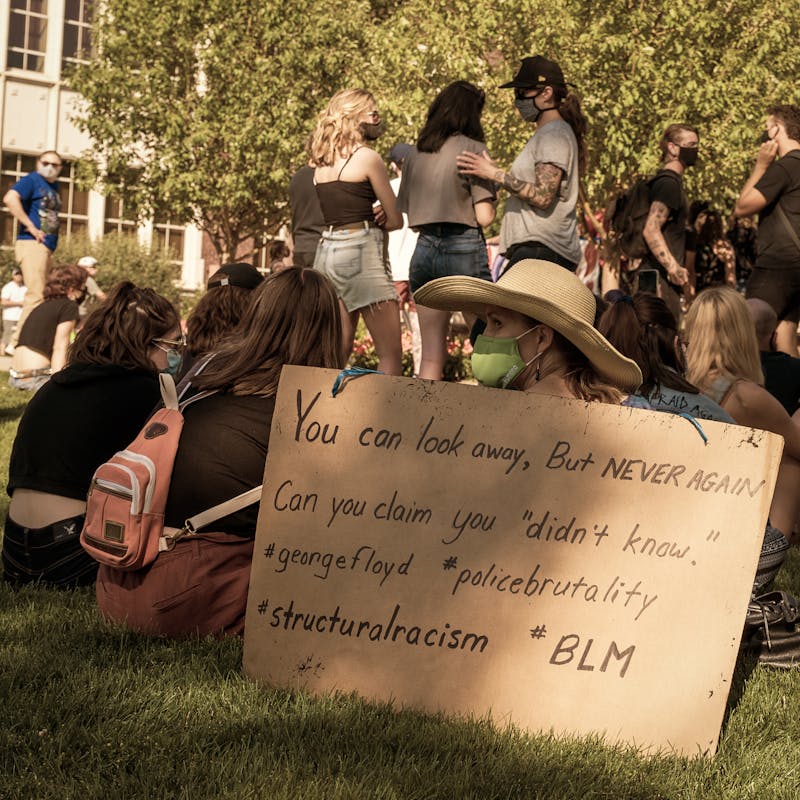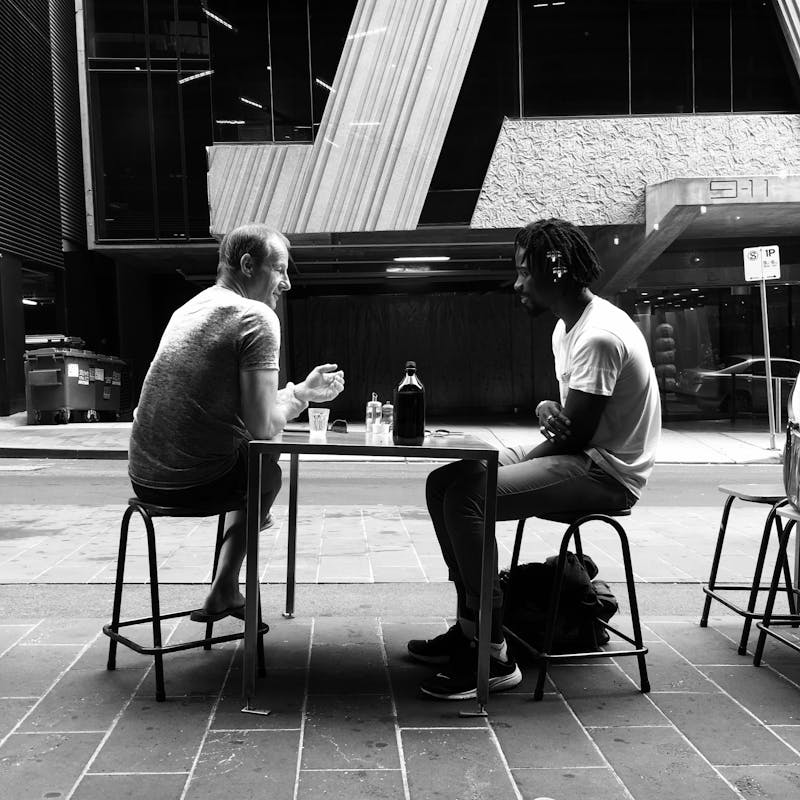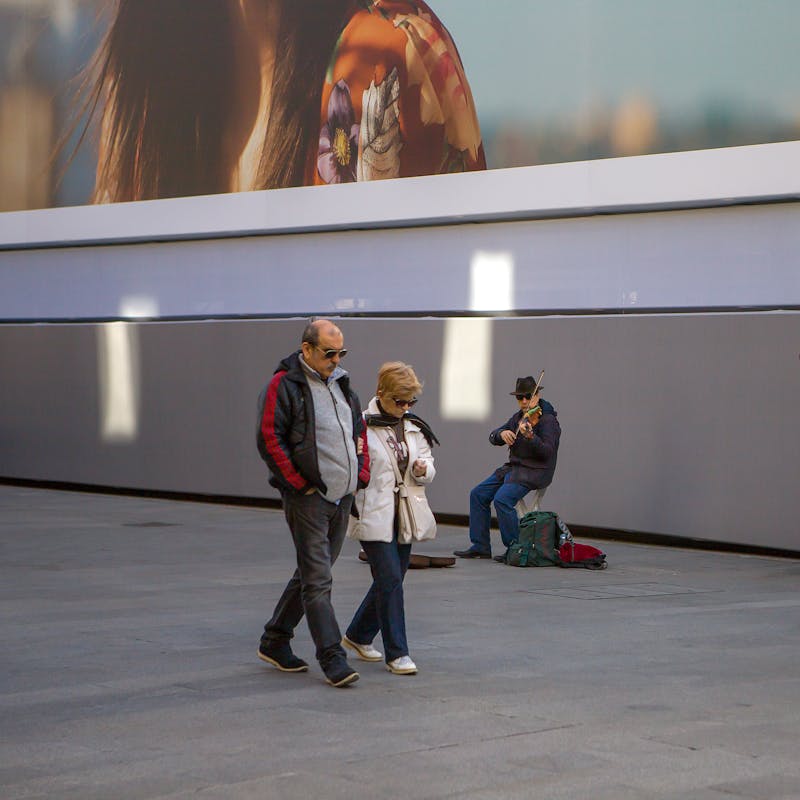
Power is rarely loud; it’s usually the room deciding who gets to relax.
Public space is where we learn, often wordlessly, what kind of person we’re allowed to be.
A park bench, a subway platform, a school board meeting, a sidewalk café—these aren’t neutral backdrops. They are stages with invisible rules, shaped by history, money, fear, and the quiet preferences of people who feel entitled to belong.
What’s changed in recent years is not that public space has become political. It’s that the politics have become harder to ignore.
We’re living through a new etiquette—one that doesn’t just involve saying “excuse me” or waiting your turn, but negotiating identity, status, and safety in real time. The awkwardness many people feel isn’t simply social anxiety. It’s the sensation of standing on shifting ground, where yesterday’s norms don’t apply and tomorrow’s expectations aren’t agreed upon.
The old rules were never for everyone
The nostalgia for “civility” often carries a hidden assumption: that there was once a shared script.
There was, but it was not shared equally.
For some people, public life came with a built-in presumption of innocence. You could loiter without being suspected, speak loudly without being branded, move through a store without being followed, dispute a charge without being labeled difficult.
For others, public life has always required rehearsal. How you hold your face. How you explain yourself. How you keep your hands visible. How quickly you smile to avoid being read as a threat.
Etiquette has never been only about manners. It has always been a social technology: a way to reward those who match the dominant image of “normal” and penalize those who don’t.
What’s new is the scale and speed at which these judgments happen—and the fact that so many of them are now recorded, shared, and debated.
Public space is a negotiation, not a location
A useful way to think about public space is as an ongoing negotiation over comfort.
Who gets to take up room without apology? Who has to shrink? Who is granted the benefit of ambiguity?
Consider a simple scene: two people reach the same doorway. One holds the door and the other hesitates, unsure whether the gesture is politeness or performance. The exchange is small, almost nothing, yet it can carry layers: gender expectations, cultural habits, age dynamics, even the fear of being misread.
Or picture a group conversation at work that spills into a café. Someone makes a joke. Another person doesn’t laugh, not dramatically—just enough to change the temperature of the table. No one says “power” out loud, but everyone adjusts.
Public life is full of these moments where etiquette is really an argument about whose feelings set the standard.
Identity isn’t just expressed; it’s interpreted
In theory, identity is personal: a name, a pronoun, a style, a set of affiliations.
In practice, identity is relational. It’s something other people interpret, often incorrectly, and often with consequences.
The new etiquette is shaped by this reality. It asks people to be more deliberate about how they address others and more humble about what they assume.
But it also reveals a tension that modern life doesn’t resolve neatly: the desire to be recognized on your own terms versus the fact that strangers will always be working with partial information.
A person wearing a religious garment might want quiet respect, not fascination or suspicion. A trans person might want their identity acknowledged without being turned into a seminar topic. A disabled person might want help offered with tact, not pity.
The problem is that public space tends to pressure everyone into fast interpretations.
You don’t get long footnotes on a crowded train.
So etiquette becomes a set of micro-decisions: Do I ask? Do I assume? Do I comment? Do I ignore? And behind those choices sits a deeper question: Do I see you as fully real, or as an inconvenience in my day?
The smartphone turned etiquette into evidence
Before phones with cameras, many public conflicts dissolved into he-said-she-said.
Now a disagreement can become a clip, a thread, a national argument.
This has changed behavior in opposite directions.
Some people act with more care, aware that a moment of cruelty can follow them. Others act with more defiance, performing dominance for an imagined audience. In both cases, the presence of potential recording alters what “normal” looks like.
A person who used to be quietly dismissive may now add a smile, not because they’ve changed, but because they fear consequence. Another person may escalate a minor conflict because the spectacle itself feels like power.
Etiquette in this environment becomes less about mutual ease and more about managing risk.
And risk is not distributed evenly.
People who have been historically disbelieved often find validation in footage that shows what they have long described. At the same time, people with less social power can be exposed to public judgment for a single stressed-out moment, without context, without the grace most of us need occasionally.
The new etiquette includes an unspoken question: Are we treating each other like human beings, or like content?
Safety has become part of the social script
There was a time when “feeling safe” was treated as an internal matter, a private emotion.
Now safety is openly discussed as a public responsibility, and that shift has reshaped behavior.
In many spaces, people are learning to narrate their intentions. Someone walking behind another person at night might cross the street. Someone might announce themselves before entering a room. Someone might keep a respectful distance, not out of coldness, but out of awareness.
Yet even here, power complicates the story.
For some, safety etiquette means being believed and protected. For others, it means being treated as inherently dangerous.
A young man in a hoodie and a woman clutching her bag are both responding to an idea of threat. One response may be rooted in lived experience. The other may be rooted in stereotype. Public life forces these possibilities to coexist, and etiquette becomes the imperfect attempt to prevent harm without turning fear into policy.
What we’re watching is not just anxiety—it’s a society trying to decide whose vulnerability counts.
The performance of allyship—and the desire for quiet respect
Modern etiquette includes a strange new character: the well-intentioned spectator.
In public debates about identity and power, some people feel pressure to signal that they’re on the right side. They speak in the newest language, share the correct posts, correct others quickly.
Sometimes this is sincere and useful.
Sometimes it’s a kind of social insurance.
The difference matters because people can feel when they’re being respected versus displayed. No one wants to be someone else’s proof of virtue. Quiet respect looks like listening without making it about you. It looks like getting someone’s name right and moving on. It looks like making room without announcing that you’re making room.
If old etiquette enforced dominance through politeness, new etiquette can enforce dominance through righteousness.
Both can be suffocating.
A healthier public life requires something harder than perfect language: it requires the courage to be corrected without collapsing, and the generosity to correct without cruelty.
When “neutral” is a luxury
People often argue that public spaces should be “neutral,” free from politics and identity claims.
But neutrality is rarely neutral. It usually means that the existing power arrangement goes unchallenged.
A city ordinance about “loitering” may sound impartial until you notice who gets questioned. A dress code may sound professional until you see whose hair is treated as unkempt. A policy about “keeping things family-friendly” may sound reasonable until you realize it’s applied unevenly.
In this sense, etiquette is the daily version of policy.
It’s the glance that says you don’t belong. The tone that suggests you’re overreacting. The joke that tests whether you’ll protest.
And it’s also the small acts that counter those messages: the bartender who intervenes when someone is harassed, the stranger who makes space for a wheelchair without making a spectacle, the coworker who stops using “guys” as a default because they noticed who it excluded.
Public life is built from these accumulated choices.
Learning the new etiquette without turning it into a trap
The phrase “walking on eggshells” comes up a lot in conversations about modern norms.
Sometimes it’s a refusal to learn. Sometimes it’s an honest description of uncertainty.
The new etiquette can feel like a trap because it asks people to care about impact, not just intent, while also insisting that mistakes are inevitable. That’s not comfortable. It’s also not optional if we want shared spaces that don’t quietly injure the same people over and over.
The goal isn’t to memorize a perfect script.
It’s to develop a better reflex: curiosity instead of assumption, accountability instead of defensiveness, restraint instead of performance.
There’s a small but meaningful difference between “I didn’t mean it” and “I hear you.” One defends the self. The other makes room for another person’s reality.
And there’s a difference between “I’m just being honest” and “I’m choosing to be blunt because I can.” Public space is where we test whether we can hold truth without using it as a weapon.
A public life worth sharing
At its best, etiquette is not a set of rules designed to keep everyone in their place.
It’s a way of signaling: I recognize you. I will not make your day harder for my convenience.
The new etiquette of power, identity, and public space is messy because it is trying to do two things at once. It is trying to correct old injustices while still allowing ordinary human clumsiness. It is trying to widen belonging without replacing one rigid hierarchy with another.
You can feel this tension in the smallest scenes.
A teacher pauses before calling roll, wanting to pronounce names correctly. A neighbor wonders whether to ask a question or let a flag on a porch speak for itself. A manager rewrites a policy, aware that “professionalism” can be a mask for prejudice. A friend hesitates before posting a photo, thinking about consent rather than likes.
These moments are not just etiquette.
They are the daily practice of democracy, in miniature: the effort to share space without demanding sameness, to disagree without dehumanizing, to be seen without turning visibility into punishment.
Public space will never be free of power. The most we can ask is that power becomes more answerable.
And that the room, finally, becomes a little easier for more kinds of people to breathe in.