A single bottle cap can outlast a lifetime of good intentions.
Plastic pollution in oceans isn’t a distant, abstract problem—it’s a daily, compounding cost that shows up in seafood, storm resilience, shipping lanes, tourism economies, and the quiet health of marine ecosystems. The real question isn’t whether plastic is “bad,” but what we pay—financially, biologically, and socially—when we keep treating the ocean as an invisible landfill. What follows is a clear look at those costs, why they’re so hard to reverse, and what actually moves the needle.
The price tag we rarely add up
The ocean is good at hiding our mess—until it isn’t. Plastic drifts out of sight, fragments into smaller pieces, and spreads across currents that ignore borders. That invisibility is part of why the costs of plastic pollution in oceans are so often underestimated.
One cost is straightforward: cleanup and damage control. Coastal municipalities spend money removing debris from beaches and harbors, especially after storms. Ports and shipping operations contend with fouled propellers and clogged intake systems. Fishing communities lose income when gear is damaged or when fish stocks decline in areas choked with debris.
Then there’s the quieter cost: lost value. A beach that becomes known for litter doesn’t just look bad—it becomes a weaker economic engine. Fewer visitors ripple outward to hotels, restaurants, charter boats, and seasonal jobs. Meanwhile, taxpayers often fund the response while the sources of waste remain diffuse.
The harm also shows up as opportunity cost. Money spent on reactive cleanup isn’t spent on seawalls, wetland restoration, or climate adaptation. It becomes another line item that competes with urgent needs.
What makes plastic pollution in oceans uniquely hard to solve?
Because most of it becomes small, mobile, and persistent. Once plastic enters the sea, it disperses, breaks apart, and resists biodegradation—turning a single item into a long-lived problem.
Unlike an oil spill, which is catastrophic but finite, plastic pollution is a chronic leak. Sunlight and waves don’t make it vanish; they grind it down. Over time, macroplastics become microplastics (often defined as particles smaller than 5 millimeters) and even smaller nanoplastics that are difficult to detect and nearly impossible to remove at scale.
A major global assessment by the United Nations Environment Programme (UNEP) has emphasized that plastic pollution is increasing rapidly without systemic change—meaning waste management alone can’t keep up if production and consumption continue to rise.
A problem with many doorways
Plastic reaches the ocean through more routes than most people realize:
- Mismanaged waste that escapes collection systems
- Rivers carrying litter downstream after rain events
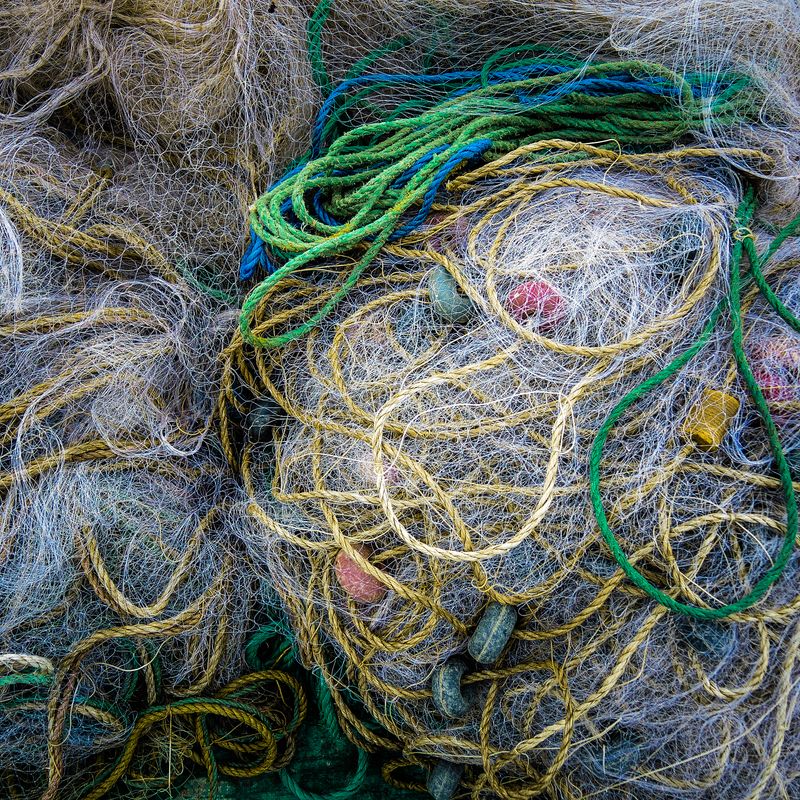
- Lost or abandoned fishing gear (often called “ghost gear”)
- Stormwater drains that funnel street litter to the sea
- Industrial pellets (“nurdles”) spilled during transport
Each pathway has different fixes, different stakeholders, and different incentives—so coordination becomes as important as technology.
What it does to marine life—and why it matters to people
It’s tempting to frame this as a wildlife tragedy alone: turtles snared in six-pack rings, seabirds with stomachs full of fragments, whales entangled in lines. That suffering is real, but the deeper issue is how plastic rewires ecosystems.
Entanglement and ingestion can reduce survival and reproduction across species, from marine mammals to fish and seabirds. Lost fishing nets continue catching animals for years, turning into unregulated traps that also undermine legitimate fisheries.
Plastics can also act like rafts. They transport organisms across oceans, potentially aiding invasive species in reaching new coastlines—one more stressor for habitats already pressured by warming waters and acidification.
And microplastics don’t stay “out there.” A 2022 study published in Science reported microplastics in human blood samples, underscoring that exposure is not hypothetical. The health implications are still being clarified, but the direction is clear: when plastics fragment, they become a pathway for widespread contact.
Seafood, salt, and the question of exposure
Microplastics have been found in many marine organisms, including shellfish that are eaten whole. Researchers continue investigating what this means for human health, including whether particles carry additives or absorb other chemicals.
It’s important to be precise: scientists are still working out dose, pathways, and outcomes. But uncertainty is not reassurance. It’s a sign we’ve outpaced our own ability to measure risk, and that alone is a cost.
The hidden chemistry: plastics are not chemically inert
“Plastic” isn’t one thing. It’s a family of materials with different polymers and a long list of additives—plasticizers, flame retardants, stabilizers, pigments. Some of these chemicals are known to affect hormones or persist in the environment.
In the ocean, plastic can also interact with other pollutants. Fragments can attract hydrophobic chemicals from seawater and concentrate them on their surfaces. Whether plastics meaningfully increase contaminant exposure in marine food webs depends on context, species, and local pollution sources—but the mechanism is plausible enough that researchers keep returning to it.
What’s more certain is that plastics create long-term debris fields that don’t match the timescale of human policy cycles. A new regulation might reduce waste over years. A piece of plastic can remain in circulation for decades.
Why “just recycle” doesn’t match reality
Recycling is valuable—but it’s not a magic undo button.
Many plastics aren’t economically recyclable, especially when contaminated by food, mixed materials, or pigments. Even in places with strong recycling programs, collection and sorting aren’t perfect. Globally, recycling rates remain limited relative to how much plastic is produced.
A 2022 report by the Organisation for Economic Co-operation and Development (OECD) found that only a small share of plastic waste was recycled worldwide, with most ending up landfilled, incinerated, or leaking into the environment. That’s not a moral failure of consumers; it’s a system designed around cheap virgin plastic and complex packaging.
If the goal is to reduce plastic pollution in oceans, the best leverage often appears earlier in the chain: product design, material choices, reuse systems, and policies that reduce unnecessary single-use plastics.
A practical way to think about solutions: stop it upstream, trap it midstream, heal what’s downstream
Progress tends to come from stacking approaches instead of searching for a single heroic fix. Here’s how the most credible strategies fit together.
| Strategy layer | What it targets | Realistic impact | Key limitation |
|---|---|---|---|
| Upstream prevention | Reducing unnecessary plastic, redesigning packaging, reuse/refill systems | Highest long-term reduction | Requires industry change and policy support |
| Midstream capture | Better waste collection, river barriers, stormwater filtration, pellet containment | Can cut leakage quickly in hotspots | Needs maintenance and consistent funding |
| Downstream response | Beach cleanups, ghost gear removal, habitat restoration | Visible benefits, helps wildlife | Cannot scale to “solve” the total volume |
Upstream prevention is where the math finally starts working in our favor. Midstream capture is where we buy time. Downstream response is where we reduce immediate harm and keep places livable.
A concise checklist that actually helps
If you’re deciding what to support—personally, professionally, or politically—this short list is more effective than guilt-driven gestures:
- Prioritize reuse where it’s convenient (refill stations, returnable containers, durable bottles) over “recyclable” disposables.
- Support deposit-return systems for beverage containers; they consistently raise collection rates.
- Choose brands and vendors with simpler packaging (mono-material, minimal layers) that is more likely to be recycled.
- Advocate for better stormwater and river capture in local infrastructure budgets—especially after flood events.
- Back ghost gear recovery programs and fishing-gear accountability measures in coastal regions.
- Look for pellet-spill prevention standards in companies that handle raw plastic resin.
None of these steps is glamorous. Collectively, they are how leakage drops.
What ignoring it costs in the long run
The long-run costs are less like a bill and more like a slow tax on everything coastal communities depend on.
Biodiversity loss isn’t just sad; it’s destabilizing. Coral reefs, seagrass beds, and mangroves help buffer shorelines and support fish nurseries. When ecosystems are stressed by warming, pollution, overfishing, and debris all at once, they become less resilient—more likely to tip into degraded states that are expensive to restore.
There’s also a governance cost. Plastic pollution in oceans highlights a mismatch between how products are sold (fast, global, disposable) and how waste is managed (local, underfunded, politically invisible). When communities feel they’re cleaning up after decisions made elsewhere, public trust erodes.
And there’s a cultural cost that’s hard to quantify but easy to recognize. An ocean full of plastic changes what people believe is normal. If children grow up thinking littered shorelines are simply “how beaches look,” the baseline shifts—and ambition shrinks.
The future hinges on whether we treat the ocean as a mirror
The most unsettling part of plastic pollution in oceans is that it reflects our strengths—mass production, convenience, global trade—and our blind spots: externalized waste, short-term pricing, and policies that lag behind materials science.
Cleaning beaches will always matter, partly because it’s immediate and human-scaled. But the real test is whether we build systems that make leakage rare rather than routine: packaging designed for reuse, collection that doesn’t fail in heavy rain, accountability for lost fishing gear, and economic incentives that favor recovery over disposal.
The ocean has carried our commerce for centuries. It shouldn’t have to carry our trash as well. The longer we ignore the cost, the more we normalize paying it—one fragment at a time.