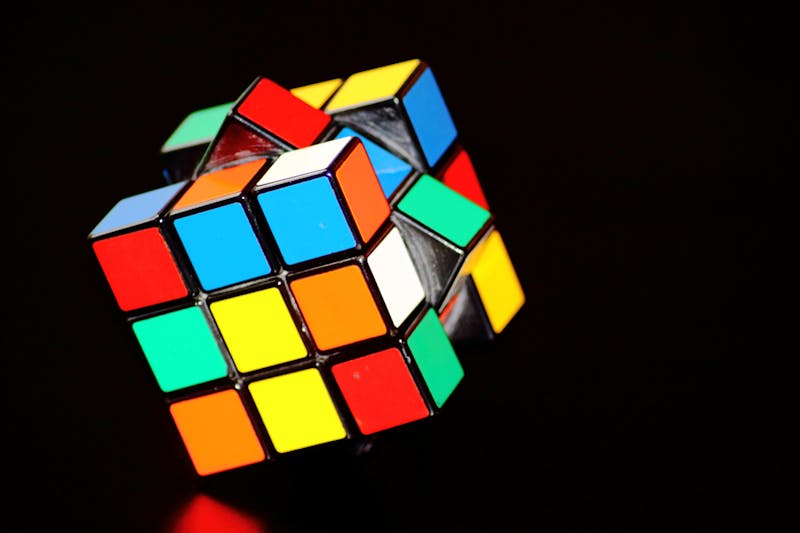
From Cold War classrooms to viral TikTok challenges, the Rubik's Cube has spun through history as more than just a puzzle.
A Twisting Invention Born Behind the Iron Curtain
In 1974, Hungarian architecture professor Ernő Rubik created a small plastic cube, initially to help explain three-dimensional movement to his students. Originally called the “Magic Cube,” it wasn’t designed as a toy—it was a teaching tool. But once Rubik realized its puzzle potential, the cube's future began to shift.
By 1977, it was being sold in Budapest toy shops, and by 1980, rebranded as the Rubik’s Cube, it hit international markets. It quickly became the ultimate mind-bending challenge, tapping into both the intellectual curiosity and playful competition of millions during the Cold War era.
Puzzle Craze of the 1980s
The Rubik’s Cube exploded in popularity during the early 1980s. By 1982, it had become the best-selling toy in the world, and the first official Rubik’s Cube World Championship was held in Budapest. People were obsessed—books were written on solving it, and it even made appearances on TV shows and in advertisements.
In the West, it became a symbol of both intelligence and pop culture. Solving the cube was a badge of honor among kids and adults alike. In an era before smartphones, this analog brain teaser stood out as a universal challenge that transcended borders.
Decline and Reinvention
Like many trends, the Rubik’s Cube faded in popularity by the late '80s. But it never vanished. Hobbyists and mathematicians kept it alive, and it slowly evolved from a pop toy to a symbol of problem-solving prowess.
In the 2000s, the resurgence came from a new place: the internet. Online forums and YouTube tutorials allowed a new generation to master and share solving methods. Speedcubing—the sport of solving the cube as fast as possible—emerged and grew rapidly, pushing the cube back into the spotlight.
The Rise of Speedcubing Culture
With the foundation of the World Cube Association in 2004, competitive speedcubing became an organized global movement. Records were shattered, and new solving methods (like CFOP and Roux) took the cube to new levels of speed and sophistication.
Teenagers around the world started dedicating hours to perfecting their finger tricks. By the 2010s, Rubik’s Cube competitions were attracting thousands, with livestreams and social media content generating millions of views.
TikTok and the Rubik’s Renaissance
Then came TikTok. The platform became an unexpected catalyst for the Rubik’s Cube’s latest popularity spike. Short, visually satisfying videos of solvers completing the cube in seconds—or customizing and painting their cubes—turned the old-school toy into digital-age content gold.
Creators shared solving tips, challenges, and tricks, making the cube feel fresh again. Some videos garnered tens of millions of views. Suddenly, the cube wasn’t just a puzzle—it was a lifestyle prop, a symbol of intelligence and creativity in the viral age.
More Than a Toy
Today, the Rubik’s Cube is much more than a nostalgic toy. It’s a tool for cognitive development, a sport, a social media trend, and even a classroom resource. It bridges generations, geographies, and digital platforms.
Its appeal is timeless because the challenge is both universal and endlessly personal. Whether you're a first-time solver, a world record contender, or just someone who enjoys a good fidget, the Rubik’s Cube offers a uniquely satisfying experience. And that’s why, fifty years after its invention, it’s still twisting its way into hearts and hands around the globe.