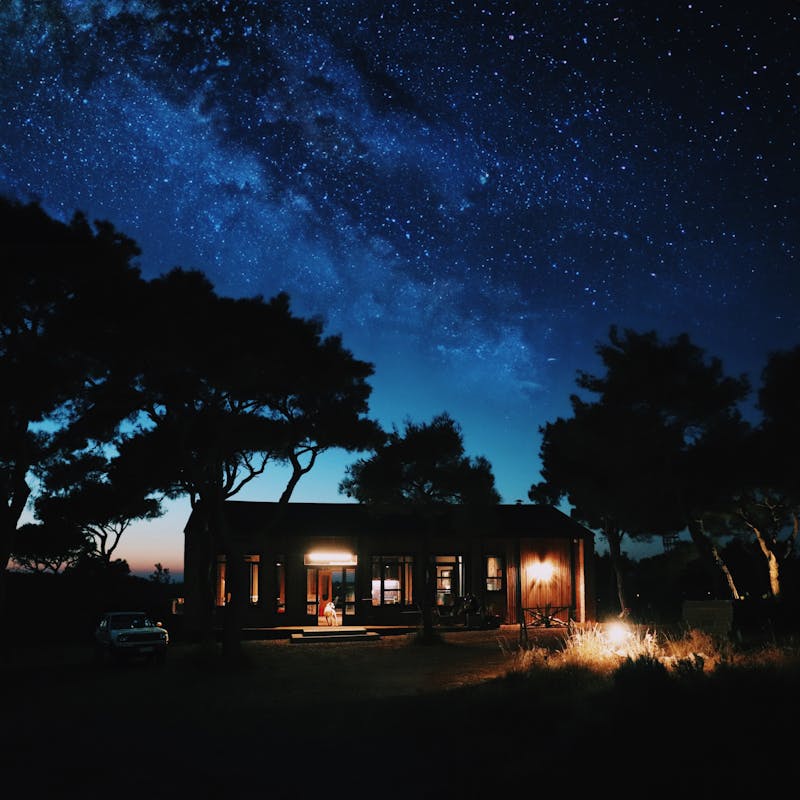
Some questions arrive like starlight—late, quiet, and impossible to ignore.
Curiosity as a Social Weather Pattern
Curiosity used to be treated like a private trait, something you either had or didn’t.
Lately it feels more like weather—moving across groups, gathering intensity, changing the day’s mood. You can sense it in casual conversations that drift toward “What if?” and “Have you noticed?” rather than the older reflex of “That’s just how it is.”
This isn’t a sudden revolution. It’s subtler than that, a slow tilt of attention. It shows up in the small ways people are re-learning how to look closely: at language, at food labels, at the design of a street, at a friend’s silence, at the sky.
We’ve entered a moment where curiosity doesn’t always announce itself as wonder. Sometimes it arrives as suspicion, as verification, as an urge to cross-check. But beneath the new habits is the same old human impulse: the desire to make meaning.
The Quiet Return of “Why”
In many places, the most noticeable shift isn’t ideological. It’s conversational.
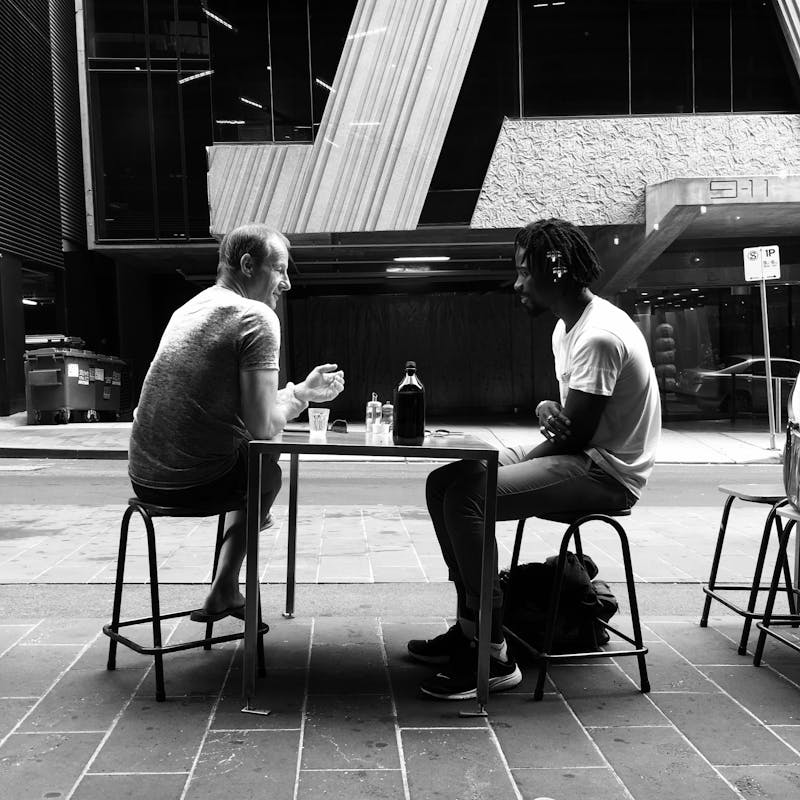
People ask more follow-ups. They interrogate their own assumptions out loud. They pause mid-sentence and recalibrate. A surprising number of everyday exchanges now include tiny repairs: “Wait, is that true?” “I might be wrong.” “I’m trying to understand.”
Part of this is defensive. When information is abundant and trust is fragile, “why” becomes a form of self-protection.
But it’s also generative. The reflex to question can open a door that certainty keeps locked. When someone asks why we work the way we do, why we measure success the way we do, why our cities look like they do, they aren’t merely nitpicking. They’re searching for a more livable story.
Micro-shifts You Can Feel on a Tuesday
Cultural change is often described with loud nouns—movements, crises, eras.
Yet much of what shapes a society happens at the micro level, where taste and attention live. Think of a Tuesday afternoon: a line at a coffee shop, someone reading a paperback instead of scrolling; a neighbor planting herbs in a bucket on the fire escape; a group chat that detours into astronomy because someone spotted a bright point above the horizon.
These scenes don’t look like transformation. They look like people trying to stay human.
Small choices—what we watch, what we refuse to watch, which notifications we silence, how we decorate our homes—create slow patterns. Patterns harden into norms. Norms become the new “just how it is.”
Curiosity thrives in these small spaces, especially when it is paired with a sense of agency, however modest. Not the grand agency of changing the world overnight, but the grounded kind: adjusting your day so you can think.
Attention Is the New Status Symbol (Even When We Pretend It Isn’t)
For years, status was tied to speed: being booked, being busy, being unreachable.
Now there’s a countercurrent. The person who can pay attention—deeply, patiently—has a kind of power that feels increasingly rare.
You see it in the return of long-form reading, in the popularity of slow hobbies, in the pride people take in learning a craft that offers no immediate monetization. These aren’t universally accessible luxuries, and they can be romanticized too easily. But they point toward a hunger that many share: to reclaim the mind as a place that belongs to you.
Curiosity is attention with a pulse. It isn’t just noticing. It’s noticing and leaning in.
The cultural twist is that we’re learning to value that lean again, even while our tools are designed to interrupt it.
The Sky as a Shared Screen
One of the strangest modern ironies is that we live under the same sky, yet we often experience it through separate feeds.
And still, the stars remain a rare commons. They don’t require a subscription. They don’t care about your demographic. They don’t update their terms of service.
When someone says they’ve started going outside at night, it can sound like a lifestyle trend. But it can also be a quiet form of resistance: a decision to look at something that isn’t optimized for you.
The night sky carries a kind of cultural neutrality that’s hard to find elsewhere. You can attach many stories to it—scientific, spiritual, poetic, ancestral—and it doesn’t collapse under the weight. If anything, it becomes more expansive.
In a time when meaning is contested, the stars offer a stable prompt: here is scale; what will you do with it?
Astrology, Astronomy, and the Hunger for Pattern
It’s tempting to frame our renewed interest in the stars as a simple split: astrology is fantasy, astronomy is fact.
In reality, the cultural phenomenon is less about which side is “right” and more about what people are seeking.
Astronomy satisfies curiosity about how the universe works. It offers awe with structure—math, physics, measurement, discovery.
Astrology, for many, satisfies a different curiosity: how to talk about the self, how to interpret timing, how to give language to moods that don’t fit neatly into productivity metrics. Even when approached playfully, it becomes a tool for reflection, a way of narrating experience.
Both are, in their own ways, pattern languages. And the modern appetite for pattern makes sense. When daily life feels fragmented—news cycles, economic uncertainty, algorithmic persuasion—pattern becomes comfort.
The risk, of course, is substituting pattern for understanding. A pattern can be real and still mislead. It can feel true without being reliable.
But it would be a mistake to treat the hunger for pattern as naive. It’s an intelligent response to complexity, even when it sometimes reaches for shortcuts.
The New Curiosity Is More Collaborative
Old stereotypes imagine curiosity as solitary: a thinker alone with a book, a scientist in a lab, a kid taking apart a radio.
Those scenes still exist. But there’s another kind of curiosity gaining prominence—collaborative curiosity.
You can see it in people building shared vocabularies for mental health, in communities swapping notes about climate resilience, in crowdsourced investigations that range from harmless internet mysteries to serious civic scrutiny. Even the way people learn has shifted: many don’t just study privately; they document the process, discuss it, teach it back.
This can be beautiful. It can also be messy.
Collaborative curiosity sometimes turns into performance. People ask questions not to learn, but to signal belonging. Or they hoard trivia like currency.
Still, the underlying change matters: curiosity is becoming more social, less gated by institutions. That democratization comes with noise, but it also comes with new kinds of intelligence—distributed, improvised, lived.
Skepticism Isn’t the Enemy of Wonder
A subtle shift in society is the way skepticism has become a mainstream posture.
In some ways, this is healthy. People are more aware of manipulation. They understand that images can be edited, quotes can be clipped, data can be cherry-picked.
But skepticism can flatten into cynicism if it’s not paired with openness.
The new age of curiosity asks for a harder balance: to doubt without closing, to verify without losing the capacity to be moved. Wonder is not the same as gullibility. Wonder is a willingness to be surprised.
The stars can help here. They invite wonder while rewarding rigor. They remind you that amazement can coexist with method.
A person can learn the mechanics of an eclipse and still feel their stomach drop a little when day turns strange.
Time, Reimagined
Perhaps the deepest cultural shift beneath all this is a renegotiation of time.
We’re questioning inherited schedules and inherited life scripts. People are reconsidering the pace of career growth, the architecture of relationships, the meaning of adulthood, the idea that every season must be maximized.
Looking at the sky makes time feel less transactional. It stretches the imagination. It hints that life is not merely a sequence of tasks, but a series of encounters—with other people, with ideas, with the unknown.
Curiosity becomes a way to inhabit time differently. Instead of rushing through the day, you start to collect it.
A few minutes spent learning a constellation, or reading about a distant planet, or simply watching the moon rise behind a building, can puncture the illusion that everything must be immediate to be valuable.
A Reflective Ending Under an Ordinary Night
Cultural change doesn’t always feel like progress. Sometimes it feels like restlessness.
The new age of curiosity has that texture: a society both exhausted and awake, wary and hungry, skeptical yet still reaching.
Maybe that’s why the stars keep reappearing in our conversations—quietly, persistently. They offer an ancient permission slip to wonder without needing to win an argument.
On an ordinary night, you might step outside for no reason other than to check the air. You look up and notice a brightness you can’t name. You stand there a moment longer than you planned.
And in that pause—a small pause, almost nothing—you can feel the cultural shift in miniature.
Not a grand awakening. Just a renewed willingness to ask: what else is here?