Calm is a strategy, not a personality trait.
Remote interviews can feel strangely intimate: your face fills the screen, your room becomes a backdrop, and every pause seems louder than it would in a conference room. The best remote interview tips aren’t about performing a new version of yourself—they’re about reducing friction so your real strengths come through.
What follows is a practical, steady guide for standing out on camera without acting like you’re “on camera.” It focuses on the moments candidates underestimate: the first 60 seconds, the subtle signals of attention, and the simple preparation that keeps nerves from hijacking your thinking.
Remote interview tips that actually change the outcome
The goal is to make the conversation feel easy for the interviewer. When the logistics fade into the background, your clarity, judgment, and presence take center stage.
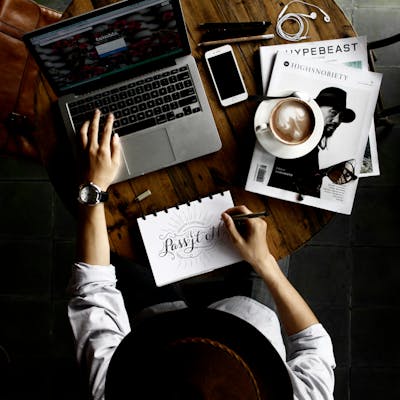
Start by treating the interview like a small live production. You don’t need professional gear, but you do need reliability. Test your internet speed where you’ll sit. Plug in if you can. Close bandwidth-heavy apps. If you’re using a laptop, prop it up so the camera is at eye level; looking down can read as disengaged even when you’re fully focused.
Then get your environment quietly working for you. A simple, tidy background beats a “perfect” one. Soft, front-facing light (a window or lamp behind your screen) makes your expression readable—one of the few advantages you can control. Finally, silence notifications everywhere: computer, phone, watch. The absence of interruptions creates an immediate sense of professionalism.
What makes a remote interview different from an in-person one?
Remote interviews compress communication. Because there’s less body language and more audio lag, clarity and pacing matter more than charm.
In person, small signals—walking together, shaking hands, glancing at a whiteboard—carry social ease. On video, those signals vanish, and the brain works harder to interpret intent. That’s why concise answers land better, why interruptions feel sharper, and why a calm tempo can make you seem more confident than you feel.
A useful mindset shift: you’re not trying to “win the room.” You’re trying to create a clean channel where the interviewer can quickly understand how you think and how you’d work with others.
The first minute: how to start without sounding rehearsed
The opening minutes set the emotional tone. Aim for warm and direct.
When you join, look at the camera, smile lightly, and greet the interviewer by name if possible. If there’s a minor tech hiccup, narrate it calmly (“I’m going to switch to headphones—one moment”). That composure reads as competence.
Have a two-sentence “arrival statement” ready—something that settles you and orients them. Example: “Thanks for meeting with me. I’ve been looking forward to this conversation because I’m excited by the role’s mix of customer insight and analytics.” It’s not a speech; it’s a clean starting point.
Answering on video: clarity beats speed
One of the most underrated remote interview tips is to pause before you answer. A one-second pause prevents you from talking over someone due to lag, and it signals thoughtfulness.
When you respond, structure your answer so it’s easy to follow on a screen:
- Start with the headline (your point in one sentence).
- Add a brief example.
- End with the result or lesson.
If you use stories, keep them tight. The STAR method (Situation, Task, Action, Result) still works, but on video it’s better as a quick arc than a detailed narrative. Choose details that show decision-making: what you noticed, what you prioritized, and how you handled trade-offs.
And remember: camera eye contact is different. If you can, look into the lens when you deliver your key sentence (your headline or result). It creates connection without forcing a constant, unnatural stare.
Questions that help you stand out (and feel calmer)
Thoughtful questions signal maturity—and they also give you a mental break by shifting the focus.
Instead of asking only broad questions (“What’s the culture like?”), try prompts that invite specifics:
- “What does great performance look like in the first 90 days?”
- “What’s a challenge this team is navigating right now, and how could this role help?”
- “How do decisions get made when priorities conflict?”
These questions do more than gather information. They position you as someone who already thinks like an insider—practical, collaborative, and outcomes-focused.
Managing nerves without pretending you don’t have them
Most people aren’t anxious because they’re unprepared; they’re anxious because the stakes feel unclear. Give your brain certainty where you can.
Create a one-page “anchor” document: role highlights, three stories you can adapt, and a few metrics or outcomes you’re proud of. Keep it next to your screen, not on your lap. Glancing sideways occasionally is normal; reading paragraphs is not.
Before the call, do a quick reset: drink water, take five slow breaths, and drop your shoulders. The body leads the mind more often than we admit.
If you blank mid-answer, name it briefly and recover: “Let me take a second to organize that.” Then return to your headline. That simple line can turn a stumble into a moment of poise.
The close: leave a clear final impression
Near the end, summarize your fit in a way that feels helpful, not salesy. A strong closing sounds like clarity: “Based on what we discussed—especially the need to streamline reporting and partner with stakeholders—I’m confident I could add value quickly.”
Then confirm next steps and thank them. Afterward, send a short note that references something specific you discussed, not a generic template. Specificity is memory.
Remote interviews reward the people who make things feel human through a screen. The most effective remote interview tips are surprisingly quiet: reliable setup, simple structure, thoughtful questions, and a steady pace. When you remove the noise, you don’t just look more confident—you give your actual capability room to show up.