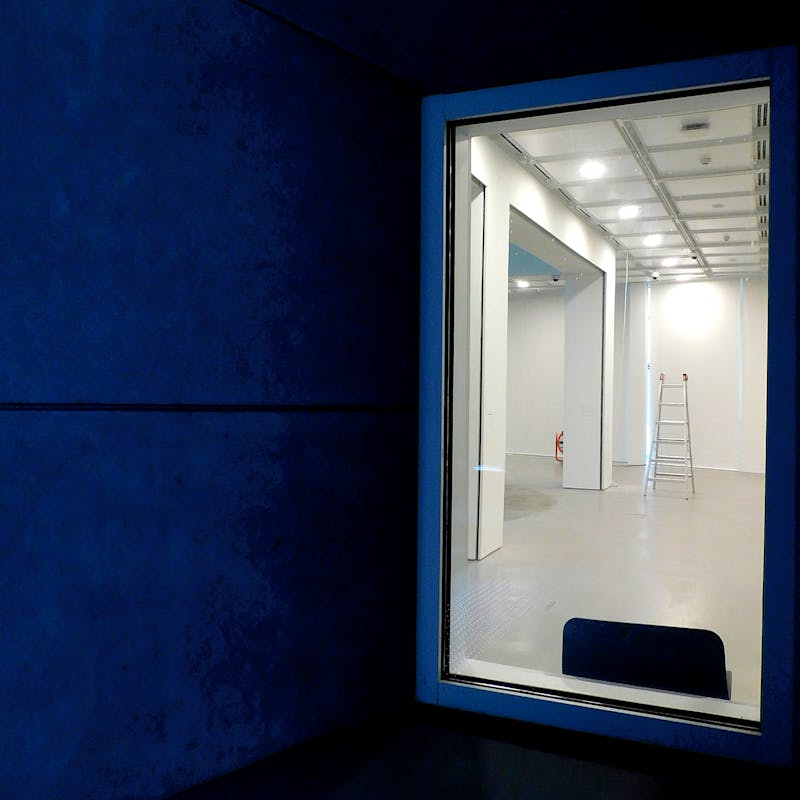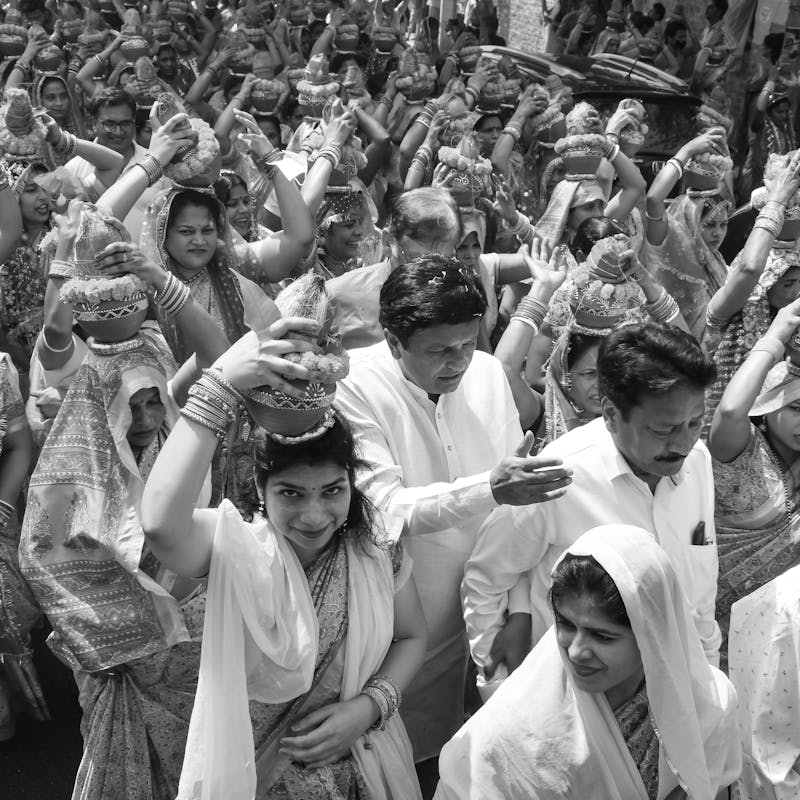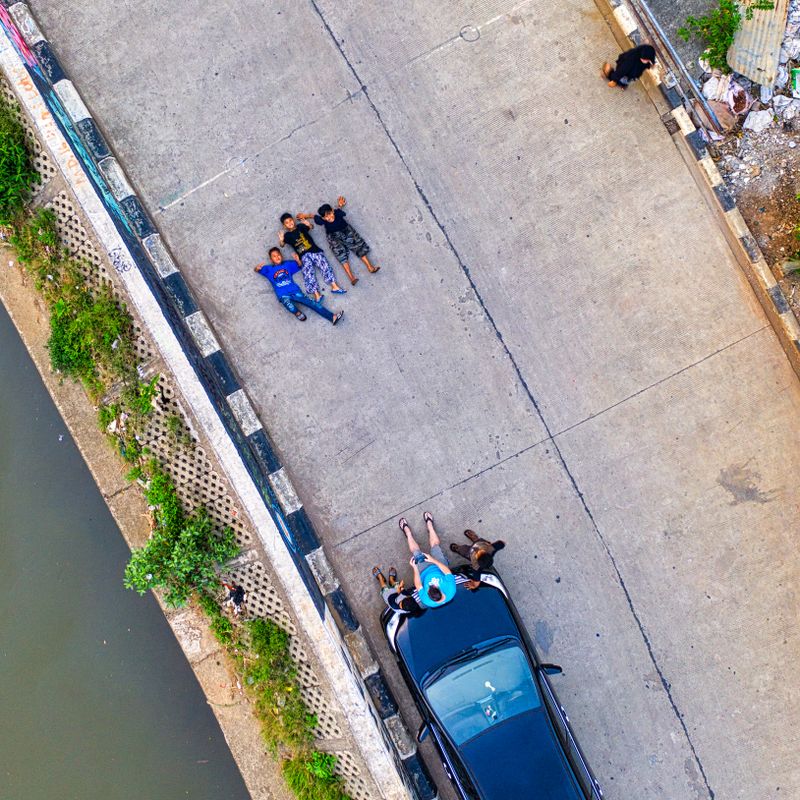
A photo goes viral; the real story often stays off-screen.
The phrase hidden backstory behind viral photos names a simple frustration: we can see an image everywhere and still not understand what we’re actually looking at. This piece is about how viral images are made, framed, cropped, captioned, and shared—and how those steps can quietly change meaning. If you’ve ever felt a weird gap between the certainty of the internet’s reaction and your own sense that “there has to be more here,” this is for you.
A viral photo is rarely just a snapshot. It’s a compressed moment that travels faster than context can keep up, turning a scene into a symbol. The symbol may be inspiring, misleading, funny, or cruel—sometimes all at once.
The moment that becomes “the story”
Imagine scrolling late at night and seeing the same photo three times in ten minutes: a soaked person kneeling on a sidewalk, a police officer hovering nearby, a dog pressed against a stranger, a kid staring up at a crowd. It looks like a verdict—on kindness, on injustice, on society—before you’ve read a word.
That’s the first trick of virality: a single frame feels complete. Our brains love narrative closure. The photo seems to answer the question it asks.
But most photographs are incomplete on purpose, not out of malice. A lens cuts away everything outside its borders. A shutter selects one fraction of a second from a longer chain of events. And then the internet performs a second crop: it picks one interpretation and repeats it until it hardens.
When people talk about the hidden backstory behind viral photos, they’re usually reacting to that hardening—how quickly a picture becomes a moral lesson even when the underlying situation is messy, ordinary, or unresolved.
Why context disappears online
Context doesn’t vanish because people are lazy (though sometimes they are). It disappears because platforms reward speed, emotion, and simplicity.
A full backstory asks for time: who took the photo, where it happened, what occurred before and after, whether the subjects consented, what the photographer intended, and what the subjects themselves say. Those details arrive slowly, if they arrive at all.
Meanwhile, the photo travels at the pace of outrage and delight.
Researchers who study online sharing consistently find that high-arousal emotions—especially anger—spread fast. One widely cited study published in Proceedings of the National Academy of Sciences (often referenced for the finding that anger can be especially “contagious” on social networks) helps explain why a viral image paired with an inflammatory caption can outpace careful corrections.
Even when better information emerges, it has to compete with something powerful: the first version people saw.
The caption is a second camera
A caption doesn’t just label; it directs attention. “Brave hero” and “reckless idiot” can describe the same posture, the same moment, the same person. Once a caption lands, it becomes hard to unsee.
This is why the hidden backstory behind viral photos often starts with a mundane fact: the caption writer wasn’t there.
The algorithm prefers the clean takeaway
Platforms don’t “want” you to be misinformed, but they are designed to keep you engaged. A clean takeaway is engaging: Look at this. Can you believe this? This restored my faith.
Ambiguity is a speed bump. And speed bumps don’t go viral.
What makes a photo go viral in the first place?
A viral photo usually has three ingredients: instant readability, emotional charge, and interpretive flexibility. It’s easy to grasp, it makes you feel something, and it can be used to support multiple narratives.
That last ingredient matters most.
A picture that is too specific—too tied to a niche context—doesn’t travel as far. But a picture that feels universal can be repurposed endlessly. The same image may be circulated as proof of compassion in one corner of the internet and proof of decay in another.
This flexibility is exactly where the hidden backstory behind viral photos tends to hide. The more a photo can “mean anything,” the more likely it is that the true circumstances are being blurred.
To make this concrete, here’s how a single image can shift depending on what’s missing:
| What you see | What you might assume | The missing context that changes everything |
|---|---|---|
| A person holding a child in a chaotic scene | A rescue in progress | It could be an evacuation drill, a film set, or an unrelated moment nearby |
| A crying athlete on the field | Defeat or disgrace | It might be injury, grief, relief, or an off-camera family moment |
| A crowd surrounding someone on the ground | Violence or threat | It might be bystanders helping after a fainting episode or waiting for paramedics |
| An animal in an unusual place | Neglect or cruelty | It might be a wildlife rescue, veterinary transport, or a temporary situation |
The point isn’t that viral photos are “fake.” The point is that meaning is fragile.
The ethics: when the public turns someone into a symbol
There’s a human cost to virality that doesn’t show up in the frame.
A photo can make an unknown person famous overnight, and fame is not always a gift. People get identified, tracked down, judged, praised, doxxed, fired, or turned into memes. The image becomes a public property in practice, even if it isn’t legally.
This is where the hidden backstory behind viral photos becomes less about curiosity and more about responsibility.
Consent is often assumed, not given
Street photography has a long tradition, and laws vary by place. But legality isn’t the same as ethics. Someone in crisis, a child, a grieving family—these are not just “subjects.” They’re people who may never have agreed to be the face of a national argument.
A viral image can freeze a person at their worst moment
The internet loves transformation stories: “before and after,” “look where they are now.” But many viral photos don’t offer that arc. They freeze someone in fear, anger, confusion, poverty, addiction, or humiliation.
And then strangers build a personality around them.
A single frame can become the only way the world knows a person, even if it isn’t representative. That’s a heavy thing to carry.
Corrections rarely catch up
One of the most sobering findings in media research is how sticky misinformation can be. A 2018 study in Science about the spread of true and false news on Twitter reported that falsehoods traveled farther and faster than truths, in part because they tended to be more novel. A misleading caption attached to a photo isn’t “news” in the traditional sense, but it behaves similarly: it’s simple, sharable, and often surprising.
So even when journalists or the original photographer clarifies the situation, the corrected version may never reach the same audience.
How to look for the hidden backstory behind viral photos (without becoming cynical)
Being careful with images doesn’t require becoming joyless or suspicious of everything. It’s more like developing good posture: small habits that prevent strain.
Here’s a practical checklist that fits the way people actually scroll.
- Pause for ten seconds. Ask: What am I assuming that the frame does not prove?
- Read past the first caption. Look for the earliest upload or the photographer’s statement.
- Check time and place. Is there a location, a date, or an event name? Vague claims (“somewhere in Europe,” “today,” “just happened”) are a red flag.
- Look for multiple angles. If it’s a major event, other photos or videos often exist. One frame can mislead; a sequence tells more.
- Notice cropping. Crops can remove a helpful sign, a uniform, a police badge, a stage light—details that change the story.
- Beware the too-perfect moral. If the photo “proves” a sweeping claim with no nuance, it may be serving an agenda.
- Ask who benefits. Is the image being used to sell something, fundraise, recruit, or inflame? Motive doesn’t equal falsehood, but it shapes framing.
- Hold space for uncertainty. Sometimes you simply cannot know the full context. Sharing anyway is a choice.
These steps don’t just protect you from being misled. They protect the people in the photo from being flattened into a lesson you needed that day.
When the backstory is more interesting than the image
Some viral photos become famous precisely because the backstory is mundane. A “miracle” turns out to be a scheduled meet-up. A “spontaneous act of kindness” turns out to be a staged shoot for a campaign. A “terrifying moment” turns out to be a controlled environment—training, theater, rehearsal.
And sometimes the backstory is not mundane at all, just complicated.
A single picture of a protest, for example, can’t show what led to it, what the policies were, what happened earlier that day, or what occurred after the shutter clicked. The image might still be meaningful—photography can be an honest witness—but it isn’t the whole witness.
The internet tends to prefer clean narratives:
- a hero and a villain
- a victim and a savior
- a society in decline or a society redeemed
Real life is often stranger: people act inconsistently, motives overlap, and the “villain” might also be afraid, untrained, or following a flawed protocol.
If you’re drawn to the hidden backstory behind viral photos, it may be because you sense this mismatch: the internet’s demand for a parable versus reality’s refusal to simplify.
A quieter way to share
One of the hardest things about viral images is that they turn sharing into a reflex. You repost to signal who you are: compassionate, informed, outraged, hopeful. But an image is not only a mirror for the sharer. It’s also a doorway into someone else’s life.
A quieter way to share might look like this:
- Share with accurate sourcing (who, where, when) instead of only a feeling.
- Prefer language like “appears to show” when details aren’t confirmed.
- If the photo involves a private individual in distress, consider not sharing at all.
- When you do share, add context that reduces harm rather than amplifying judgment.
This isn’t about policing the internet. It’s about remembering that photographs are made of people, places, and consequences.
The next time a photo floods your feed, it’s worth asking a gentler question than “Is it real?” Ask: What am I not seeing—and who is paying the price for that missing piece?