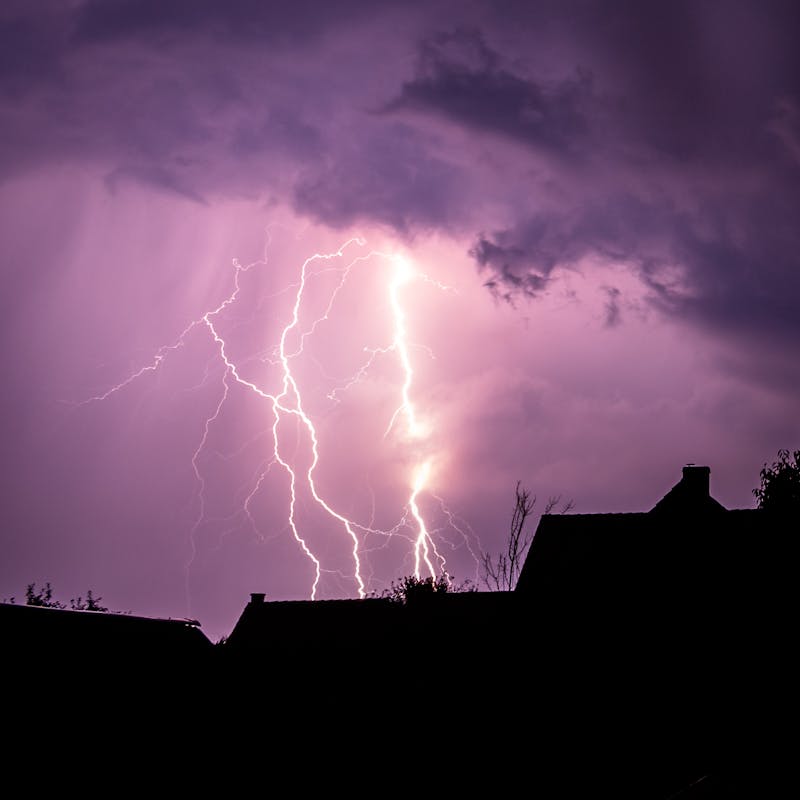
We keep making plans, and the ground keeps shifting.
Somewhere between a calendar invite and a cracked riverbed sits the story of modern life. We live by goals—quarterly targets, five-year visions, retirement timelines—while the planet increasingly behaves like a moving walkway that speeds up without warning. Most days, the tension is subtle. It arrives as an odd February heat wave, a smoky sunset that looks beautiful until you remember why it’s there, a storm that doesn’t match the season you thought you knew.
Human ambition is loud by design. It has to be. It rallies teams, attracts investment, and convinces us that effort leads somewhere stable. A restless planet, by contrast, doesn’t announce itself in boardrooms. It negotiates quietly, through changing baselines and delayed consequences, through the slow rewriting of what “normal” means.
The negotiation between these forces isn’t a single political debate or a single technological breakthrough. It’s happening in neighborhoods, supply chains, hospital systems, farms, insurance offices, and family conversations about where to live next.
Ambition’s Favorite Myth: Predictability
Ambition thrives on the idea that tomorrow will resemble today closely enough to make planning rational. That assumption is so deeply embedded in our routines that it rarely feels like an assumption at all.
A city approves a new housing development based on historical flood maps. A company prices a product assuming shipping lanes will remain dependable. A couple chooses a home because the commute is manageable and the school district looks strong. Each decision is reasonable inside the old contract: the world changes, but slowly, and mostly in ways that can be accommodated.
The planet’s restlessness breaks that contract in small ways before it breaks it in dramatic ones. The maps become outdated. The commute becomes unreliable due to heat-related infrastructure failures or smoke-related school closures. The cost of “rare” events shows up every year, like a subscription nobody remembers signing up for.
Planning doesn’t stop. It just becomes more expensive—financially, emotionally, and cognitively. The price is paid in contingencies.
The Planet Doesn’t Bargain—It Updates the Terms
When we talk about negotiation, it can sound like the planet is a participant with intentions. It isn’t. The atmosphere doesn’t compromise. Coastlines don’t accept counteroffers.
But the effect on human systems feels like bargaining because we respond in cycles. We push forward. We hit limits. We adjust. Then we push again.
A clear example is water. In many regions, the old pattern of rainfall and snowpack used to function like a savings account. Snow accumulated, melted gradually, and fed rivers at predictable times. Now, the timing shifts. The “account” is less reliable. Communities respond by drilling deeper wells, building new pipelines, buying water rights, or arguing over who gets access first.
That’s negotiation in human terms: deciding whose plans remain intact and whose are curtailed.
The Quiet Work of Normalizing the Unfamiliar
One of the most disorienting features of a restless planet is how quickly we normalize what would have shocked us a decade ago.
A summer with weeks of hazardous air becomes the summer you buy extra filters and keep a box of masks by the door. A hurricane season that starts earlier and ends later becomes something you track like sports scores. Heat indexes that make walking the dog risky at noon become the reason you rearrange your life around dawn and dusk.
There’s a strange tenderness to this adaptation, and also a danger. The tenderness is that people keep caring for each other amid the changes. They improvise. They share resources. They check on neighbors. The danger is that normalization can dull urgency. If the new baseline becomes tolerable enough, it becomes easy to treat it as the cost of doing business.
Ambition is especially good at that. It can absorb almost anything as a constraint, the way a start-up absorbs obstacles as “challenges” to overcome.
When Growth Runs Into Physical Reality
For much of recent history, economic growth has been treated as a kind of natural law, a direction the world is supposed to move in if we’re doing things right. We build, expand, extract, and scale.
A restless planet doesn’t necessarily oppose growth in a moral sense. It simply introduces physical limits. Asphalt softens in extreme heat. Electrical grids strain when everyone needs cooling at the same time. Crops suffer when pollination windows shift or drought arrives at the wrong moment. Supply chains falter when waterways become too shallow for cargo.
What makes these limits feel like negotiations is that they force choices. Do you rebuild in the same place or retreat? Do you keep expanding consumption or redesign for efficiency? Do you treat climate risk as a line item or a foundational assumption?
In many cases, the choice is postponed until it becomes unavoidable. The quiet negotiation is often a stalling tactic.
The New Status Symbol: Resilience
Ambition has always had symbols—corner offices, fancy zip codes, seamless travel, the sense of being unbothered by constraints. Increasingly, the status symbol is shifting from luxury to resilience.
Backup power. Higher elevation. A home that stays cool without overworked air conditioning. A job that can be done remotely when weather disrupts commuting. A community with robust public services and emergency planning.
This shift is revealing. Resilience, in theory, is a shared good. In practice, it’s frequently purchased. Those with resources can relocate, retrofit, insure, and buffer themselves. Those without resources are asked to be “tough” in conditions that keep getting tougher.
That’s one of the most painful negotiations: the one between individual aspiration and collective vulnerability. If ambition becomes primarily about personal insulation, society becomes more brittle.
The Emotional Math of Tradeoffs
Not all negotiations are about policies or infrastructure. Many are private.
A parent wonders whether to let their child play outside on a day that looks bright but smells faintly of smoke. A homeowner debates whether to replace an aging roof now or wait another year, knowing that storms are getting harsher. A young adult weighs staying near family against moving to a city with better water security and job options.
These decisions rarely feel dramatic in the moment. They feel like errands and budgeting and scheduling. Yet they shape the future as much as any election.
There’s grief in this, though it’s often unnamed. Grief for a world that felt dependable. Grief for a version of ambition that didn’t require factoring in evacuation routes. Grief for the freedom to plan without the constant background question: will this still make sense in ten years?
Technology as Both Promise and Alibi
When human ambition meets planetary instability, it often reaches for technology as a translator: a way to make the problem legible and solvable.
Better forecasts, smarter grids, drought-resistant crops, cleaner energy, carbon capture, more efficient buildings—these are not fantasies. Many are real and increasingly necessary. They can reduce harm and buy time.
But technology can also become an alibi, a reason to keep the current trajectory intact. If the story is “innovation will fix it,” then the harder conversations—about consumption, land use, inequality, and political will—can be deferred.
The planet doesn’t care which story we tell ourselves. It responds to physics. Ambition responds to narratives. The negotiation is partly about which narrative wins inside our institutions.
Learning to Plan Like the Weather Can Change
The most pragmatic shift we can make is also one of the most philosophical: accepting that planning must include instability as a baseline.
That doesn’t mean giving up on long-term goals. It means designing them to bend without breaking.
A city can build parks that double as flood buffers rather than treating floods as anomalies. Businesses can diversify supply lines instead of optimizing for maximum efficiency under perfect conditions. Schools can prepare for heat and smoke days the way they prepare for snow days. Homeowners can make choices that lower energy use and reduce exposure rather than simply increasing cooling and hoping the grid holds.
This kind of planning is less glamorous than bold promises. It’s quieter, and it often looks like maintenance. But maintenance is a form of respect—respect for the reality that systems wear down, and that the planet is no longer willing to pretend otherwise.
The Moral Question Hiding Inside Practical Decisions
Every adaptation contains a moral question, even when it looks purely technical.
Who gets protected first? Who bears the costs? Whose neighborhood gets the seawall, and whose gets a “managed retreat” plan? Who has access to cooling centers, clean air, reliable transit during emergencies? Who gets listened to when decisions are made?
Ambition loves to frame itself as meritocratic: work hard, do well, rise. A restless planet makes that story less convincing because so much depends on location, infrastructure, and collective capacity.
If climate risk becomes another filter that sorts people into safer and more dangerous lives, we haven’t negotiated with the planet so much as with each other—and we’ve chosen an outcome that will be hard to live with.
A Different Kind of Ambition
There’s another form of ambition that doesn’t rely on domination or denial. It’s less about conquering nature and more about learning to live within the terms of reality.
It shows up in communities that invest in shared resilience instead of private escape hatches. It shows up in leaders who treat boring infrastructure as a legacy project. It shows up in people who decide that success includes leaving room for others to survive.
This ambition doesn’t eliminate desire. It redirects it. It asks: what would it mean to build a life that can endure change without demanding that someone else absorb the damage?
That question is uncomfortable because it challenges the assumption that we can have everything—growth without cost, comfort without consequence, progress without limits.
The Negotiation Continues in Small Rooms
The planet’s restlessness will keep expressing itself through weather, water, heat, and the slow reconfiguration of ecosystems. Human ambition will keep making plans anyway.
The quiet negotiation will continue in small rooms: an architect sketching a building that shades itself; a city council debating zoning; a farmer deciding what to plant; a family choosing where to put down roots; an insurer recalculating risk; a teacher preparing for another disrupted semester.
None of these people control the whole outcome. Yet the shape of the future emerges from their cumulative choices.
If there’s a reflective lesson to carry forward, it might be this: ambition is not wrong, but it is unfinished. It has to learn the language of limits, not as surrender, but as fluency.
Because the ground is shifting, and we are still writing our plans on it.