Some limits aren’t walls—they’re mirrors.
The modern world runs on a quiet assumption: tomorrow must be bigger than today. Bigger earnings, bigger output, bigger markets, bigger lives. We’re taught to read growth like a heartbeat—if it’s rising, the system is alive; if it flattens, something must be wrong.
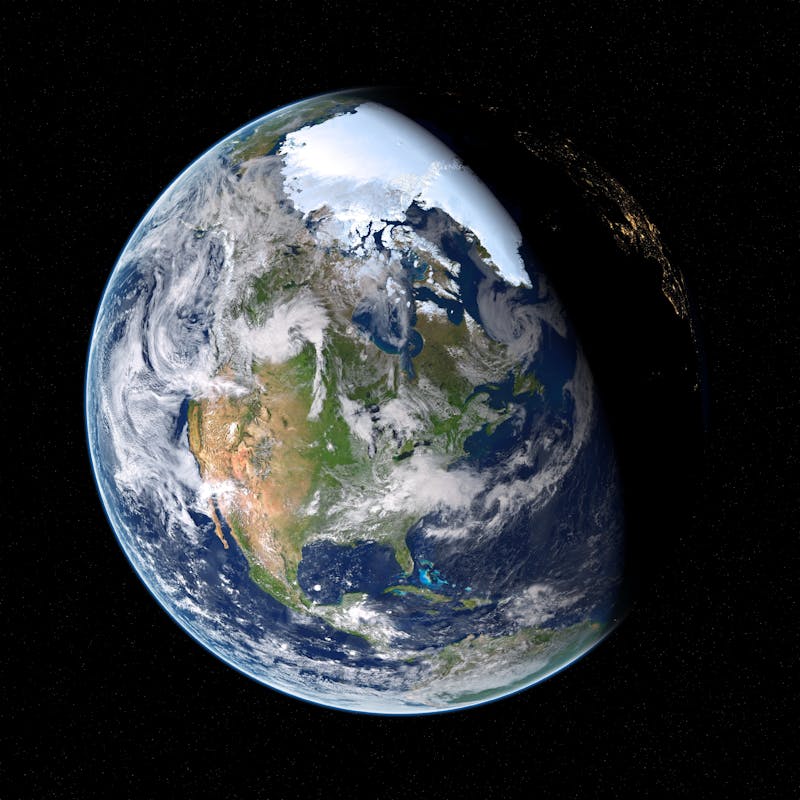
But the planet we live on does not share that assumption. Earth does not get new oceans, fresh topsoil, or extra breathable air just because quarterly targets demand it. The tension between a culture of endless expansion and a physically bounded world isn’t a niche environmental concern. It’s the central story behind our economic anxiety, our political arguments, and the uneasy feeling that something doesn’t add up.
The promise hidden inside the word “growth”
“Growth” is one of those words that sounds inherently good. Children grow. Knowledge grows. Communities grow closer. The term carries the warmth of progress without asking what kind of progress we mean.
Economic growth, though, is a specific kind of expansion. It measures more production and more consumption, translated into numbers that can be compared, ranked, and celebrated. When that number rises, leaders take credit. When it falls, panic spreads in boardrooms and kitchens alike.
The emotional power of growth comes from what it seems to offer: security. A growing economy suggests there will be more jobs, higher wages, stronger pensions, better public services. Growth becomes a promise that the future will be easier than the present, and that promise has shaped entire generations.
Yet it also smuggles in a condition: keep expanding, or face instability.
A finite planet doesn’t negotiate
There are two kinds of boundaries that matter here. One is physical: land, minerals, water, forests, fisheries, and the capacity of ecosystems to absorb waste. The other is biological: human bodies, attention spans, social trust, and mental health.
Both are treated like they can be stretched indefinitely if we’re clever enough.
Technological innovation is real and often astonishing. We can produce more food per acre than our grandparents could imagine. We can build lighter materials, recover metals, and generate power without burning fossil fuels. But efficiency gains have a habit of being eaten by demand. When something becomes cheaper or easier, we often do more of it.
Even when we reduce impact per unit—per mile driven, per kilowatt-hour consumed, per package shipped—the total can still rise if the overall scale keeps expanding. The planet doesn’t experience our lives per unit; it experiences the sum.
The treadmill effect in everyday life
Endless growth isn’t only a national statistic. It shows up as a feeling.
A professional gets a raise, then moves to a pricier neighborhood because that’s what “moving up” looks like. A family buys a bigger home, then needs higher income to maintain it. A company increases output, then requires new markets and cheaper inputs to protect margins. A city expands outward, then must maintain more roads, pipes, and power lines.
At each step, the system asks for more just to keep the same sense of stability.
This is why the growth conversation gets personal so quickly. People aren’t greedy for wanting security. They’re responding to a world where healthcare, housing, education, and retirement feel like moving targets. Growth becomes the coping mechanism when the basics are precarious.
If we want to talk honestly about the planet’s limits, we have to talk just as honestly about the human fear of falling behind.
When success is measured as “more,” everything becomes expendable
A growth-first mindset doesn’t only extract resources. It extracts meaning.
If the main metric is expansion, then time spent caring for an elderly parent can look like “lost productivity.” A walk with no destination becomes a luxury. Repair becomes less rational than replacement. Longevity becomes a design flaw.
You can feel this logic in small moments: a device that’s difficult to fix, a subscription that quietly rises in price, a product built to be replaced rather than maintained. The system prefers churn because churn looks like activity, and activity looks like growth.
Meanwhile, the ecological costs are often displaced—into the future, into poorer communities, into distant places where extraction happens out of sight. The bill exists, but it’s sent to an address we don’t have to open immediately.
The real argument isn’t “economy versus environment”
The most common framing suggests we must choose: protect nature or protect jobs. That framing is convenient, because it reduces a complicated reality into a two-sided fight.
But the deeper issue is the design of the economy itself: what it rewards, what it ignores, and what it counts as success.
An economy can grow while increasing stress, loneliness, and inequality. It can grow while eroding topsoil and draining aquifers. It can grow while creating jobs that don’t cover rent.
At the same time, an economy can maintain high living standards with far less material throughput if it is structured around durability, repair, shared infrastructure, clean energy, and services that genuinely improve life.
So the question becomes: growth of what, for whom, and at what cost?
The seductive faith in “decoupling”
Many people pin hope on the idea that we can keep growing the economy while shrinking environmental impact. In some areas, partial decoupling has happened—certain countries have reduced some pollutants while still increasing economic output.
But the hardest parts to decouple are the ones tied to physics and scale: energy demand, raw material extraction, land use, and the accumulation of greenhouse gases. Making processes cleaner helps, but it doesn’t automatically solve the problem if total consumption keeps climbing.
There’s also a global accounting trick hidden in many success stories: wealthy places can reduce local emissions by importing carbon-intensive goods produced elsewhere. The atmosphere doesn’t care where the emissions occur. It only counts total concentration.
This isn’t an argument for despair. It’s an argument for clarity. Technology can be a tool for living well within limits, but it can’t serve as a blank check for infinite expansion.
A different definition of prosperity
If growth stops being the central goal, what replaces it?
Not stagnation. Not austerity. Not a romantic fantasy of going backward.
The more interesting alternative is a shift in what we optimize for. A society can prioritize stability, health, resilience, and fairness rather than sheer output. It can treat housing as shelter before asset. It can treat energy as a public good before a speculative commodity. It can treat nature as infrastructure rather than scenery.
This is where the conversation turns from abstract economics to concrete design.
A durable, low-waste economy looks different on the street. It has repair shops that aren’t niche. It has buildings made to last and to adapt. It has public transit that feels normal, not heroic. It has products built to be maintained, not replaced.
It also values work that doesn’t always show up neatly in GDP: caregiving, teaching, community-building, preventive healthcare, ecosystem restoration. These activities strengthen life without necessarily increasing material consumption.
The politics of “enough”
“Enough” is a provocative word because it challenges status. Who gets to have enough? Who decides what enough means? For people who have been denied security, calls for restraint can sound like a demand to accept less while others keep more.
That’s why the limits conversation has to be paired with equity.
A world that lives within planetary boundaries cannot be built on the expectation that those already struggling should sacrifice first. The moral and practical path is to reduce excess where excess is real—wasteful luxury emissions, planned obsolescence, inefficient buildings, disposable culture—while ensuring everyone has access to the essentials of a dignified life.
Without fairness, “living within limits” becomes a slogan. With fairness, it becomes a social project.
Learning to love mature systems
In nature, endless growth is not the sign of health; it’s often the sign of imbalance. A forest grows, then matures. It becomes more complex, more resilient, more interdependent. It doesn’t need infinite expansion to be thriving.
Human systems can mature too.
A mature economy might not post dramatic growth numbers, but it could deliver reliable healthcare, affordable housing, clean air, and meaningful work. It could be less volatile, less extractive, and less obsessed with novelty for novelty’s sake.
Maturity is not a downgrade. It’s a different kind of ambition.
The small, stubborn moments where change begins
The shift away from endless growth won’t arrive as one grand announcement. It will show up in a thousand decisions that suddenly feel more sensible than radical.
A city chooses to retrofit buildings instead of endlessly expanding outward. A company designs products for repair because customers demand it and laws support it. A community invests in local energy and shared transport because it’s cheaper over time and less fragile during crises.
And in private life, it might look like learning the difference between comfort and clutter.
Someone buys less, but buys better. Someone chooses time over status. Someone measures a good week not by what they acquired, but by how they slept, who they saw, and whether their life felt like their own.
These aren’t moral trophies. They’re quiet experiments in living well without treating the planet like an infinite warehouse.
The question that lingers
The planet will not expand to match our expectations. That part is not negotiable.
What is negotiable is the story we tell about what it means to live a good life. We can keep chasing a number that demands more extraction and more waste, hoping innovation will outrun physics. Or we can build an economy that aims for sufficiency, resilience, and dignity—one that measures success by whether people and ecosystems can endure.
If endless growth is a habit, then it can be broken.
And if limits feel frightening, it may be because we’ve been taught to see them as failure rather than guidance. The most radical possibility is that a bounded planet isn’t a trap at all—it’s an invitation to design a future where “better” no longer depends on “more.”