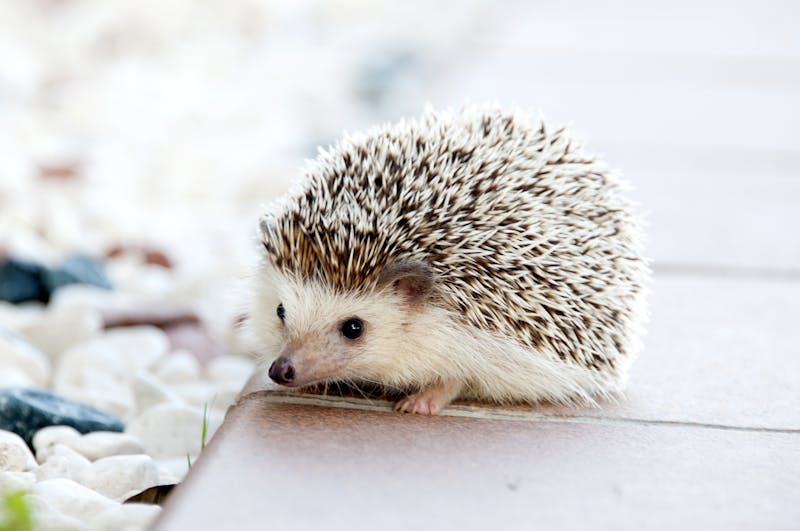
"Sometimes, the best way to survive is to be unapproachable."
Hedgehogs are nature’s quiet warriors. Small, nocturnal, and generally non-aggressive, these creatures nonetheless possess one of the most iconic defense systems in the animal kingdom: their spines. But these aren't just random prickles. A hedgehog's spines serve as both armor and language, conveying everything from fear to warning. Let’s unravel the surprising intelligence behind their prickly persona.
Anatomy of a Spine: More Than Just a Needle
Each hedgehog spine is a modified hair shaft, keratin-based and hollow. Unlike a porcupine's quills, hedgehog spines are not barbed and do not detach easily. This makes them ideal for passive defense. A hedgehog can have up to 7,000 spines on its back, each able to move slightly thanks to tiny muscles at the base, allowing for dynamic responses to different threats.
When relaxed, a hedgehog's spines lie relatively flat. But at the first sign of danger, those spines bristle outwards as the hedgehog rolls into a tight ball, presenting a fortress of needles to any would-be predator.
Body Language in Bristles
This defensive curl isn’t just physical; it's communicative. Predators interpret it as a clear "do not disturb" sign. Even among themselves, hedgehogs can use posture to signal discomfort or stress. Young hedgehogs learn early on to interpret these cues, avoiding unnecessary conflict.
Interestingly, scientists have noted that the degree of curling and spine stiffness can vary depending on the threat. A soft rustle may provoke a half-curl, while the scent of a nearby fox could prompt a full lockdown.
Behavioral Wisdom: When to Prickle and When to Flee
Hedgehogs are not impulsive. They often freeze first, assessing danger. If the threat persists, they curl. This behavior minimizes energy use and maximizes survival odds. It's a smart balance of visibility and caution.
Their reliance on spines doesn’t make them antisocial, either. Hedgehogs are known to share nesting spaces and tolerate close proximity during mating seasons. But their default response to stress is always to defend first.
Prickly Parallels: Other Masters of Natural Defense
Hedgehogs aren't alone in using their bodies for defense. Consider:
- Porcupines: They use barbed, detachable quills that embed in attackers, a more aggressive strategy.
- Armadillos: Their hard bony armor offers a rolling defense similar in concept but different in material.
- Pufferfish: When threatened, they inflate and extend spines to appear larger and more dangerous.
- Skunks: Rather than physical armor, they emit a chemical deterrent, using smell instead of spines.
These adaptations show that defense mechanisms often double as communication tools—a universal language of survival.
Evolutionary Elegance
Over millennia, hedgehogs have refined their defense into an elegant solution to predation. Their spines are not weapons but shields. Their behaviors are not chaotic reactions but strategic expressions of self-preservation.
In a world where being loud and fast often steals the spotlight, the hedgehog thrives through quiet resilience. Their spiny speech is a lesson in subtle strength—sometimes, silence wrapped in spikes says more than a roar ever could.