Some damage doesn’t fade when your feelings change.
We’ve grown used to reading the world like it’s reflecting us back. The sky is “moody.” The ocean is “angry.” A heat wave is “wild.” Even disaster gets turned into a vibe, something to scroll past and categorize with a quick emotional label before moving on.
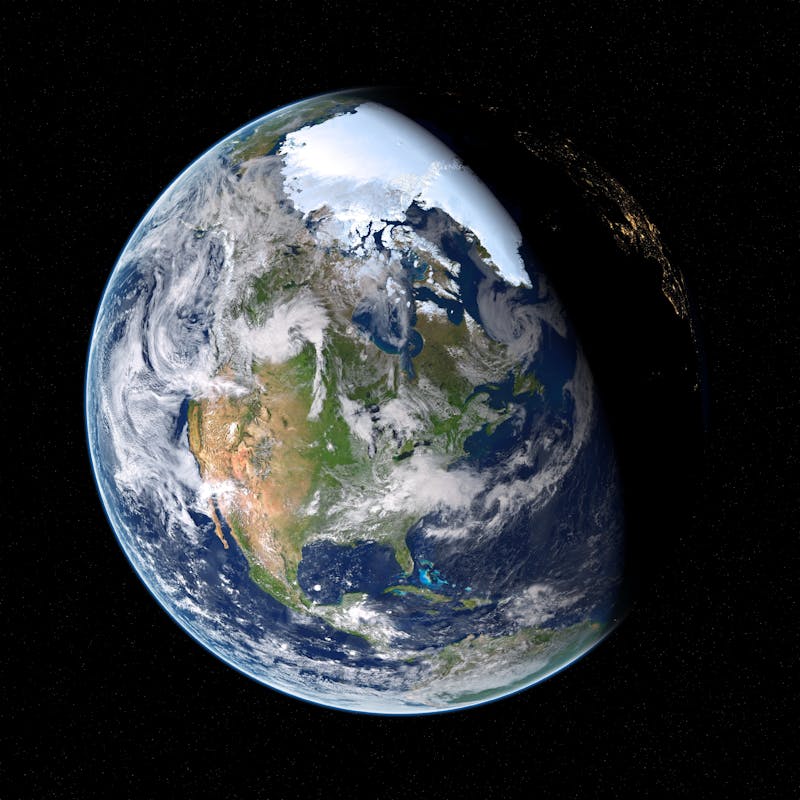
But the planet isn’t a mood ring. It’s not a decorative accessory that shifts colors to match our anxieties, our political identities, or our attention spans.
More and more, it resembles a crime scene: evidence everywhere, patterns repeating, causes obscured by noise, and the uncomfortable question lingering behind every headline—who did this, and who benefited?
The seduction of treating nature like a mirror
A mood ring is appealing because it offers the illusion of insight without demanding responsibility. You glance at it, interpret the color, feel briefly understood. It asks nothing else.
That’s how a lot of climate talk functions in everyday life. People talk about a “weird winter” the way they talk about a rough week at work. The abnormal becomes a conversational flourish: something slightly unsettling, but not enough to reorder the day.
Even when fear is present, it often gets folded into personal narrative. The heat makes you irritable. The smoke gives you headaches. The flood disrupts your trip. These are real experiences, and they matter. But they can also shrink the story to the boundaries of the self.
When a planet is treated like a mirror, the primary question becomes: how does this make me feel? When a planet is treated like a crime scene, the questions change: what happened here, what evidence remains, and what system keeps allowing it?
A crime scene has patterns, and patterns have authors
One of the hardest parts of environmental harm is that it rarely looks like a single act. There isn’t always a loud crash. There’s the quiet draining of wetlands, the slow poisoning of soil, the invisible leak of gases that change the chemistry of air and ocean.
In classic crime stories, the best villains aren’t the ones who yell. They’re the ones who blend in, who move costs onto others, who can point to the complexity of the situation and claim nothing can be done.
Environmental damage thrives in that same complexity. It gets disguised as “trade-offs,” as “the price of progress,” as “unfortunate externalities.” The language itself becomes a kind of cleanup crew.
And yet the patterns are visible.
Certain neighborhoods breathe dirtier air year after year. Certain rivers keep getting sick. Certain regions get treated as sacrifice zones, where the land can be stripped because the people living there have less political power to resist.
If the harm repeatedly lands in the same places, on the same bodies, benefiting the same companies and supply chains, that’s not random. That’s design.
The evidence is ordinary—until you learn how to read it
Crime scenes in movies are dramatic. Real ones are often banal: a smear, a trace, a missing record, a door left ajar.
The planet’s evidence is similarly ordinary.
A childhood memory of a lake that froze solid now replaced by winters that don’t quite commit. A garden that used to be forgiving now demanding constant attention, as if the seasons have lost their habits. A town that plans its summer around smoke forecasts the way it used to plan around barbecues and baseball.
None of this is proof by itself. But crime scenes aren’t solved by one clue. They’re solved by accumulation.
Scientists have been doing what detectives do: comparing notes across time, place, and system. They look for fingerprints in atmospheric measurements, for consistent changes in temperature and precipitation, for the ways warming oceans intensify certain kinds of storms. The picture that emerges isn’t mysterious. It’s coherent.
What’s incoherent is our social response.
We treat the evidence as trivia. We treat the warnings as content. We treat the damage as weather.
Denial isn’t ignorance; it’s strategy
It’s tempting to believe denial is just a lack of information, and that if people knew the facts they would act differently.
Sometimes that’s true. But often denial is something else: a method of protecting a way of life from moral scrutiny.
A crime scene creates obligations. If you acknowledge a crime, you implicitly accept that someone must be held accountable, and that repair is required. If you insist nothing happened—or that what happened is too complicated to attribute—then nobody has to change.
This is why the conversation so easily drifts toward personal virtue and away from power. Personal choices matter, but they can also become a diversion. A focus on individual purity is a convenient substitute for structural accountability.
It’s easier to argue about reusable bags than to confront the machinery that makes waste inevitable. It’s easier to shame someone’s commute than to ask why public transit is underfunded, why housing is segregated, why jobs are clustered far from where people can afford to live.
At a crime scene, the question isn’t whether every witness behaved perfectly. The question is who set the conditions for harm.
The slow violence that doesn’t feel like violence
Some crimes don’t announce themselves as crimes because they unfold over years. They hide inside normalcy.
A refinery flares at night, and residents learn to sleep through it. A coastal community loses land inch by inch, and the losses get tallied as “erosion,” as if the ocean were simply being fussy. A drought hits, and farmers take on more debt, and the story becomes one of personal resilience.
The moral danger of slow violence is that it trains people to accept what should be unacceptable.
When harm is slow, responsibility becomes easy to spread thin. When responsibility is spread thin, it begins to evaporate.
Yet the effects are not thin at all. They are concentrated—often on people with fewer resources to relocate, fewer lawyers to fight back, fewer microphones to make the story heard.
A crime scene lens makes that concentration impossible to ignore.
Who gets to leave, and who gets left with the bill
One of the clearest markers of environmental injustice is mobility.
If a neighborhood becomes unlivable—too hot, too flooded, too polluted—some people can move. Others can’t. Those who can leave often do so quietly, and the market adjusts. Prices fall. Investors wait. Eventually, the place becomes a bargain for someone else, until the next disaster.
Meanwhile the costs—medical bills, lost wages, damaged homes, disrupted schooling—collect like unpaid fines.
This is what a crime scene looks like in economic terms: privatized gains and socialized losses.
The companies that profit from extraction and pollution are frequently insulated by layers of contracts and subsidiaries. The people who suffer the consequences are exposed directly, often without a meaningful path to compensation.
Even when there are settlements, they can function like hush money: a price paid to keep the system running.
The emotional comfort of calling it “natural”
There’s a reason people reach for the word “natural.” It’s soothing. It implies inevitability.
A “natural disaster” sounds like a storm that simply arrived, blameless as gravity. And it’s true that storms, fires, and floods are part of Earth’s rhythms.
But intensity and frequency aren’t just poetic fluctuations. The conditions that feed catastrophe can be altered by human decisions—about energy, land use, building codes, corporate regulation, emergency management, and public investment.
Calling everything “natural” can be a way of laundering responsibility.
At a crime scene, you don’t get to shrug and say, “These things happen.” You have to ask why the door was left unlocked, why the alarms didn’t work, why the neighborhood was never given protection in the first place.
What accountability looks like when the culprit is a system
The tricky part is that the “culprit” isn’t always one person or one company. It’s a system built to convert living things into revenue while treating the fallout as someone else’s problem.
Systems are harder to prosecute because they don’t fit the satisfying narrative of a single villain. They have many hands, many signatures, many plausible excuses.
Accountability, then, has to be layered.
It looks like laws that make pollution expensive and prevention cheaper. It looks like enforcement that doesn’t flinch when the defendant is wealthy. It looks like policy that stops rewarding short-term extraction at long-term public cost.
It also looks like cultural clarity: refusing to treat ecological harm as a matter of taste or identity.
A crime scene doesn’t care whether you “believe” in it. Evidence is indifferent to your politics.
The small scene that reveals the bigger story
Picture a late summer afternoon when the air smells faintly of smoke. The sun is a dull coin behind haze. People still go about their errands, but there’s a subtle speed to it, a sense that everyone is trying to finish quickly.
Someone jokes about how the sky looks “apocalyptic,” and someone else laughs, and the moment passes.
This is how normalization happens.
Not through evil monologues, but through small adaptations. Through the quiet lowering of expectations. Through the way we learn to live with less and call it maturity.
A crime scene perspective interrupts that drift. It insists that adaptation can’t be the only answer, because adaptation without accountability becomes surrender.
Living with the evidence without becoming numb
There’s a risk in the crime scene metaphor: it can make people feel trapped in grimness, as if the only appropriate emotion is despair.
But detectives don’t examine evidence to wallow in it. They do it to establish truth, to connect cause and effect, to create the possibility of intervention.
The planet doesn’t need us to be perpetually devastated. It needs us to be awake.
Awake means noticing when “unprecedented” stops being a red flag and becomes a marketing hook. Awake means questioning why rebuilding happens in some places quickly while other places wait for years. Awake means refusing to let “resilience” become code for “you’re on your own.”
And awake means keeping moral proportion: the problem is not that individuals exist, but that powerful systems have been permitted to treat the living world as disposable.
A different kind of reflection
A mood ring gives you a quick emotional readout and then gets on with its day.
A crime scene asks you to linger. To look again. To see what you didn’t want to see.
If we can hold that gaze—without turning away, without turning it into aesthetic gloom—we might begin to act with the seriousness the moment demands. Not the seriousness of scolding, but the seriousness of accountability.
Because the planet isn’t performing a feeling for us.
It’s recording what we’ve done.