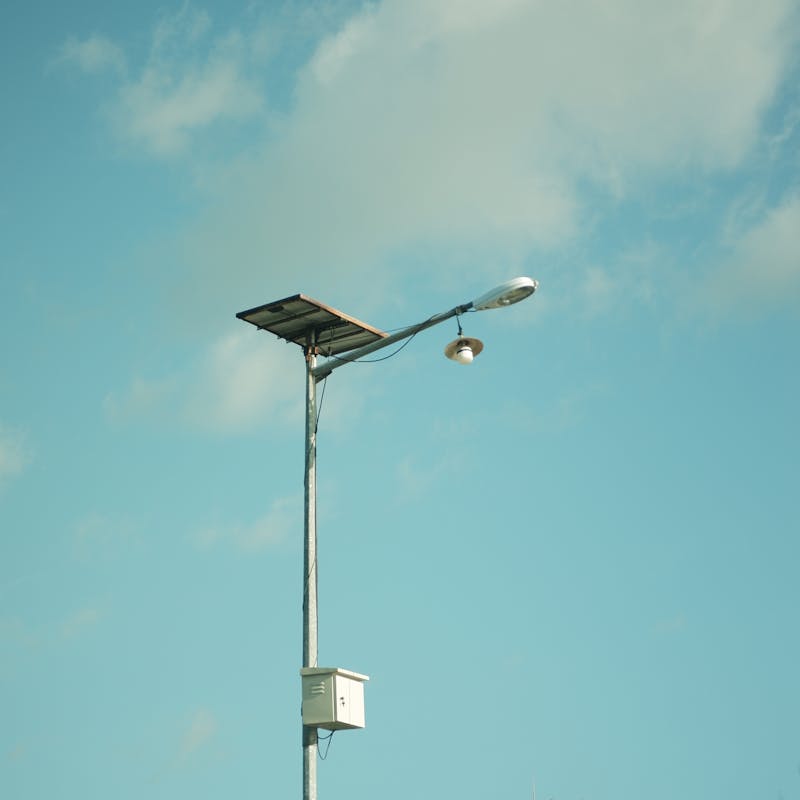
Progress can feel clean while still leaving a mess behind.
The comfort of a bright-green story
There’s a particular relief in believing technology will get us out of environmental trouble. It’s a tidy narrative: swap the old machines for new ones, electrify everything, digitize the waste away, and keep life more or less the same.
In that story, “green tech” is more than a toolkit. It’s a permission slip. We can keep buying, keep moving fast, keep upgrading, and still feel like we’re doing something virtuous.
It’s not that the tools don’t matter. Many of them do. Renewable electricity has genuinely changed the energy landscape, and electrification can reduce local air pollution in ways that are immediate and profound.
But the emotional comfort of the story can hide a harder question: what if our love of green tech—especially our hunger for the newest version—quietly amplifies the very problems it claims to solve?
When “clean” shifts the mess elsewhere
A lot of modern environmental harm is simply displaced rather than eliminated. The smoke no longer rises in your neighborhood; it rises near a mine, a refinery, a factory, or a port.
Green technologies, particularly those built on batteries, advanced materials, and sprawling data infrastructure, have supply chains that stretch across continents.
The climate benefits of an electric vehicle, for example, depend heavily on what it replaces, how it’s charged, and how long it stays on the road. Yet the physical reality of building that vehicle is unavoidably material-intensive.
Mining and processing lithium, nickel, cobalt, copper, and rare earth elements can be disruptive and sometimes damaging to water, soil, and local communities. Even when extraction is improved, it still has a footprint. There is no such thing as a consequence-free ton of metal.
That footprint doesn’t mean electrification is a mistake. It means the label “green” can be misleading when it functions like a moral seal rather than a summary of trade-offs.
Efficiency: the gift that can backfire
One of the strangest truths about human behavior is that efficiency can lead to more consumption.
Make lighting cheaper and people use more light. Make travel faster and people travel farther. Make computing cheaper and companies collect, store, and analyze vastly more data.
This isn’t because people are foolish. It’s because cost, convenience, and cultural norms shape behavior. The moment something becomes easier, it expands.
Green tech is often sold on efficiency: less energy per mile, less power per computation, less fuel per unit of heat. Those gains are real and valuable.
But if efficiency is paired with continued growth in total demand—more cars, bigger homes, longer commutes, heavier shipping volumes—the net impact can flatten out or even worsen.
The uncomfortable implication is that the question isn’t only “Is this device cleaner than the last one?” It’s also “What kind of life does this device encourage us to build?”
The upgrade culture problem
There’s a quiet contradiction at the center of consumer green tech.
We’re told to be responsible by buying a new thing—often sooner than we otherwise would—because it’s more efficient. A new heat pump. A new EV. A new smart thermostat. A new phone made with “recycled materials.”
Sometimes replacing old equipment makes sense. Old furnaces and clunky appliances can be genuine energy hogs. Aging vehicles can be polluting and unsafe.
But the upgrade mindset can become its own form of wastefulness, especially when products are designed for short lifespans, difficult repairs, or rapid obsolescence.
A “greener” gadget that gets replaced every two or three years may not be greener in any meaningful way. The carbon and material cost is front-loaded in manufacturing, and if the product doesn’t last, it never has time to earn back its impact.
There’s also a psychological effect: buying the new “eco” version can feel like a completed act of responsibility. It can substitute for the slower, less glamorous work of using less, repairing more, and voting for systems that make low-impact choices default.
The digital layer we pretend is weightless
Part of green tech’s appeal is that it seems intangible. Apps, dashboards, AI optimizations, cloud services—these feel like a shift from heavy industry to sleek information.
But digital infrastructure is physical. It runs on data centers, transmission lines, cooling systems, backup generators, and a constant churn of hardware.
The energy demand of computing rises as services expand. Even as individual chips become more efficient, the scale of computation can grow faster.
And beyond electricity, there’s the material side: servers, routers, phones, sensors, and batteries, all requiring mining, manufacturing, shipping, and eventual disposal.
Digital tools can absolutely reduce emissions when they replace wasteful processes or improve system coordination. Smart grids and better forecasting help integrate renewables. Remote work can reduce commuting for some jobs.
But when we treat digital expansion as inherently “clean,” we give ourselves permission to build a larger machine without asking what it’s for.
The seduction of “net zero” as a feeling
Corporate and political messaging often frames decarbonization as a matter of accounting.
In theory, accounting has its place. Measuring emissions, tracking reductions, and setting targets are necessary. The danger is when “net zero” becomes an emotional balm rather than a practical plan.
Offsets and credits can be used responsibly, but they can also become a way to delay the hard work of changing operations, products, and incentives.
A company can fund tree-planting while continuing to sell a high-emissions product. A city can announce a target while approving development patterns that lock in car dependence.
Green tech fits neatly into this accounting mindset. Buy cleaner power. Install sensors. Purchase credits. Publish a report.
Meanwhile, the deeper question—how to reduce total resource throughput—remains sidelined because it’s harder to quantify and politically riskier to say out loud.
What “better” really means in a finite world
The most honest way to talk about green tech is as a set of tools under constraints.
We need clean electricity at scale. We need electrified transport. We need better building efficiency. We need industrial innovation and smarter grids.
But we also need an adult conversation about limits.
A world where everyone drives a large electric SUV, upgrades it frequently, lives far from work, and expects overnight shipping for everything is still a world that demands massive extraction, land use, and energy infrastructure.
It might be a less carbon-intensive version of the same pattern, but it’s not automatically sustainable.
“Better” in a finite world might look less like swapping every engine for a battery and more like reducing the number of engines we need at all.
That shift can be subtle. Not deprivation, but design.
Cities that make it easy to walk, bike, and take transit. Homes that are comfortable without being oversized. Products designed to be repaired. Energy systems built around reliability and sufficiency rather than endless peak demand.
Green tech supports this vision beautifully when it’s aligned with it. But it undermines it when it becomes a way to preserve high-consumption norms.
The politics hiding inside the hardware
Technology doesn’t arrive in a vacuum. It arrives through policies, incentives, supply contracts, and power.
Subsidies can accelerate helpful transitions, but they can also entrench certain industries and designs. If incentives favor new purchases over repair, people will buy new.
If the market rewards short-term cost over durability, products will be disposable. If zoning enforces sprawl, even the cleanest car becomes a necessity rather than a choice.
The hard truth is that green tech alone can’t fix the systems that drive demand. Without structural changes, it can become an expensive layer added on top of the same old extraction-heavy model.
And when those structural changes don’t happen, disappointment follows. People start to suspect the whole project was a sham.
It isn’t a sham. It’s just incomplete.
A more grounded way to love green tech
It’s possible to embrace green technology without turning it into a lifestyle religion.
That begins with treating “green” as a direction, not a halo.
We can ask: How long will this last? Can it be repaired? What happens to it at end of life? Does it reduce demand or simply shift it? Does it make a low-impact life easier, or does it encourage more consumption?
We can also widen our idea of what counts as innovation.
A durable product with modular parts is innovation. A building code that rewards efficiency and good design is innovation. A transit line that changes how a city moves is innovation. A right-to-repair law is innovation.
Not everything that matters comes with a sleek interface.
The question worth keeping
Green tech can be a real part of the solution, and in many sectors it has to be.
But if we treat it as a substitute for restraint, durability, and better systems, it becomes a kind of camouflage. The world looks cleaner while the material appetite grows.
The most useful skepticism isn’t cynicism about technology. It’s curiosity about outcomes.
A future that’s genuinely greener will likely feel different, not just powered differently. It will prize longevity over novelty, shared infrastructure over individual excess, and thoughtful design over constant replacement.
If our love of green tech helps us build that future, it’s a gift. If it helps us avoid changing anything else, it may quietly make things worse.
And that’s the question worth holding onto whenever the next “clean” breakthrough arrives: what is it really allowing us to keep doing?