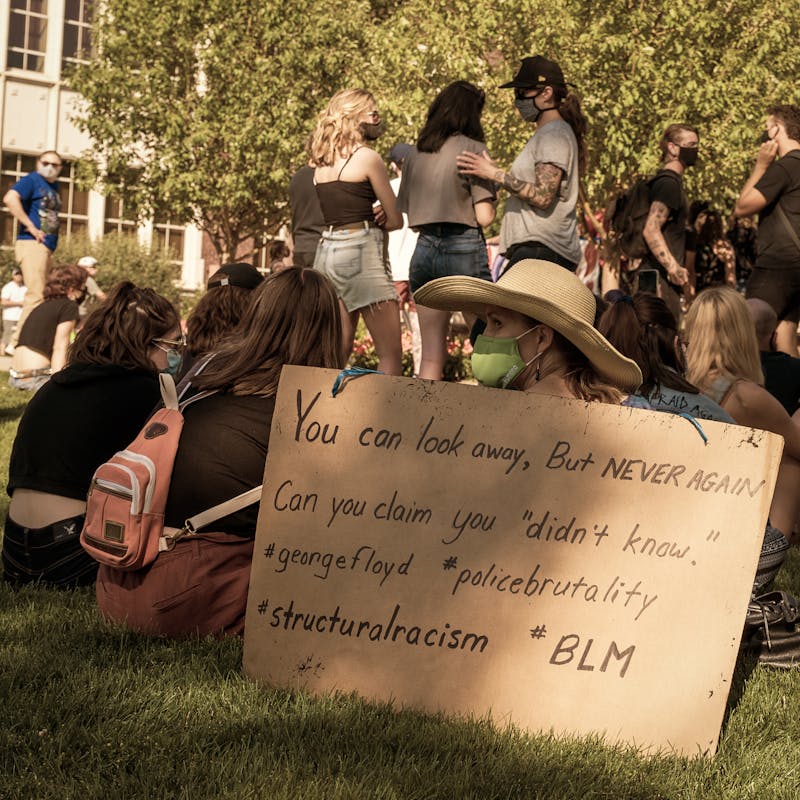
We learned new words for acceptance, but we forgot how to stay in the same room.
For years, the story has been simple: society is becoming more tolerant. We point to broader representation on screens, to laws that recognize relationships once denied, to workplaces that teach the language of inclusion. Many of these shifts are real and overdue.
And yet, when you watch how people speak to each other—online, at school board meetings, in group chats, even at the dinner table—something doesn’t fit. The tone is sharper. The patience is thinner. The urge to punish is stronger.
It’s a strange modern paradox: our ideals sound gentler while our tribes grow harsher.
The new manners of tolerance
Tolerance used to mean living beside differences without needing to absorb them. You might not understand your neighbor, but you didn’t try to ruin their life either.
Today, tolerance often arrives as a set of manners. We learn the right terms, the updated etiquette, the public signals that show we belong to the decent people. This can be a meaningful improvement, especially for anyone who has been treated as invisible or unsafe.
But manners can also become armor.
When tolerance becomes primarily about how to speak, it’s easy to confuse the performance of respect with the practice of curiosity. You can say the correct thing and still have no interest in the person you’re addressing. You can be fluent in the vocabulary of dignity and still feel privately disgusted, threatened, or superior.
That gap—between outward language and inward posture—creates pressure. People become vigilant, not only about harming others, but about being seen as the kind of person who would never harm others.
And vigilance, no matter how well-intended, tends to look for enemies.
Why tribes tighten when the world opens
In a genuinely plural society, you’re supposed to encounter differences constantly. You share institutions with people whose values you don’t share. You develop the skill of coexistence.
But modern life is structured to reduce that friction. We can choose what we watch, where we shop, which news we consume, what “side” we live on. We can curate our social worlds until they feel like one long affirmation.
When people say we’re more tolerant now, they may be describing the widening of what’s visible in public. More identities and viewpoints have surfaced, demanded room, and claimed language. That’s a kind of opening.
At the same time, the private architecture of our lives often narrows. Algorithms and social incentives reward sameness. Friendships form around shared stances, not shared lives. Neighborhoods, workplaces, and cultural spaces become sorted by class and politics.
When diversity increases on paper but decreases in your daily experience, difference starts to feel like an intrusion rather than a normal feature of citizenship.
That’s when tribes tighten.
The moral thrill of belonging
Harshness is not only anger. It’s also a form of intimacy.
There’s a specific warmth that comes from being surrounded by people who share your moral instincts. You don’t have to explain yourself. You don’t have to hedge. Someone makes a half-sentence joke and the group laughs in recognition.
In a time when many traditional sources of identity—religion, neighborhood ties, long-term employment—have weakened, moral belonging can replace them. Your “side” becomes a home.
Homes have rules.
The harshness grows when membership depends on purity. If the group is built around a righteous cause, any deviation doesn’t feel like disagreement; it feels like betrayal. A minor lapse becomes proof of a corrupted character. A clumsy question becomes an accusation. Silence becomes complicity.
That’s how you get communities that claim to be compassionate while practicing social cruelty.
They are compassionate toward those inside the circle, and brutal toward those outside it.
The conversion of tolerance into a weapon
There’s a quiet shift that happens when tolerance stops being a limit on how we treat others and becomes a badge we use against them.
Instead of “I won’t dehumanize you,” the posture becomes “If you’re not with us, you’re dangerous.”
Instead of “We can disagree without violence,” it becomes “Your disagreement is violence.”
Some disputes really do involve harm, and society has a responsibility to protect vulnerable people. But the modern temptation is to frame every conflict as existential. That raises the emotional stakes to a level where ordinary democratic life becomes impossible.
Once every disagreement is a crisis, any tactic becomes justified.
Public shaming starts to feel like accountability. Misinterpretation becomes a shortcut. Context becomes an excuse. The goal shifts from persuasion to removal: get them fired, get them banned, get them ostracized.
It’s worth noticing how often this happens across ideological lines. Different tribes use different language, but the emotional machinery is similar.
How technology trains us to be harsher
The internet didn’t invent tribalism, but it industrialized it.
Online spaces reward speed and certainty. They punish hesitation. In a feed, nuance looks like weakness. A careful thought gets ignored; a scorching line gets shared.
Even when people sincerely value tolerance, the platform teaches them to communicate like prosecutors. You gather evidence, you present the worst interpretation, you deliver a verdict. The audience is the jury, and their approval is immediate.
What’s lost is the ordinary human rhythm of repair.
In person, you can see someone flinch and recalibrate. You can hear the tremor in their voice and soften. Online, you mostly see text and avatars, and the mind fills in the blanks with whatever story your tribe already believes.
The result isn’t just conflict. It’s a kind of moral overstimulation.
When every day contains a new outrage and every outrage is framed as proof that the other side is irredeemable, your tolerance doesn’t expand. It contracts.
Tolerance without humility isn’t stable
One reason the “more tolerant” story feels hollow is that tolerance is not only about what you believe; it’s also about what you can withstand.
A tolerant society can tolerate the presence of people who irritate it. It can tolerate awkwardness, imperfect language, learning in public. It can tolerate the slow pace of human change.
That requires humility.
Humility isn’t self-hatred or surrender. It’s the recognition that you are capable of being wrong, of misunderstanding someone, of reacting from fear rather than principle. It’s also the recognition that other people’s motives are often mixed, just like yours.
Without humility, tolerance turns brittle.
Brittle tolerance breaks when it meets a complicated person.
A complicated person might share your values but express them in unfamiliar ways. They might hold one view you admire and another you dislike. They might be trying, failing, and trying again.
If your tribe demands clean categories—good people and bad people—complicated people become a threat.
So the tribe gets harsher, not because it hates tolerance, but because it can’t tolerate the messiness that tolerance requires.
The hidden grief beneath the harshness
Harshness often reads as confidence, but it can be fueled by grief.
People are grieving the sense that shared reality is dissolving. They’re grieving institutions that feel untrustworthy. They’re grieving a future that looks less secure than what they were promised.
In that environment, moral certainty can feel like control.
If the world is confusing, at least you can know who the villains are. If the economy is unstable, at least you can build status by being “on the right side.” If your life feels lonely, at least you can join a chorus and feel the rush of collective judgment.
This isn’t an excuse for cruelty. It’s a clue.
If we want less harshness, we have to address the conditions that make harshness emotionally useful.
What it looks like to resist the tribal reflex
Resisting harshness rarely looks dramatic. It looks small and almost boring, which is why it’s hard to celebrate publicly.
It looks like asking a question when your tribe expects a sentence of condemnation.
It looks like pausing before sharing a clip that makes the other side look monstrous, long enough to wonder what’s missing.
It looks like being willing to say, “I don’t know,” without panicking about how that will be interpreted.
It also looks like drawing boundaries without turning them into humiliations.
You can refuse to tolerate behavior that harms people without treating every mistake as evidence of evil. You can defend someone’s dignity without demanding that everyone think the same thoughts in the same tone.
The point isn’t to become soft on everything. The point is to become strong enough to remain human.
A quieter definition of tolerance
Maybe we need to recover an older, less glamorous definition of tolerance.
Not the version that flatters us, but the version that costs us something.
Tolerance is the ability to live among people who will disappoint you, confuse you, and sometimes offend you—without reaching immediately for exile as the solution.
It is the discipline of distinguishing between what is truly dangerous and what is merely different.
It is the practice of criticism that leaves room for return.
A tolerant society doesn’t require constant agreement. It requires a shared commitment to the idea that opponents are still people, and that people are more than their worst post.
The question that lingers
If our tribes are growing harsher, it’s not only because we’re failing at tolerance.
It may be because we’ve redefined tolerance as a signal of membership rather than a skill of coexistence.
Signals can be policed. Skills can be practiced.
The future will likely bring even more difference into the open—more competing moral visions, more visible identities, more arguments about what a good life looks like. That isn’t a tragedy. It’s what freedom looks like.
The real question is whether we can build the inner capacity to handle it.
Because tolerance isn’t proven by who you agree with.
It’s proven by what you do when you don’t.