You can feel the room changing before you can explain why.
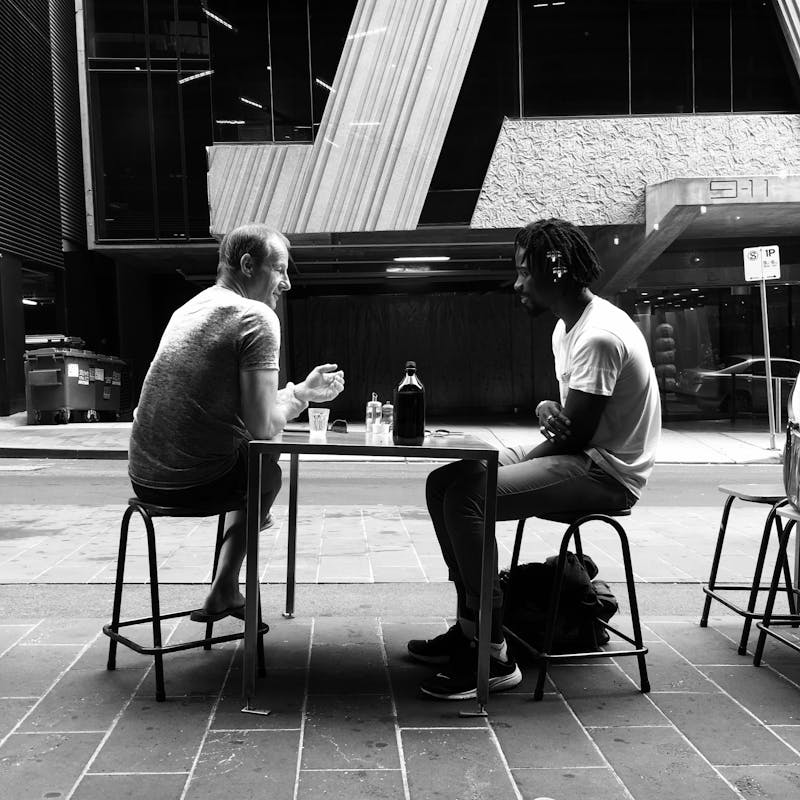
There’s a particular kind of quiet that settles in when a group of friends is deciding where to eat. Someone says, “I don’t care,” but they’re already scrolling. Another person mentions a new place they “just found,” though it’s hard to say whether they found it or it found them. Within minutes, the decision is less a debate than a convergence—an invisible nudge guiding the table toward the option that already seemed inevitable.
Nothing about this moment feels like technology in the dramatic sense. No buzzing drones. No glassy sci-fi interfaces. Just a handful of people making a small choice. And yet these micro-choices, repeated across a day and across millions of lives, are where culture quietly gets rewritten.
The new background noise
We used to imagine influence as something you could point to: a bestselling book, a hit TV show, a celebrity interview, a political speech that went viral. Cultural change arrived with a signature, or at least a recognizable style.
Now a lot of it arrives as background noise.
The feed updates. The recommendations refresh. The map suggests a faster route. The shopping app remembers what you “might like.” The streaming service starts playing the next episode before you have to decide whether you want it.
This isn’t just convenience; it’s a new kind of atmosphere. Algorithms are no longer tools we actively use. They’re conditions we live inside.
And because they are mostly invisible—hidden behind friendly buttons and clean design—they can change behavior without triggering our internal alarm system. It’s hard to resist something you barely notice.
From public taste to personalized reality
Mass culture once depended on shared scarcity. There were only so many channels, so many newspapers, so many radio stations worth tuning into. People argued about the same movies because they’d seen the same movies.
Today, “popular” has become slippery. Two people can live in the same city and experience radically different versions of what’s trending. One person’s sense of the moment comes from a constellation of niche creators and hyper-specific interests. Another person’s comes from a different constellation, equally convincing.
This personalization doesn’t just fragment entertainment. It reshapes the texture of everyday conversation.
When our inputs diverge, our assumptions diverge too. We lose the subtle, unspoken common references that make social life feel effortless. Even jokes can fail to land—not because they aren’t funny, but because the shared context isn’t there.
Culture starts to feel like a set of parallel hallways rather than a crowded public square.
The gentle choreography of choice
Algorithmic systems rarely force. They suggest. They rank. They present a limited set of options with the unspoken message: these are the ones worth considering.
In most cases, the influence is delivered through small frictions and small favors.
Something is made a little easier to click. Something else is buried behind a few extra taps. A headline is framed to match what you tend to engage with. A notification arrives at the precise moment you’re most likely to respond.
This is not mind control, and it’s not magic. It’s behavioral design at scale.
The cultural shift is subtle because the persuasion is subtle. The algorithm doesn’t need to change what you believe overnight. It only needs to steer what you notice today, what you ignore, and what you come back to tomorrow.
Over time, attention becomes habit. Habit becomes identity.
Data trails as autobiography—written in pencil
Most people understand, at least abstractly, that their data is being collected. But the idea remains hazy because “data” sounds like something technical and impersonal.
In practice, data trails are intimate.
They’re your pauses and your swipes. The moment you hover over a post before deciding whether to like it. The late-night searches you’d never say out loud. The routes you take when you’re trying to clear your head. The songs you replay after a breakup.
If earlier eras produced diaries and photo albums, our era produces behavioral residue—an autobiography written in pencil by thousands of tiny actions.
And because it’s written in pencil, it’s easy to revise. The story that gets inferred about you can change when the model changes. The meaning of your actions can be reinterpreted without you doing anything new.
There’s a quiet cultural consequence here: we begin to see ourselves through a statistical mirror.
You liked this, so you’re the kind of person who likes that. You watched those, so you must want more of these. A personality, in this framing, is not something you cultivate but something that emerges from pattern recognition.
When prediction becomes prescription
Recommendation systems often describe themselves as predictive: they aim to show you what you’re likely to enjoy.
But prediction has a strange way of becoming prescription.
If the system keeps serving a certain kind of content, it shapes your sense of what’s available. If it continually reinforces a genre, a style, a viewpoint, it gradually defines your tastes by surrounding you with them.
Even if you occasionally branch out, the pathway back to the familiar is always smoother. The algorithm remembers what “works,” and it is optimized to repeat what works.
This can create a cultural loop where the new is filtered through the measurable. Surprise becomes a risk. Ambiguity becomes a problem. Art that demands patience competes against content designed for immediate response.
Over time, we can end up with a culture that feels strangely restless—constantly refreshed, constantly updated, yet oddly repetitive.
The soft politics of ranking
There is an old phrase that “to name is to frame.” In the algorithmic age, to rank is to rule.
Most ranking systems claim neutrality: they simply elevate what gets the most engagement, what is most relevant, what is most similar to what you’ve liked before.
But relevance is not a fact; it’s a decision.
Any system that determines what appears first—and what appears at all—shapes public life. It influences which ideas seem mainstream, which voices feel authoritative, and which controversies look urgent.
This is power that rarely announces itself.
It doesn’t look like censorship. It looks like a list.
And because the list is personalized, it becomes harder to compare experiences. Two people can argue fiercely about “what everyone is seeing,” only to discover they’re living under different informational weather patterns.
In that sense, the politics of algorithms is often the politics of perception: not only what we think, but what we think is happening.
The economy of the self
A quieter shift is happening in how people present themselves.
When visibility is mediated by platforms, selfhood becomes partly a negotiation with the machine. People learn, sometimes unconsciously, what gets rewarded: the caption length that performs well, the tone that invites comments, the vulnerability that drives shares without tipping into discomfort.
This doesn’t mean everyone is fake. It means authenticity becomes performative in a new way.
There’s a difference between expressing yourself and optimizing yourself. But the boundary can blur when the feedback is immediate and quantifiable.
You can watch the cultural ideal of a person becoming more “legible.”
Legibility is useful for algorithms. It’s easier to classify someone who fits a recognizable type: the minimalist, the hustle hero, the wholesome parent, the contrarian, the aspirational traveler, the wellness devotee. Once you’re legible, you’re easier to target, easier to recommend, easier to package.
The risk is that we start trimming the messy edges of human life—the contradictions, the evolving opinions, the awkward in-between stages—because they don’t convert neatly into engagement.
Time, reshaped into a stream
The old cultural rhythms had pauses. Morning papers. Prime-time television. Weekend outings.
Now culture arrives continuously. A stream has no natural stopping point.
That changes not only what we consume but how we live. Leisure becomes porous. Work leaks into the evening. News breaks at any hour. Friendship lives partly in a scrolling corridor of posts and stories.
The algorithm thrives in the absence of stopping cues. Autoplay is not just a feature; it’s a philosophy. The next thing is always ready.
In this environment, attention becomes the most contested resource, and culture becomes the terrain where that contest plays out.
And yet people still crave slowness. You can see it in the popularity of long walks, vinyl records, quiet hobbies, newsletters that read like letters, bookstores that feel like sanctuaries. These aren’t merely trends; they’re cultural antibodies—small attempts to restore rhythm.
The paradox of comfort and unease
Many of these algorithmic shifts make life genuinely easier. Directions are better. Shopping is faster. Entertainment is abundant. It’s not wrong to enjoy any of that.
The unease comes from something subtler: the sense that comfort is being traded for agency in small installments.
When systems anticipate our needs, we risk forgetting how to articulate them. When options are curated for us, we risk losing the muscle of choosing. When a platform decides what deserves our attention, we risk outsourcing curiosity.
The cultural cost isn’t always dramatic. Sometimes it’s a faint dulling of surprise.
You can see it in how rarely people stumble into something truly unfamiliar—an album outside their usual taste, a viewpoint that doesn’t arrive as an opponent, a local event that isn’t pre-approved by ratings.
Serendipity used to be a feature of public life. Now it can feel like a luxury.
Finding the seams
If algorithms are shaping culture by becoming invisible, one response is to make them more visible—not in the technical sense of reading code, but in the everyday sense of noticing patterns.
Notice when your mood changes after ten minutes of scrolling.
Notice when a “random” recommendation arrives right after you mentioned something out loud.
Notice when your opinions start to feel like they were assembled from fragments.
The point isn’t paranoia. It’s literacy.
Cultural literacy used to mean knowing classic books or famous paintings. Now it also means understanding the architecture of the feed: how it rewards outrage, how it flattens nuance, how it nudges you toward certainty because certainty performs.
And perhaps it means recovering a different kind of attention—attention that can linger without being immediately monetized.
A quieter kind of freedom
There’s a small scene that plays out in coffee shops and on buses: someone closes an app, sets the phone down, and looks out the window.
It’s not a grand rebellion. No one applauds. Nothing changes on the platform.
But something changes in that person.
They re-enter a world that isn’t ranked. The light on the sidewalk doesn’t care what they clicked yesterday. A stranger’s conversation is not tailored to their preferences. A book on a nearby table doesn’t know their demographic.
In those moments, culture stops being a stream and becomes a place again.
The subtle shifts driven by invisible algorithms will keep unfolding, because they’re baked into the way modern life is organized. But the most meaningful cultural commentary might begin not with outrage, but with attention—patient, stubborn, human attention.
Not everything that matters can be measured.
And not everything worth choosing should be chosen for us.