Some days, the world feels like it’s trying to settle—on our skin, on our thoughts, on the thin ledge between inside and out.
A windowsill is such a small stage for a big story.
Dust gathers there with quiet patience, as if time itself has a texture. You wipe it away and, almost immediately, the room begins its slow work of becoming lived-in again. Outside, the sky can carry its own residue—smoke, haze, the faint afterimage of something burning far beyond your neighborhood. And then the rain comes, again and again, not dramatic enough to feel like a turning point, but persistent enough to change how you walk through your day.
“Dust on the Windowsill, Ash in the Sky, Rain on Repeat” is a title that reads like weather, but it feels like a mood. It suggests a season where the air isn’t neutral, where the atmosphere—literal and emotional—keeps leaving marks.
The Small Domestic Evidence of Time
Dust is honest in a way we rarely appreciate.
It doesn’t pretend to be anything other than what it is: a mix of fibers, soil, skin, and the powdered leftovers of living. It arrives without announcement, settling where light touches most. On a windowsill, it’s almost performative, highlighted by the sun like a confession.
Most of us have a complicated relationship with that kind of evidence.
We want our spaces to feel clean and controlled, not because we’re shallow, but because the world already asks so much of our attention. Wiping down a surface can feel like restoring order, like making a small promise that at least one corner of life is manageable.
But dust returns.
It doesn’t return out of spite. It returns because presence creates residue. The more a home is lived in—the more blankets are shaken out, the more someone cooks, the more air moves through vents and open windows—the more the room becomes a participant in time.
A dusty windowsill isn’t just a housekeeping problem.
It’s a reminder that stillness is never truly still. Even on days when nothing “happens,” matter is traveling. Particles drift. Light shifts. You breathe in and out, and the world rearranges itself in small, invisible negotiations.
Ash: When the Outside Becomes Personal
Ash is different from dust.
Dust suggests ordinary life; ash suggests interruption. It arrives with a story attached, even if you don’t know the details. Something had to burn to make it.
In recent years, many people have learned the specific dread of looking up and seeing a sky that doesn’t look like a sky.
It might be tinted an unsettling orange. It might be a dull gray that makes noon feel like early evening. The sunlight can turn flat and strange, as though someone swapped the world’s lightbulb for a lower-quality version.
Even when the fire is far away, ash is intimate.
It lands on cars. It collects in porch corners. It gets caught in hair and eyelashes. It changes the smell of the air so thoroughly that you stop trusting your lungs to know what “clean” means.
There’s a psychological trick in that: the way distance collapses.
A disaster on the horizon is one thing. A disaster in your air is another. It’s hard to keep tragedy at arm’s length when it’s coating your patio furniture.
And ash has a way of making the future feel fragile.
It raises questions people don’t always say aloud. If the sky can look like this today, what about next month? Next year? What about the places you thought were safe, the seasons you assumed would behave, the routines you built on the quiet belief that the environment is a stable backdrop?
Ash doesn’t just obscure the view.
It challenges the idea that there’s a clear separation between “out there” and “in here.” It’s a messenger that doesn’t knock before entering.
Rain on Repeat and the Feeling of Being Stuck
Rain is supposed to be cleansing.
In stories, it washes streets and resets the mood. It’s cinematic, cathartic, a signal that something is about to change.
But rain on repeat isn’t a dramatic downpour.
It’s the kind that keeps you checking the forecast with a tired thumb. It’s the kind that makes the day feel narrower. Your shoes never fully dry. The dog looks at you like you’re responsible for the entire sky. The air in your home gets that damp heaviness, and you start to notice every shadowy corner where moisture likes to linger.
Repetitive rain can make time feel syrupy.
Not because it’s tragic, but because it’s the same. The same gray light. The same wet sidewalks. The same half-damp cuffs on your jeans if you forget an umbrella for the third time.
And sameness is powerful.
It can be comforting in small doses, but extended sameness has a way of blurring the boundaries between days. You can lose the sense of forward motion. You can start to wonder if your own life is becoming weather: happening to you rather than being shaped by you.
There’s also the quieter truth that rain, too, carries things.
In many places, it collects particles from the air—smoke, pollution, the unseen grit of industry and traffic. It can be a rinse, but it can also be a delivery system. The idea of “fresh rain” becomes complicated when you’ve watched the sky fill with haze for weeks.
Cleansing, yes—but never purely.
The Windowsill as a Borderline
The windowsill is where these three forces meet.
Dust is the inside’s slow accumulation. Ash is the outside’s sudden intrusion. Rain is the rhythm that keeps insisting on itself, tapping against glass like a metronome that won’t change tempo.
A windowsill sits at the border of control.
Inside, you can choose the temperature, the lighting, the music. You can close the curtains, light a candle, make the room feel like a refuge. Outside, you can’t negotiate with wind or drought or the stubborn patterns of a shifting climate.
Yet the border is porous.
Air leaks. Light enters. Sounds travel. Even with the windows shut, the outside presses its fingerprints against your interior life.
People notice this more when they’re tired.
When you’re running on low sleep and high stress, the dust feels symbolic. The smoky sky feels personal. The rain feels like a commentary on your plans.
A canceled picnic becomes “of course.”
A sore throat becomes “is it allergies or the air?” A dull mood becomes “maybe it’s the weather,” which might be true, but also might be shorthand for something deeper: the feeling that the world is less predictable than it used to be.
Living With Residue Without Becoming It
The hardest part of residue—dust, ash, repeated rain—is how it tempts you into resignation.
It suggests that effort doesn’t matter, because the film will return. The sky will haze again. The forecast will keep repeating itself.
But there’s another way to read the same pattern.
Dust returns because life is happening. It’s proof that you are here, moving through rooms, touching fabrics, opening doors. It’s not romantic, but it’s real.
Ash, for all its menace, is also a signal.
It forces attention. It refuses the luxury of denial. It makes it harder to pretend that “somewhere else” is separate from “here.” That awareness can be heavy, but it can also be a beginning. People change what they’re willing to change when the air stops feeling abstract.
And rain on repeat can be a lesson in pacing.
Not the kind of lesson you’d choose, but the kind that arrives anyway. It asks what you do when the external world doesn’t cooperate with your internal schedule. It asks how you keep your mind from becoming a closed room.
Sometimes resilience looks less like grit and more like adjustment.
A different route to work because the street floods. A habit of airing out the house when the smoke clears. A simple choice to wipe the windowsill not because you think you’ll win, but because you want your space to feel tended.
The gesture matters.
Not because it changes the climate, but because it changes your relationship to your days.
The Quiet Scene We Keep Returning To
Picture someone standing at the window, coffee cooling in their hand.
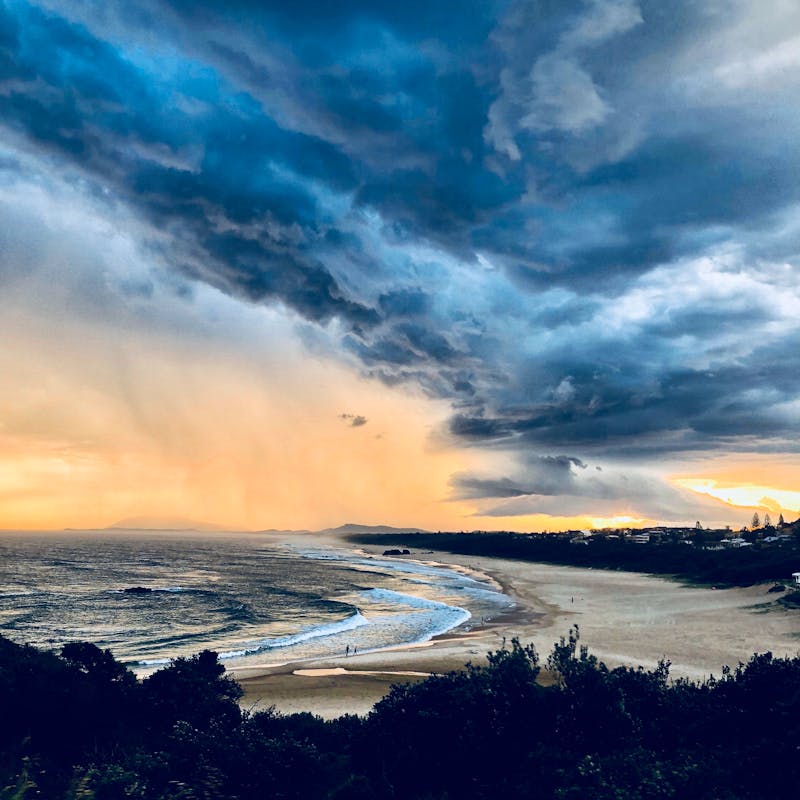
They run a finger along the sill and lift it, noticing the gray on their skin. Outside, the sky looks bruised—either with smoke or with the low ceiling of rainclouds. The street is wet again, reflecting a dim version of morning.
Nothing about this is dramatic.
It’s the opposite: a small moment that repeats in many homes, many cities, many seasons that have started to feel unfamiliar.
And yet it’s exactly in these moments that people decide what kind of attention they can bear.
Do you turn away quickly, overwhelmed by the accumulation? Do you stare too long, letting the day’s atmosphere dictate your inner weather? Or do you notice—really notice—without surrendering your ability to choose your next move?
Maybe you open the window when the air is clear enough.
Maybe you don’t. Maybe you wipe the sill, or maybe you leave it for tomorrow. Maybe you step outside into the repeating rain anyway, hood up, accepting that you can’t bargain with clouds.
The point isn’t to pretend the residue isn’t there.
The point is to remember that you are not only what settles on you.
The world leaves marks—fine dust, drifting ash, rain that keeps coming.
And still, you get to decide what you make of the view, how you tend your small interior spaces, and how you keep moving through a season that refuses to be simple.