Wandering changes the map.
The romance of not knowing exactly where you are
For a long time, travel was sold as a pursuit of certainty. You booked the ticket, checked the landmarks off a list, and returned home with proof that you had been there. The value of a trip seemed to depend on how efficiently it could be described afterward: the museum, the market, the view from the hill, the meal everyone told you to try.
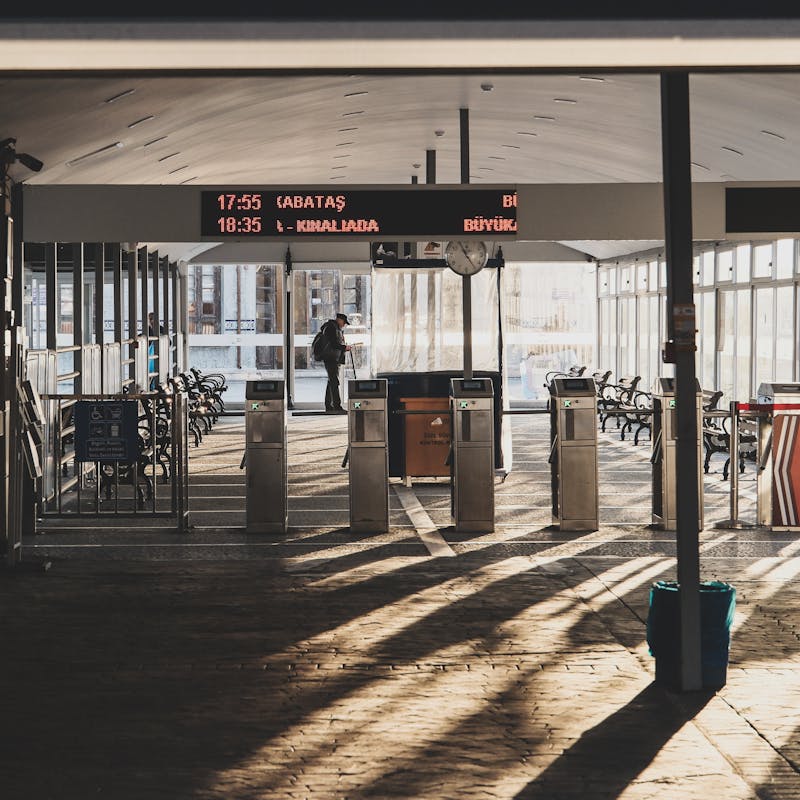
But something subtler has been happening. In an age of search bars, ride apps, and review scores, the most memorable moments often arrive when travel slips out of control. Not in a dramatic sense, but in a human one. A wrong turn. A train delay. A street that does not appear on the itinerary. A neighborhood where no one expects visitors, and the air feels less curated because of it.
Getting lost has become less about confusion and more about permission. It allows a traveler to move without always performing efficiency. It opens a small space where place can speak before expectation does.
What it means to be found by a place
There is a difference between seeing a destination and being absorbed into it. The first can happen quickly. The second takes time, and time often begins with uncertainty.
When travelers stray from the obvious route, they tend to encounter the ordinary rhythms that hold a community together. A bakery that opens before dawn. Children kicking a ball against a wall after school. Older residents greeting one another by name. These moments are not designed to impress outsiders, yet they often reveal more than the places built for visibility.
A community is rarely understood through its postcard surfaces. It comes into focus through repetition, habit, and the small choreography of daily life. Getting lost, in the gentlest sense, can let visitors witness that choreography without standing too firmly outside it.
This does not mean romanticizing confusion or pretending that every unplanned turn is profound. Sometimes being lost is just inconvenient. But even inconvenience can be revealing. It reminds travelers that a place is not arranged for their comfort alone, and that can be a healthy correction.
The quiet pressure of being a “good” tourist
Modern travel often carries an invisible performance. People are encouraged to maximize each hour, collect experiences, and produce a polished version of movement through the world. Even leisure can start to feel like a task list with scenery.
That pressure changes how communities are experienced. If the goal is to consume only the famous parts, then everything else becomes background. Local life turns into something to pass through quickly on the way to the “real” attraction.
Yet many communities are beginning to feel the effects of this style of travel. Highly visited districts can become too expensive for residents, too crowded for ordinary routines, and too dependent on businesses built for short-term attention. What was once lived-in can start to resemble a stage set. The irony is painful: the more a place is flattened into an image, the less of its actual life remains visible.
The new art of getting lost offers a quieter alternative. It asks travelers to loosen their grip on the checklist and notice what exists outside it. Not every interesting street has a famous name. Not every meaningful meal comes with a recommendation badge.
Small detours, real encounters
A traveler who allows for detours is often rewarded with encounters that cannot be engineered.
A conversation at a corner store may yield a better understanding of a neighborhood than any guidebook. A bus ride taken by mistake can reveal how people commute, shop, and return home. A local festival discovered by accident may feel more memorable precisely because it was not scheduled into the trip’s highlight reel.
These experiences matter because they soften the distance between visitor and resident. They do not erase the difference, and they should not pretend to. Travelers remain guests. But a guest who pays attention, asks respectfully, and moves with humility can participate in a place’s life without claiming ownership of it.
That distinction is important. Communities are not attractions in disguise. They are living systems made of routines, memories, obligations, and relationships that predate the traveler’s arrival and will continue after departure.
When wandering supports local life
There is a practical side to this shift as well. When visitors spread beyond a handful of famous spots, the benefits of travel can become more evenly distributed. A small café in a less-visited district may gain new customers. A family-run guesthouse in a quieter area may stay open another season. A neighborhood market may feel less like an afterthought.
This is not a cure-all. Tourism can still strain local infrastructure wherever it goes, even in areas that once felt overlooked. But a more dispersed and attentive style of travel can reduce the concentration of pressure that often damages the most iconic places.
It also changes the traveler’s relationship to money and value. Instead of spending primarily on prestige, visitors may spend on proximity to everyday life: local transit, neighborhood food, independent shops, community events. Those choices can be modest and still meaningful.
The important point is not to perform virtue. It is to recognize that how one moves through a place shapes what that place becomes.
The emotional side of disorientation
Being lost can be unsettling because it briefly removes the illusion of control. That discomfort is part of its usefulness.
Many of us are trained to avoid uncertainty. We want the route to be clear, the language to be translated, the timeline to stay intact. But travel has always had an honest relationship with vulnerability. You arrive unfamiliar, and for a while, the world does not center on your habits.
That can be humbling. It can also be freeing.
When a traveler stops insisting on mastery, there is room for observation. The senses become less abstract. You notice the smell of rain on stone, the sound of a market being packed away, the angle of evening light on a building no one mentioned. These details often stay with us longer than the “big” sights because they were encountered rather than scheduled.
In communities, this softer form of attention can be felt. People are usually quick to sense whether a visitor is rushing to extract value or genuinely present. The difference shows in eye contact, in patience, in the willingness to pause and listen. Getting lost can slow that exchange down enough for it to become human.
Technology cannot replace attention
Maps on phones are useful, and no honest traveler would argue otherwise. But digital guidance has also made it easier to move through places without really entering them.
If every route is optimized, every corner previewed, every restaurant rated in advance, then travel can become strangely abstract. The journey is completed before the body has fully arrived.
The new art of getting lost is not a rejection of technology. It is a reminder that guidance is not the same as awareness. A screen can tell you where to go, but it cannot tell you how a neighborhood feels when school lets out, or which street hums most warmly at dusk, or when to stop walking and simply stand still.
Sometimes the best use of a map is to set it aside for a while.
Community as something lived, not consumed
At the heart of this quieter travel ethic is a deeper respect for communities themselves.
A community is not a backdrop for self-discovery, though travelers often treat it that way. It is a network of shared responsibilities. People care for one another, argue, improvise, remember, and rebuild. They create customs not for display, but for continuity.
When visitors move through such a place with curiosity instead of entitlement, they become more likely to notice those acts of continuity. They see that a town is not just its scenic center, but its laundromat, its schoolyard, its late-night pharmacy, its benches, its repaired sidewalks, its ordinary acts of maintenance.
This recognition matters because it resists the habit of reducing places to content. Communities deserve to be understood in full, including the parts that will never go viral.
A slower kind of departure
The strange gift of getting lost is that it can change the way departure feels too.
A neatly planned trip often ends with a checklist completed and a set of photos filed away. But a trip shaped by detours leaves behind more ambiguity. You may not remember the exact route, but you remember the feeling of crossing into an unfamiliar block and being gently absorbed by it. You remember the kindness of directions offered by a stranger. You remember the silence of a street at noon or the way a local shop seemed to carry the neighborhood’s personality in its windows.
Those memories are less tidy, and perhaps more durable.
They also leave a different ethical residue. Instead of asking, “What did I get from this place?” the traveler may ask, “What did I notice, and what did I leave untouched?” That question lingers long after the suitcase is unpacked.
Travel will always involve movement, but perhaps its most valuable shift is not geographical. Perhaps it is a shift in posture—from taking to noticing, from arriving with certainty to arriving with curiosity, from consuming a destination to encountering a community.
In that sense, getting lost is not a failure of travel. It may be one of its quietest forms of wisdom.