We live by borrowed light, and it keeps asking for more.
The room is quiet, but it isn’t dark.
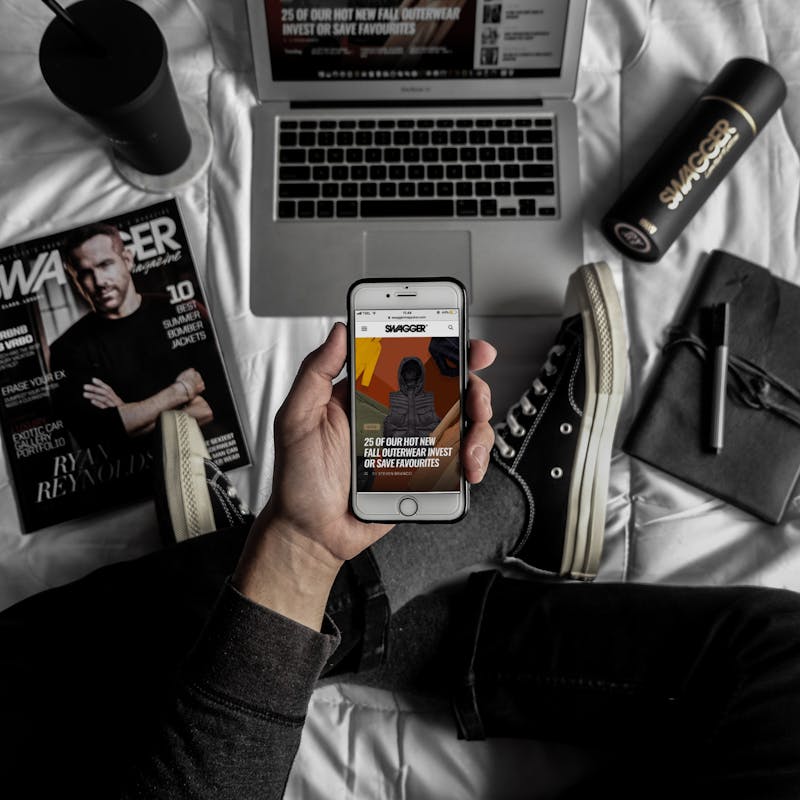
A soft rectangle floats above the sheets, staining hands and cheekbones with a bluish tint. Somewhere beyond the glass, the night is doing what night has always done—cooling the air, deepening shadows, settling into stillness. Inside, the phone hums with tiny urgencies that don’t quite belong to any one moment, but insist on being handled right now.
This is not a story about technology as villain or savior. It’s about the particular mood our devices create: a hushed glow that feels intimate and impersonal at the same time. A light that suggests company even when we’re alone, and offers rest while quietly denying it.
The new bedside ritual
Bed used to be a border.
It separated the day’s noise from whatever came next—sleep, thinking, talking in the dark, or simply the private drift of being unobserved. Now the border is porous. The last thing many people see is a screen, and the first thing they reach for is the same.
It starts innocently. You check tomorrow’s weather. You answer a message that seems easier to handle now than to hold in your mind overnight. You glance at a headline because you want to feel “caught up,” as if life might penalize you for missing something.
The device doesn’t demand attention like a siren. It invites it like a warm cup in your hands.
And in that warmth, something shifts. Bed becomes not a threshold but an outpost—another place where the day continues, softer but still active. The brain, designed to dim and drift, keeps a small engine running.
The glow that flatters and exposes
Screens give us a certain kind of flattering light.
It smooths faces in selfies and brightens dim rooms. It creates the illusion of clarity: high contrast, crisp edges, everything legible. Yet it also exposes us, not visually but psychologically. The glow reveals how quickly we reach for stimulation, how uneasy we can feel with silence, how often we use “just one more minute” as a way to postpone being alone with our thoughts.
There’s a tender irony in this. We’ve built tools to connect, and we often use them to avoid the most immediate form of connection: attention to the present.
A person can be sitting in a living room with someone they love, both of them scrolling, each bathing in private light. No argument, no drama—just a quiet mutual agreement that elsewhere is more interesting.
And sometimes it is. The world is genuinely fascinating.
But fascination becomes restlessness when it’s compulsive, when curiosity turns into reflex.
The restless mind, expertly accommodated
Restlessness isn’t new.
Humans have always fidgeted with worry, wondered about distant things, replayed conversations, imagined different outcomes. What’s new is the way our devices accommodate restlessness with perfect efficiency. Any itch—boredom, loneliness, uncertainty—can be scratched instantly.
Waiting for water to boil? You can fill the gap with a video.
Feeling a vague anxiety you can’t name? You can dissolve it into a feed that moves too fast for reflection.
Even grief, which once demanded stillness, can be anesthetized with infinite content. Not because people are shallow, but because the option exists: escape is now portable.
The phone offers a kind of emotional outsourcing. It says: you don’t have to sit with this. Here, take something else.
The trouble is that avoidance has a cost. The feelings we don’t metabolize don’t disappear. They wait. They leak into our days as irritability, fatigue, or a sense that we’re behind on a task we can’t name.
The intimacy of being “reachable”
There’s a romance to being reachable.
A message arriving late at night can feel like proof of significance. Someone thought of you. Someone wants you. Someone expects you.
But the same mechanism that delivers intimacy also delivers obligation. The line between “I can” and “I must” blurs. If you’ve seen the message, you should respond. If you’re online, you should acknowledge. If you can be reached, you should be available.
Availability becomes a personality trait.
And then a strange reversal happens: we start to fear the very quiet we used to crave. A phone left in another room feels like a missing limb. Silence feels like being excluded.
It’s not just habit. It’s social gravity. Many workplaces and friend groups now operate with an assumption of near-instant responsiveness, even if no one would say that out loud. The expectation is woven into the pace of modern conversation.
So we keep the device close, as if proximity could prevent misunderstanding, as if speed could guarantee care.
The performance of living
A screen is not only a window; it’s a stage.
Even when we aren’t posting, we are often consuming the curated performances of other lives—meals presented as art, vacations reduced to highlights, opinions sharpened into slogans. The result isn’t simply envy; it’s distortion.
We begin to sense that life is something to be documented, optimized, and packaged. Moments that would have once been complete in themselves—walking to a corner store, hearing a song, laughing at a bad joke—acquire a shadow question: would this be worth sharing?
That question doesn’t always arrive consciously. Sometimes it appears as a subtle tilt of attention away from experience and toward its potential representation.
And representation has a particular tempo. It’s faster than reality.
Real life includes dead air: the pause before someone answers, the long middle of a project, the ordinary Tuesday with nothing notable in it. Screens tend to skip those parts. They deliver the punchline, the reveal, the glow-up, the breaking news.
After enough exposure to edited tempo, unedited life can feel slow in a way that makes us uneasy.
So we reach for the screen again.
The body keeps its own schedule
Our bodies do not evolve on app updates.
They keep old rhythms: daylight and darkness, hunger and satiety, exertion and rest. The brain is especially stubborn about one requirement—sleep—and it doesn’t negotiate well.
When we lie in bed scrolling, we borrow time from the night and pay for it with the day. Not always immediately, and not always dramatically. Sometimes the price is subtle: a little more fog in the morning, a little less patience in traffic, a little less capacity to listen.
The more tired we are, the more we crave easy stimulation. The more easy stimulation we consume, the harder it is to sleep. It becomes a loop that feels like personal failure, even though it’s partly structural.
Most apps are built to reduce stopping points.
The next video starts before you decide. The next post loads before you ask for it. The next notification arrives like a tap on the shoulder. These designs don’t force anyone to stay, but they make leaving feel like swimming against a current.
The body, meanwhile, keeps whispering its simpler request: turn the lights down. Let the mind settle. Let the day end.
Small scenes of quiet resistance
Resistance doesn’t have to be dramatic.
It can look like a person choosing to charge their phone across the room, not out of purity but out of kindness to their future self. It can look like someone pausing before opening an app and asking, with surprising honesty, “What am I trying not to feel?”
It can look like a couple deciding that the first ten minutes after dinner are for talking, even if the conversation is messy and unpolished. Or a friend sending a message that says, “No need to reply tonight,” which is another way of saying, “I don’t want your attention at the expense of your rest.”
Sometimes it’s as simple as reclaiming the dimness.
Letting the room be a room, not a backdrop for a device. Listening to the quiet long enough for it to stop feeling empty and start feeling like space.
There’s a moment, if you give it time, when boredom turns into something else. It becomes imagination. Memory. Planning. Prayer. A slow unspooling of thoughts that don’t fit into the bright, fast logic of the feed.
The fear of missing and the relief of not knowing
A lot of screen restlessness is fear in disguise.
Fear of missing a joke, a news update, a message that will shift the social weather. Fear that if you aren’t watching, you’ll fall behind. The world feels unstable, and information seems like a form of control.
But information can also be a form of agitation.
There is a relief in not knowing everything the moment it happens. A relief in letting the day’s events arrive at a human pace, through conversation or morning light or the simple experience of being awake.
It’s worth asking what we gain by immediate awareness, and what we lose.
We gain the illusion of readiness.
We lose the deeper readiness that comes from being well-rested, attentive, and emotionally steady.
What the glow can’t replace
Screens can deliver a lot: companionship at odd hours, communities that would otherwise be inaccessible, practical tools that make life smoother.
But they can’t replace the specific nourishment of unmediated presence.
They can’t replicate the feeling of sitting with someone and letting silence be part of the conversation. They can’t reproduce the way a long walk reorganizes your thoughts. They can’t create the kind of privacy where you aren’t performing—even subtly—for anyone.
And perhaps most importantly, they can’t give the mind the experience of ending.
We need endings. We need the day to close. We need a sense that it’s acceptable to stop.
In the hushed glow, stopping can feel like abandonment—of the world, of friends, of relevance. But stopping is also a form of trust. Trust that the world will continue without your constant witness. Trust that the people who matter will still be there. Trust that your own mind, left alone in the dark, won’t betray you.
Living with light, choosing the dark
The goal isn’t to banish the glow.
It’s to learn what it’s doing to us, and to decide—more often than we currently do—when we want it and when we don’t. To notice when the screen is serving a real need and when it’s simply filling a space we’re afraid to inhabit.
There’s a particular dignity in turning the phone face down.
Not as a gesture of superiority, but as a quiet reclaiming of attention. A reminder that your life is not a channel to be refreshed. That your worth is not measured in responsiveness. That your mind deserves stretches of time where nothing is asked of it.
Tonight, the room can be dark again.
Not empty. Not lonely.
Just dark enough for the nervous system to exhale, for thoughts to become less sharp and more honest, for sleep to arrive like something earned rather than wrestled into place. And in that darkness, without the borrowed light, you might feel a strange and gentle realization:
You were never meant to be reachable all the time.