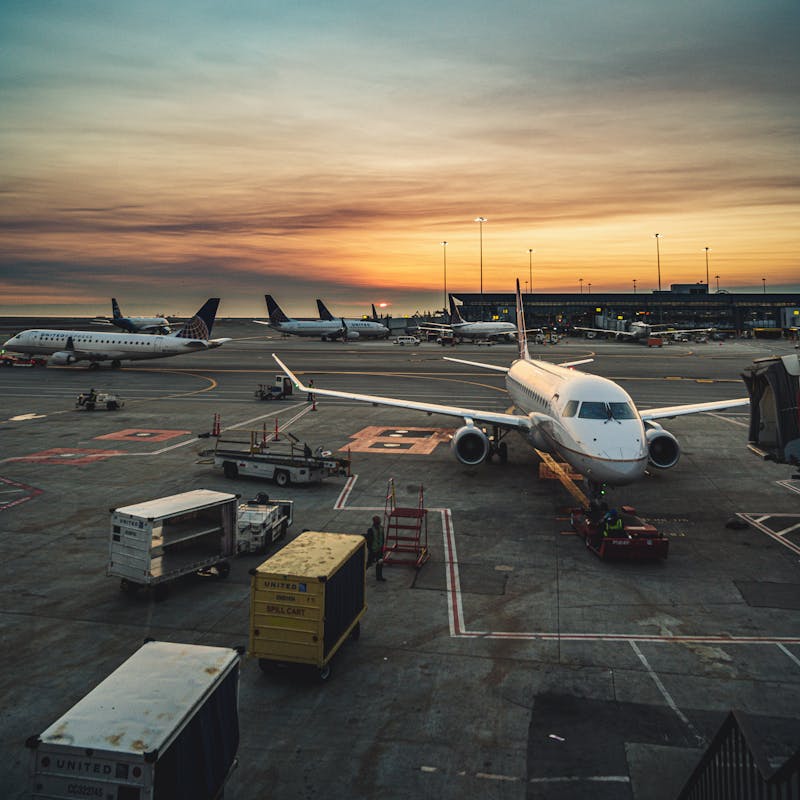
Somewhere between “Now Boarding” and “Last Call,” you can feel yourself loosen.
Airports are built to move bodies efficiently, but they also move something less visible: identity. Not in the dramatic, cinematic way where a stranger becomes a spy. More like a quiet unthreading, the slow loosening of roles we wear so tightly that we forget we’re wearing them at all.
There’s a particular sensation you get while staring at a departure board. Rows of destinations flicker, times change, gates shift. Your name isn’t on that screen, yet you feel addressed by it. Not because you’re special, but because the board is a reminder that everything can be revised in an instant.
And in a world that keeps revising itself—politics, language, work, family structures, even the definition of “normal”—it’s hard not to wonder if we’re all living a little like travelers. Passing through. Re-checking. Searching for the right line.
The airport as a temporary country
An airport is a place where you are both intensely documented and oddly anonymous.
You hand over an ID, submit to scanners, recite your birthdate, confirm your destination, prove your right to be where you are. Then, five minutes later, you dissolve into the crowd. No one knows your job title, your hometown, the last difficult conversation you had. You are just another person rolling a bag that clicks over tile.
It’s a strangely modern paradox: high surveillance paired with deep social invisibility. You’re tracked, but not known.
That combination can feel unsettling. It can also feel like relief.
For a few hours, you’re excused from being “the one who always hosts,” “the reliable coworker,” “the difficult sibling,” “the friend who gives advice.” You’re allowed to be just a human in motion, tethered to a gate number and a boarding group.
Gate numbers and the comfort of small certainty
Gate numbers are wonderfully unromantic. They’re pure function.
A gate number doesn’t tell you who you are, but it tells you where to go. In a life where directions often feel ambiguous, that kind of certainty is seductive.
There’s a reason people hover anxiously near their gate even when they have hours before boarding. It isn’t just fear of missing a flight. It’s the comfort of belonging to a clear process. Here is the line. Here is the sequence. Here is the outcome.
Outside the terminal, the choices get messier.
Work is no longer a ladder for many people; it’s a series of lateral moves, contract gigs, “side projects” that become the main thing. Relationships don’t follow one script anymore, and families don’t always fit the old templates. Even identity itself—gender, nationality, politics, community—feels more openly questioned.
A gate number is a small island of certainty in a sea of soft shifting.
The performance of travel and the self you pack
Travel asks you to curate yourself.
You decide which version of you is coming along: the efficient traveler with a capsule wardrobe, the sentimental one who brings a book you’ll never open, the anxious one with three backup chargers and a printed itinerary.
Even when you’re not going far, you assemble a temporary identity.
There’s the “airport self” who is slightly more polite, slightly more cautious, and oddly willing to eat yogurt at 6 a.m. There’s the “flight self” who watches movies you’d never choose at home. There’s the “arrival self” who stands at baggage claim and feels a flicker of hope that the next few days will be cleaner, better organized, more meaningful.
We pretend it’s just logistics, but it’s also ritual. We pack and repack the story of who we are.
In the softly shifting world beyond the concourse, people do something similar—only the luggage is invisible.
We pack identities for different rooms. Professional in one place. Casual in another. Tough when we need to be. Soft when it feels safe. Online we become our own publicists, selecting angles, editing captions, refining a self that looks coherent even when we don’t feel that way.
The airport just makes the curation obvious.
When everything is in transit, what counts as “home”?
Airports are designed around the idea that you are not staying.
Even the seating is a gentle reminder: metal armrests that keep you upright, outlets placed just far enough to make you lean forward, announcements that interrupt any attempt to settle into stillness.
It’s a place that says, implicitly, don’t get too comfortable.
That message feels familiar lately. Many people live with a low-grade sense that permanence is harder to claim. Not because stability is impossible, but because it’s more conditional than it used to seem.
A job can be restructured. A city can become unaffordable. A friendship can drift into silence. An algorithm can change the way your work gets seen. A cultural norm can flip within a few years, leaving you feeling either newly free or newly out of place.
So we start to ask a question that sounds simple but isn’t: what counts as “home” when everything feels in transit?
For some, home becomes a person rather than a place. For others, it becomes a routine: morning coffee, evening walk, a weekly call that holds the week together. For others, home is a private room of the mind where you can tell the truth without needing to convince anyone.
In a softly shifting world, “home” often stops being a location and starts being a set of conditions: safety, honesty, belonging, and the ability to rest.
The quiet grief of being unread
There’s a moment on long travel days when you realize no one around you has any context for you.
You could be heartbroken, newly engaged, unemployed, newly promoted, grieving. You could be running toward something or away from something. You could have had the kind of year that reshapes your face.
And to everyone else, you’re just a stranger holding a boarding pass.
That anonymity can be peaceful, but it also contains a small grief: the sense of being unread.
In the broader world, that grief shows up in subtler ways. People often feel misunderstood not because they’re surrounded by hostility, but because they’re surrounded by speed. Conversations skim surfaces. Messages get shortened. Identity gets compressed into labels that fit neatly into a bio.
We’re all trying to be recognized while also protecting ourselves from being pinned down.
The airport is a concentrated version of that tension. It’s a place where you’re reduced to essentials—name, seat, destination—while your inner life remains your own.
Soft shifting doesn’t mean shapeless
A world that changes quickly can make identity feel unstable, like something you’re supposed to keep updating.
But identity isn’t software. You don’t need a patch every time the culture shifts.
There’s a difference between being flexible and being hollow. Flexibility is the ability to adapt while staying rooted. Hollowness is adaptation without a core.
The challenge is learning what belongs to the core.
For some people, it’s a moral stance: I don’t lie to get ahead. I don’t abandon people when it’s inconvenient. I don’t treat others as disposable.
For others, it’s a creative impulse: I make things, even when no one is watching. I pay attention. I stay curious.
For others, it’s a commitment to care: I show up. I apologize when I’m wrong. I keep my promises, especially the quiet ones.
In a shifting world, the core isn’t a rigid identity statement. It’s a set of practices. Things you do that make you recognizable to yourself.
The small scenes that reveal who we are
If you want to see identity in motion, watch people at the edges of the airport script.
A parent kneels to zip a kid’s jacket, even though they’re late. A stranger offers a charging cable without making a big deal of it. Someone argues with a gate agent, not just because they’re stressed, but because they don’t know how to ask for help without turning it into conflict.
These tiny scenes are like snapshots of the self.
They suggest something important: identity isn’t only what we claim. It’s also what we default to when the plan changes.
And the plan always changes.
That’s what the departure board teaches, in its blunt, blinking way. The world will adjust the gate. The world will delay the flight. The world will reroute you. The question isn’t whether you’ll be disrupted; it’s what you’ll become when you are.
A reflective ending at the edge of boarding
Eventually your group is called.
You stand, gather your things, and join the slow procession. You check your pass again, as if the letters might have rearranged themselves. You step forward because that’s what you do in airports: you move when instructed, you trust the system enough to keep walking.
But there’s also another reason you move.
You move because some part of you believes that crossing thresholds matters. That changing rooms can change you. That a different sky might make a different thought possible.
In a softly shifting world, identity can feel like a gate assignment—temporary, revisable, dependent on forces you can’t always see. But the deeper truth is quieter.
You are not the gate number.
You’re the one who keeps finding your way to the right place, even when the screen updates, even when the line bends, even when you don’t fully recognize the person you’ve been lately.
And if you can hold onto that—movement with a core, change without collapse—then the shifting doesn’t have to be a threat. It can be a kind of permission: to become, again and again, someone you can live with.