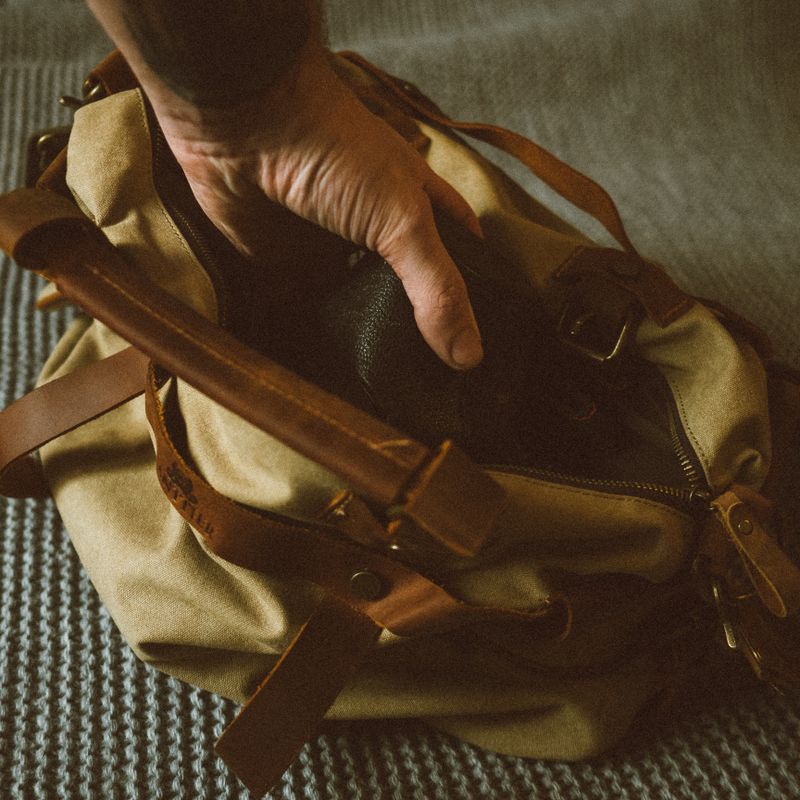
The difference between a smooth boarding and a gate-check sticker is often an inch.
Air travel has a way of turning small details into big problems—especially when your bag is the detail. This carry-on luggage size guide is designed to help you avoid the most common mistakes travelers make, from trusting the wrong measurements to forgetting that wheels count. You’ll get a clear sense of what “carry-on size” really means, why it varies by airline and aircraft, and how to choose a bag that stays overhead without drama.
If you’ve ever watched a line stall while someone wrestles a suitcase into a sizer—or had to repack on the floor near the gate—you already know the stakes. The goal isn’t perfection; it’s predictability.
Why “carry-on size” feels inconsistent from trip to trip
The first surprise is that there isn’t one universal carry-on standard. Many U.S. airlines often reference a general maximum around 22 x 14 x 9 inches (including wheels and handles), but that’s a convention, not a law. A small shift in aircraft type can change what fits, and international carriers may enforce different limits or add strict weight caps.
Then there’s the reality of bins themselves. A bag that fits on a wide-body jet may not work on a regional aircraft with smaller overhead space, where roller bags are frequently gate-checked regardless of dimensions.
Finally, enforcement varies. Some airports and routes are stricter because flights are full, bins fill quickly, or staff are under pressure to keep boarding on time. The same bag can be ignored on one trip and flagged on the next.
The carry-on luggage size guide basics (and what counts)
A practical carry-on luggage size guide starts with a simple rule: airlines measure the bag you bring onboard, not the bag you imagined before you stuffed it. That includes:
- Wheels (especially spinner wheels that add height)
- Handles (fully extended handles don’t count, but handle housings do)
- Exterior pockets when they’re packed and bulging
- Hard-shell flex (yes, even hard cases can “bow” at the seams when overfilled)
If you only remember one thing, make it this: published dimensions are often the bag’s frame size, not the true packed size. A “22-inch carry-on” can be 23 inches at its tallest point once wheels and corner guards are included.
Typical size targets you can actually shop for
Instead of chasing the maximum allowed by one airline, shop for a bag that travels well across many.
- Conservative U.S.-friendly target: 21.5–22 in tall, 13.5–14 in wide, 8–9 in deep (total including wheels)
- More flexible for international/regional routes: closer to 21 x 14 x 8 in, and keep weight modest
Weight limits are the next trap. Several international airlines publish strict carry-on weight caps (commonly in the 7–10 kg range). U.S. airlines often don’t publish a carry-on weight limit, but that doesn’t mean your shoulders—or the flight attendant who might need to move your bag—will approve of a dense suitcase.
What makes airlines reject a bag at the gate?
Usually it’s not that your bag is “huge.” It’s that it’s unpredictable. Staff need quick yes/no decisions, and anything that looks oversized, rigid, or hard to stow becomes a problem.
Two real-world pressures shape enforcement:
- Overhead bin space is finite, and the boarding process is timed. When bins fill, enforcement tightens.
- Safety and injury concerns are real. The U.S. Bureau of Labor Statistics has reported that flight attendants experience high rates of workplace injuries, and lifting heavy luggage into overhead bins is a recurring contributor. Airlines have an incentive to discourage overly heavy or awkward carry-ons.
And if you’ve noticed more pushback lately, you’re not imagining it. The FAA has repeatedly highlighted passenger behavior and cabin safety as priorities, and airlines respond with stricter cabin policies when operations are stressed.
5 mistakes that quietly sabotage your carry-on plans
These are the missteps that cause the most “How is this not allowed?” moments.
Mistake 1: Using the brand’s dimensions instead of your bag’s real, packed dimensions
Most suitcase listings emphasize the body size, not the maximum external points. That’s why you’ll see a bag marketed as “22 inches” that measures larger when you include wheels.
A quick fix: measure it yourself at home.
- Stand the bag upright.
- Measure floor to top (including wheels).
- Measure the widest point (often near corner guards).
- Measure depth with pockets packed, not flattened.
If your bag is borderline, a half-inch can decide whether it slides into a sizer without a fight.
Mistake 2: Forgetting that “carry-on” often means “carry-on + personal item” rules
Many travelers accidentally build a three-bag situation: roller + tote + purse + neck pillow stuffed with clothes. Airlines don’t love that.
A more reliable approach is to treat your setup as:
- One main carry-on (overhead)
- One personal item (must fit under the seat)
Anything beyond that can trigger gate agents to start consolidating—often into your roller bag, which then becomes too full and too large.
Mistake 3: Choosing expansion zippers as your “just in case” plan
Expandable carry-ons are convenient, but they can turn a compliant bag into a noncompliant one in seconds. The worst time to discover that is when you’ve already bought souvenirs and the bag is now a rigid brick.
If you buy an expandable model, treat the expansion as an emergency tool, not the default setting. When you expand, you also change how the bag fits in overhead bins—depth is often the limiting factor.
Mistake 4: Assuming overhead bins are the same across aircraft
A bag can be “within limits” and still be a problem on smaller aircraft. Regional jets and older planes may have overhead bins that force rollers to go in sideways or not at all.
If your itinerary includes a short hop on a regional carrier (or a connection to a smaller city), you’re more likely to encounter forced gate-checking. That’s not always a size violation; it’s a capacity issue.
Mistake 5: Packing without a strategy for weight, not just size
A carry-on that technically fits but weighs a ton is hard to lift, awkward to stow, and more likely to get attention.
The CDC and other public health authorities consistently emphasize that heavy lifting and awkward movements raise injury risk. Translating that to travel: if your bag feels like a deadlift at home, it will feel worse at a crowded boarding door.
A simple tactic is to move dense items (chargers, toiletries, shoes) into your personal item—still within rules, but easier to distribute and lift.
A quick comparison: picking the right bag for your travel style
The best carry-on isn’t the biggest one that squeaks by. It’s the one that stays consistent across airlines, overhead bins, and your own habits.
| Feature | 2-wheel roller | 4-wheel spinner | Soft-sided carry-on | Hard-shell carry-on |
|---|---|---|---|---|
| Real-world capacity | Medium | Medium | High (flexible) | Medium (fixed volume) |
| Overhead fit reliability | High (less width from wheels) | Medium (spinners add height) | Medium–High (can compress) | Medium (doesn’t compress) |
| Ease through airports | Medium | High | Medium | High |
| Best for | Cobblestones, long walks, tighter bins | Smooth terminals, heavier loads | Overpackers who need flexibility | Fragile items, wet weather, structure |
If you’re frequently on mixed aircraft types, a 2-wheel roller or a slightly smaller spinner often causes fewer surprises. If you’re mostly on larger planes and want effortless movement, a well-measured spinner can be great—just verify the true height.
A practical checklist before you buy (and before you fly)
This isn’t about becoming obsessive. It’s about removing the uncertainty that leads to last-minute stress.
Before you buy
- Check the airline(s) you fly most for posted maximum dimensions and personal-item rules.
- Choose a bag that stays comfortably under the maximum, not right on it.
- Look for external dimensions listed “including wheels and handles.” If not listed, assume the marketed size is optimistic.
- Consider your common aircraft types (regional routes? international?) and pick accordingly.
Before you fly
- Measure your packed bag once, especially if it’s new.
- Keep expansion zippers closed unless absolutely necessary.
- Put anything you may need at security or in-flight (meds, chargers, a layer) in the personal item to avoid frantic bin access.
- If you’re boarding late, expect bins to be full—plan what you’d want accessible if you’re forced to gate-check.
Using a carry-on luggage size guide to travel with less friction
A good carry-on luggage size guide isn’t really about numbers; it’s about reducing the number of decisions you have to make when you’re tired, late, or surrounded by people. The travelers who seem calm at the gate usually aren’t luckier—they’ve designed a system that works even when the flight is full.
There’s also a quiet satisfaction in knowing your bag will fit without negotiation. You stop scanning for the biggest bin. You stop bracing for the sizer. You board, lift, stow, and sit—like it’s supposed to be.
If you’re deciding what to change for your next trip, consider making just one adjustment: pick a carry-on that’s slightly smaller than you think you need, and pack like you’re protecting your future self at the gate. That’s when the whole experience starts to feel lighter—before you even leave the ground.