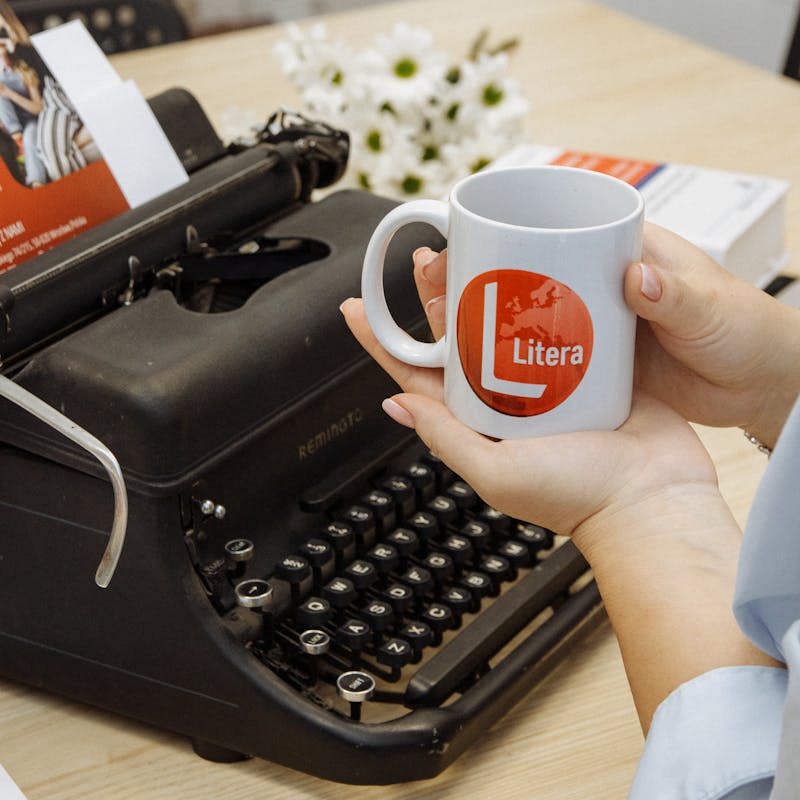
A life can change in the space between an envelope’s seal and a calendar’s red circle.
There’s a particular hush that settles in when you’re waiting for something to arrive—an email, a decision, a reply that will tell you whether your plan was smart or foolish. In that hush, time doesn’t feel neutral. It becomes a kind of judge, tapping its pen against the desk.
We talk about “finding your path” as if it’s a hiking trail with clear signage, as if a person only needs to climb a certain hill to see the whole route laid out below. But most paths aren’t discovered in a panoramic reveal. They’re assembled slowly from small communications and sharper constraints: letters that arrive with unexpected language, deadlines that force you to choose, and long stretches where you’re working without proof that it matters.
The truth is that many people don’t so much find their path as correspond with it—tentatively at first, then more fluently over time.
The Letter as a Mirror
A letter—whether it’s literal paper or a message that carries weight—does more than deliver news. It reflects your own hopes back at you.
Consider the moment you see your name at the top. Before you read the body, you already feel a quick flare of meaning: This is about me. And that’s part of the trap and part of the gift.
Letters have a way of clarifying what you wanted all along. A rejection can sting, but it can also reveal how invested you were. A yes can thrill you, but it can also raise a quieter question: Do I actually want what I just won?
This is one of the strangest features of adulthood: the most “objective” outcomes still turn you inward. The message may be about a job, a grant, a school, a contract, a landlord’s decision, a visa, an audition, a client’s verdict. But the meaning blooms privately.
You reread certain sentences like they’re scripture. You memorize one phrase and ignore another. You tell yourself a story about what it all implies.
And sometimes, weeks later, you realize the letter wasn’t the turning point. Your reaction to it was.
Deadlines: The Unromantic Sculptor
Deadlines are rarely portrayed as noble. They’re seen as the enemy of creativity, the tyrant of calendars, the reason people drink too much coffee and stare at their ceilings.
But deadlines also do something essential: they extract a self from the fog.
When there’s no deadline, we can keep our options warm like leftovers we swear we’ll eat. We can say we’re “considering” a move, “thinking” about changing careers, “exploring” a relationship, “maybe” writing a book. The language stays vague because vagueness keeps us safe.
A deadline ends the safety.
It forces you to decide what you’re willing to disappoint: the version of you who wanted everything, the person who expected you to say yes, the dream that only works if no one asks for a timeline.
There’s a small, sharp honesty to an approaching date. The closer it gets, the more it exposes what you’ve actually been doing with your hours.
Not what you intended. Not what you said you cared about.
What you did.
That’s why deadlines can feel brutal and oddly comforting at the same time. Brutal, because they don’t negotiate with your fantasies. Comforting, because they shrink the universe of choices into something you can hold.
The Slow Craft of Knowing
Knowing your path is often described as insight: a lightning bolt, a sudden clarity, a decisive moment of self-recognition.
But more often it resembles craft.
Craft is repetitive. It’s unglamorous. It asks for attention even when inspiration doesn’t show up. It demands that you return to the work with the humility of someone who expects to be bad at it for a while.
In that sense, “knowing your path” isn’t a single conclusion. It’s a practice.
You learn what you’re drawn to by showing up repeatedly to certain kinds of problems. You learn what you can tolerate by encountering it, not by imagining it. You learn what drains you by watching your energy leak away after a day spent pretending.
And you learn what restores you in the small hours afterward—when you’re reading about something out of pure curiosity, when you lose track of time while helping someone, when you feel oddly calm doing work that others find tedious.
Over months and years, these patterns form a map.
Not a map you can frame. A map you can follow.
When the World Writes Back
One reason paths feel hard to know is that the world is constantly writing back, and its feedback is inconsistent.
You can do something smart and be ignored. You can do something half-baked and be praised. You can prepare carefully and still miss your chance because the timing was wrong.
This randomness is not just frustrating—it’s disorienting. If outcomes were clean, people would choose more confidently. Instead, many of us live in a haze of mixed signals: a good performance paired with silence, a mediocre effort paired with a lucky break.
So we search for the “real” answer behind the response.
Was the rejection personal? Was the acceptance a fluke? Did they mean that compliment? Did they notice my mistake? Am I getting better, or just getting away with it?
The slow craft of knowing your path requires a difficult kind of maturity: the ability to receive feedback without being ruled by it.
That doesn’t mean ignoring the world. It means interpreting it with patience.
You look for patterns instead of single events. You weigh advice by the advisor’s values, not just their confidence. You treat praise as data, not identity. You treat criticism as information, not prophecy.
In other words, you learn to read the world’s letters without letting them write your whole story.
The Private Deadlines Nobody Sees
Some deadlines arrive without fanfare.
They’re not on a calendar shared with coworkers. They aren’t tied to tuition or rent. They are quiet limits that appear when you finally admit something is no longer working.
The deadline might be the last time you can pretend a relationship will improve on its own. Or the last time you can keep a job that makes you feel smaller. Or the last season you can delay caring for your health.
These deadlines are strange because they’re self-authored and still feel external, like weather.
One day, you wake up and the tolerance that used to stretch endlessly is suddenly gone.
It’s not always a crisis. Sometimes it’s just a clean internal sentence: I can’t do this anymore.
And once that sentence is true, everything after it becomes a negotiation with reality.
You make a plan. You choose a date. You write the email. You start again.
This is how paths change—not always with drama, but with a private, definite shift.
The Myth of the Perfect Choice
A common fear sits underneath many deadline decisions: the fear that one wrong choice will ruin everything.
This fear makes people treat paths like trapdoors.
But most lives are not that fragile. Most paths have side roads and detours, and the ability to change course is often less about luck than about skill: the skill of adapting, of learning, of recovering from embarrassment, of trying again.
What’s more, the “perfect choice” is often only visible in hindsight. In the moment, choices are made with incomplete information. You decide with the data you have, the energy you have, the courage you have.
And then you live into the decision until it becomes true.
That’s a hard idea for people who crave certainty. It suggests that meaning is not always discovered; sometimes it’s constructed.
You don’t wait for the path to announce itself in a letterhead font.
You start walking.
Small Scenes of Becoming
There’s a familiar scene: someone at a kitchen table late at night, laptop open, rereading an application essay or a cover letter that has already been edited too many times.
They’re not just choosing words. They’re choosing a story about who they are.
Do they emphasize stability or curiosity? Do they admit uncertainty or hide it? Do they present themselves as a specialist or a generalist? Each sentence becomes a wager.
Later, another scene: a person in a hallway outside an office, waiting for a meeting where they plan to ask for more responsibility, or less, or a different title, or the chance to leave gracefully.
They can hear their heartbeat, and they’re thinking, I can still turn around.
And later still: the message arrives. The answer is not as clean as they imagined. It’s yes, but with conditions. It’s no, but with an invitation to try again. It’s silence.
In each scene, the path isn’t a revelation. It’s a relationship between desire and constraint.
You offer yourself. The world responds. You adjust.
Learning to Keep Company With Uncertainty
If the slow craft of knowing your path has a single lesson, it might be this: uncertainty is not a temporary inconvenience. It’s part of the medium.
Some people try to “solve” uncertainty by collecting credentials, approvals, and contingency plans until no risk remains.
But no risk remains only when no life remains.
A more livable approach is to build tolerance for the in-between.
You learn how to take action without guarantees. You learn how to be disappointed without collapsing. You learn how to accept good news without immediately moving the goalposts and demanding the next proof.
This isn’t about being stoic. It’s about being present.
The person who can keep company with uncertainty can also keep company with growth, because growth rarely feels like certainty. Growth feels like trying, revising, and trying again.
The Letters You Write to Yourself
Not all letters come from outside. Some are written quietly, without stationery.
They are the promises you make in the dark when you know you’ve drifted. They are the sentences you repeat when you need to be brave: I’m allowed to start over. I’m allowed to want this. I’m allowed to stop wanting that.
They are also the boundaries you finally put into words.
A path becomes clearer when you stop arguing with your own experience. When you accept that you are a person with limits, preferences, and particular kinds of courage.
And then you set a deadline—not as punishment, but as care.
A date by which you’ll submit the work.
A week when you’ll have the conversation.
A month when you’ll stop waiting for someone else to choose you.
These are not dramatic gestures. They are small acts of authorship.
The Quiet Relief of Forward Motion
The most surprising part of all this is the relief.
Even when the outcome is uncertain, forward motion changes the texture of your days. It replaces rumination with effort, fantasy with contact, fear with something sturdier.
You begin to trust yourself not because you can predict the future, but because you can meet it.
And that trust is its own kind of letter—one you open again and again.
At some point, you may look back and realize you didn’t discover a path that was waiting for you, complete and shining.
You made one.
Slowly.
Through the messages you received, the deadlines you honored, and the steady, human craft of learning what you can live with—and what you can’t.