Some directions vanish, but the feeling of being found stays.
Loss is usually described as subtraction: a wallet, a job, a person, a chance. But sometimes loss is stranger than that, more like a door you didn’t know existed swinging open in the middle of an ordinary day.
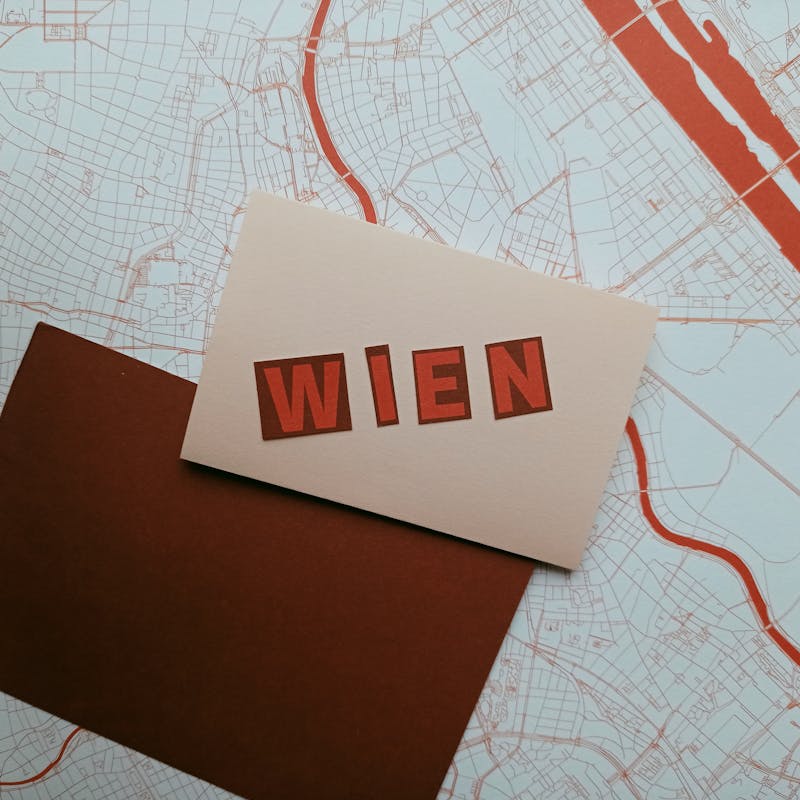
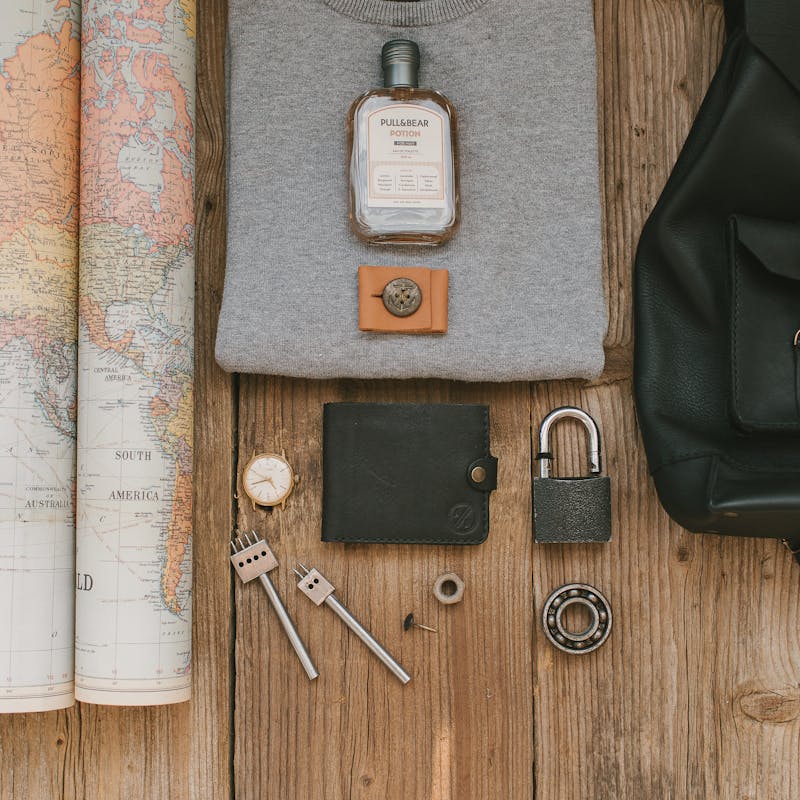
I think about this whenever I remember a map I once carried—creased, soft at the folds, annotated with little circles that looked confident even when I wasn’t. I can’t tell you where it went. I only know that it disappeared at exactly the moment I needed it most.
What remains isn’t the paper. It’s a stranger’s voice, the angle of afternoon light on a sidewalk, the quiet permission to be lost without being broken.
The Comfort of Paper in a Phone-Shaped World
A paper map has a kind of dignity. It doesn’t buzz. It doesn’t reroute you with a sigh of superiority. It sits patiently in your pocket and asks only that you stop, unfold it, and admit you don’t know.
Even now, in an era of blue dots and turn-by-turn certainty, the old act of reading a map feels like a small philosophy. You locate yourself by landmarks rather than instructions. You understand a city as a whole instead of a sequence of commands.
That’s probably why losing a paper map can feel oddly personal, as if you mislaid a version of your own competence. The lines and symbols were never just geography. They were the story you told yourself about control.
And then control slips through your fingers, as it tends to do.
The Moment the Map Went Missing
Getting lost is rarely dramatic at first. It begins as a mild disagreement with the world.
You take a turn that seemed reasonable. You keep walking because the next corner should explain everything. Your confidence holds for a few blocks longer than it deserves to.
Then comes the pause. Not the leisurely kind—more like a mental brake. You stand still, pretending you’re just checking something, when really you’re trying to rescue a plan that’s already dissolving.
That’s when I reached for the map. And that’s when it wasn’t there.
The absence had weight. I patted the pockets again, slower this time, as if moving carefully might change the outcome. I checked the bag. I even looked behind me on the sidewalk, as though paper might hover politely where it fell.
But the map was gone.
In that small silence, the city changed. Buildings stopped being helpful. Street names turned into private jokes. The idea of “over there” lost meaning.
It was an ordinary kind of panic—quiet, internal, and embarrassing.
Asking for Help as a Form of Risk
There’s a particular vulnerability in asking a stranger for directions. You’re not just requesting information; you’re admitting you misjudged yourself.
In some places, the most common advice is to keep moving, keep your head down, don’t invite attention. There’s wisdom in that, especially for people who have learned the hard way that attention isn’t always safe.
But there’s another kind of risk too: the risk of isolation. The risk of turning every encounter into a transaction you never initiate.
When you’re lost, you face a choice. You can double down on private problem-solving—walk longer, pretend you’re sightseeing, try to reconstruct the map from memory. Or you can step into the old, human method of finding your way: speak.
I chose to speak.
The Stranger Who Didn’t Treat Me Like a Problem
I don’t remember what the stranger looked like in any reliable way. Memory isn’t a camera; it’s a storyteller, and it edits aggressively.
What I remember is the tone.
It wasn’t rushed. It wasn’t suspicious. It didn’t carry the faint irritation that can come with being asked for help, as if your confusion has interrupted someone else’s life.
I approached with the cautious politeness we’re trained to use in cities: the half-smile, the measured distance, the quick preface—“Sorry to bother you.”
The stranger responded as though being bothered wasn’t what was happening.
They asked where I was trying to go. They listened, really listened, in the way people do when they aren’t already planning their next sentence.
Then they did something unexpectedly kind: they didn’t just point.
Pointing can be useful, but it’s also vague, a gesture that can hide uncertainty. This was different. The stranger described the route as if drawing it in the air, anchoring it to things I could recognize: a storefront, a park entrance, the sound of traffic shifting near a larger road.
The directions weren’t delivered like instructions from a machine. They were offered like a shared secret.
At one moment, I must have looked unconvinced. I felt it in my own face—the doubt that leaks out when you’re trying to look grateful while still calculating your odds.
The stranger noticed. They asked if I wanted them to walk with me to the next landmark.
That offer is what I remember most.
Not because we actually walked far—if we did, it wasn’t long enough to become a story about companionship. But because the offer carried a rare message: you don’t have to do this alone.
Why That Brief Kindness Stuck
We tend to think the moments that shape us must be large. A move across the country. A heartbreak that redraws your whole calendar. A triumph you tell at dinner parties.
But some moments are small and still permanent.
A stranger helping you find your way can lodge in your memory because it interrupts the narrative of modern life. We’re used to interfaces, automated answers, and a curated distance from one another. We’re used to handling our problems privately, even when they’re solvable in seconds with the right conversation.
When someone steps in with uncalculated generosity, it doesn’t just solve the immediate issue. It quietly rewrites what you think people are like.
That rewrite is subtle. It doesn’t turn the world into a fairy tale.
It just adds a counterexample.
And counterexamples matter more than we admit.
The Map as a Symbol We Don’t Recognize Until It’s Gone
A lost map is practical inconvenience, yes. But it’s also a metaphor with sharp edges.
Maps represent a certain kind of confidence: the belief that the world can be navigated if you have the right information. When you lose the map, you confront the truth that information isn’t the same as orientation.
Orientation is partly about knowledge—street names, transit lines, distances.
But it’s also about trust.
Trust in your ability to ask.
Trust that you’ll be understood.
Trust that you can recover from being wrong.
In that sense, losing a map can be a strange gift. It forces you into the relational reality we sometimes avoid: the world is not only a place you move through; it’s a network of people who can, at times, steady you.
Not always. Not reliably. But enough that the possibility is real.
The Quiet Economics of Attention
The stranger gave me something more valuable than directions: attention.
Attention is the resource we guard most fiercely now. It’s fragmented by design, monetized in small increments, and drained by the constant sensation of being behind.
To give someone your attention—focused, unhurried, sincere—is to offer a form of respect that can feel almost intimate.
The exchange wasn’t sentimental. It didn’t need to be.
It was simply one person saying, with their presence: you are not invisible.
It’s easy to underestimate how restorative that can be.
People carry private disorientation all the time. Not just the kind that happens on unfamiliar streets, but the kind that happens in marriages, careers, friendships, and bodies that change without permission.
Sometimes the best thing you can offer is not an answer, but a moment in which someone can feel their confusion without shame.
That’s what the stranger offered.
What We Choose to Remember
It’s odd, the mental filing system that decides what stays.
I don’t remember the exact route. I couldn’t retrace it now.
I don’t remember the map’s cover, or whether it had a coffee stain, or which pocket it fell from.
But I remember the sensation of the city softening. I remember the relief of being met with patience instead of judgment.
We often assume memory preserves what was most important in an objective sense. But memory preserves what changed our internal weather.
The map didn’t change me.
The stranger did.
Living With Less Certainty, On Purpose
The older I get, the more I suspect that certainty is overrated. Not because planning is useless—it isn’t. But because the insistence on always knowing where you are, always having the next step ready, can shrink your life.
It can make you harsh with yourself.
It can make you suspicious of others.
It can make you mistake independence for safety.
Losing the map was an accident, but it nudged me toward a different skill: the ability to navigate without pretending I’m above needing help.
That skill doesn’t look impressive. It doesn’t photograph well.
It looks like pausing.
It looks like asking.
It looks like letting someone be kind to you without turning it into a debt.
And it looks like offering that same kindness when the roles reverse.
The Unfinished Feeling That Remains
I still wonder what happened to that map. Maybe it slipped from my pocket on a bench. Maybe it was scooped up by a well-meaning passerby and tossed into the trash. Maybe someone else unfolded it later and tried to make sense of my penciled circles.
The practical loss is long resolved. I got where I needed to go.
But the emotional residue is more interesting. It’s the awareness that certain encounters are never meant to become relationships, yet they matter anyway.
We pass through one another’s lives like brief weather.
Sometimes we bring rain. Sometimes we bring a little clear sky.
I can’t picture the stranger’s face anymore, not clearly. But I can still feel the moment when my anxiety loosened its grip.
The map is gone.
The memory of being met with calm remains.
And whenever I find someone hovering on a sidewalk with that familiar, almost-hidden panic—phone in hand, eyes scanning street signs as if they might rearrange themselves—I think of how little it takes to become the person someone remembers most.