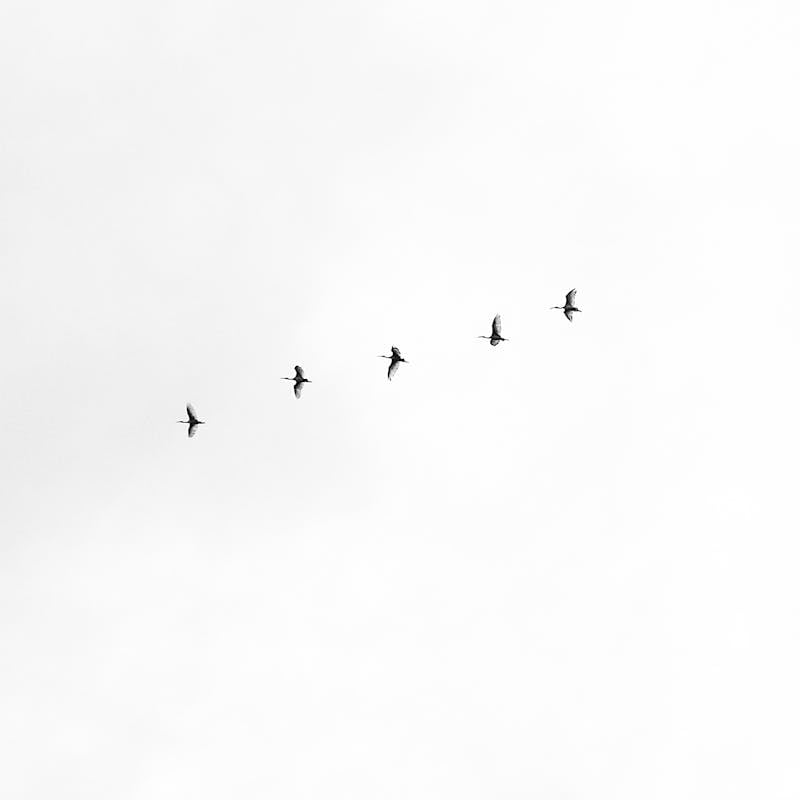
In the thin air before dawn, wings redraw the calendar.
The shifting routes of migratory birds have become one of the most vivid, trackable stories of climate change. By following when birds depart, where they pause, and how their destinations move, scientists—and increasingly, everyday birders—are watching a warming world rearrange itself in real time. What looks like a seasonal spectacle is also a living map, updated with every flight.
When migration stops being predictable
For a long time, migration felt like nature’s most reliable appointment. Swallows returned when the light softened, geese arrived with the first cold front, and warblers flashed through woodlots as if on cue. Those patterns were never perfectly fixed, but they were stable enough that local knowledge mattered.
Now the “when” is loosening. Earlier springs in many regions nudge insects out sooner and leaf-out arrives days ahead of older averages. Some birds respond by departing wintering grounds earlier, arriving on breeding territories sooner, or stretching their stay across seasons. Others can’t shift as quickly because their cues come from day length, not temperature, or because their journey depends on winds and storms that no longer behave the way they once did.
The result is a new kind of uncertainty: not just that migration timing changes, but that it changes unevenly. Two species that used to pass through the same park in the same week may now be separated by a month, simply because their biological clocks and food sources are drifting out of sync.
The flyway as a climate map
Migration routes—Atlantic, Mississippi, Central, Pacific—are often described like highways. In reality, they’re more like braided rivers, splitting and merging as weather, habitat, and geography dictate. As temperatures rise, those braids subtly re-route.
On the breeding end, many species are expanding northward or upslope where conditions remain suitable. That can show up as a slow push into higher latitudes, or as a sudden new dot on an observer’s map: a species that used to be rare now appears regularly. On the wintering end, some birds are shortening their journeys. A place that once served as a brief stopover becomes a winter home because it no longer freezes hard, or because food remains accessible.
It’s tempting to treat these shifts as simple “north equals better” logic. But climate is not only temperature. It’s drought, snowpack, heat waves, wildfire, and the timing of rain. A single extreme season can scramble a route by removing a key wetland or turning a dependable patch of coastal marsh into a saltier, less productive landscape.
Stopover sites: the fragile middle
Most migration stories focus on endpoints: tropical forests and northern breeding grounds. The middle matters just as much. Stopover habitats—mudflats, prairie potholes, riparian corridors, city parks—are where birds refuel, rest, and wait for the next favorable wind.
Climate change puts pressure on these stepping-stones in quiet ways. A drought that drains shallow wetlands can erase food for shorebirds that rely on invertebrates exposed at the water’s edge. Earlier springs can make peak insect hatches come and go before long-distance migrants arrive. Stronger storms can force exhausted birds into urban areas, where light pollution and reflective glass turn a hard night into a lethal one.
Because migration is an energy budget, not a casual trip, these mid-journey disruptions compound. A bird that leaves a stopover underfed may arrive late to breed, defend a territory poorly, or produce fewer young. The losses don’t always appear dramatic; they show up as slightly thinner margins year after year.
New neighbors and unfamiliar seasons
For people who pay attention, the neighborhood itself is changing. A birder who used to watch for a certain thrush in October might now find it lingering into December. A species once considered strictly summer may appear on winter checklists. In some places, the old “first day of spring” feelings are replaced by a longer, blurrier shoulder season.
These changes can be strangely intimate. It’s one thing to read about global average temperatures; it’s another to notice that the pond behind the school stays open all winter and the ducks don’t leave. Birds make climate visible because they are both mobile and familiar. They connect continents, yet they also show up at the feeder.
But the story isn’t purely about birds going north. Some species are squeezed between warming lowlands and mountains that run out of elevation. Others face habitat loss that intersects with climate pressure: coastal development where sea levels rise, agriculture where drought intensifies, forests stressed by heat and pests. Migration, in other words, is not a single-variable problem.
How we track the changes now
Today’s migration maps are drawn from an unusual collaboration: satellites, weather radar, tiny tracking tags, and crowdsourced observation. A hawk’s path can be reconstructed from a lightweight transmitter. A night of heavy migration can be sensed on radar as birds move like a living weather system. And millions of checklists submitted by volunteers can reveal trends that no single research team could collect alone.
What’s powerful about this data isn’t just volume. It’s context. When arrival dates shift, scientists can compare them with temperature anomalies, drought indices, and habitat conditions. When a species’ winter range creeps north, researchers can test whether survival improves, whether competition changes, and whether breeding success follows.
At the same time, the tools can’t replace the on-the-ground reality. A map may show a corridor, but it can’t always show a drained wetland or a new industrial site that removes a crucial patch of cover. The best understanding comes from combining broad patterns with local knowledge.
What a warming world asks of migration
Migration evolved as a solution: move to where food is abundant and conditions are favorable. Climate change turns that solution into a moving target. The places birds “expect” to find are changing faster than some species can adapt, and the timing of abundance is shifting like a conveyor belt that won’t hold still.
Yet there’s also resilience in the story. Some birds adjust routes, alter schedules, and adopt new wintering areas. They exploit urban heat islands, newly mild coastlines, and changing agricultural landscapes. Adaptation is happening—but it comes with trade-offs, and it doesn’t guarantee long-term stability.
The most sobering part is how much migration depends on a chain. Protecting a breeding ground is not enough if stopovers degrade. Improving a local park helps, but not if distant drought collapses the wetlands that make the journey possible. Birds remind us that ecosystems are connected across borders and seasons.
The quiet invitation in the sky
To follow migratory birds is to practice a kind of attention that modern life rarely rewards. You look up at the right hour. You notice wind direction. You learn to recognize a silhouette, a call, a sudden flurry in the treetops. Over time, you also notice what’s missing.
That absence can feel personal, like a friend who stopped visiting. But it can also sharpen resolve. If the world is warming, the birds will keep mapping it—through altered routes, unfamiliar timing, and new gatherings in old places. The question is whether we will read that map as a curiosity, or as guidance, and whether we will act before the next dawn redraws the calendar again.