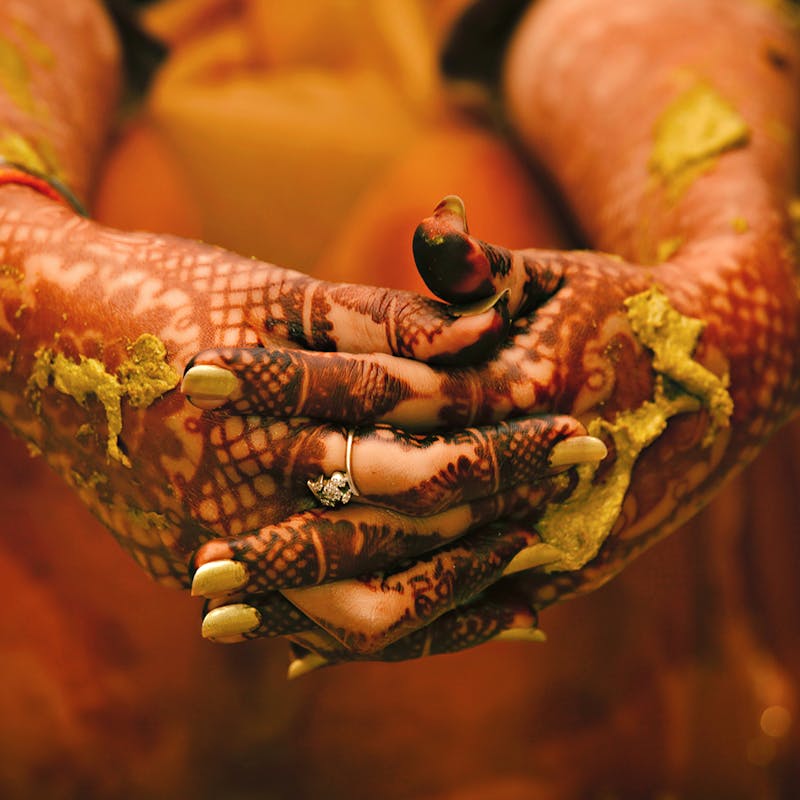
What looks ordinary is often a carefully kept secret.
There are rituals we defend with surprising intensity, even when we can’t fully explain them.
The exact mug. The precise route. The way the keys must land in the bowl by the door. These gestures don’t announce themselves as meaningful, but they carry meaning anyway—quietly, persistently, like a scent that clings to fabric.
Most days, we move through our routines without calling them anything. We just do them. Yet if someone disrupts one—if the mug is missing, if the route is blocked, if the keys aren’t where they “belong”—it can feel oddly personal, as if the world has misunderstood us.
That reaction is a clue.
Everyday rituals aren’t only about efficiency or habit. They’re stories we wear close to the skin, built out of repetition. They’re how we tuck our values, our fears, our hopes, and our history into actions so small they can pass unnoticed.
The hidden narrative inside “normal”
A ritual is not the same as a routine, though the difference can be subtle.
A routine is what you do to get through the day. A ritual is what you do to feel like yourself while you’re doing it.
You can brush your teeth as a routine—quick, automatic, barely remembered. Or you can brush your teeth as a ritual—same steps, but threaded with something else: the comfort of order, the sense of starting clean, the private satisfaction of not letting the day’s mess linger.
The story isn’t written in words. It’s written in sequence.
This is why two people can do the same thing for entirely different reasons. One person makes the bed because they like a neat room. Another makes the bed because their childhood felt chaotic, and a smooth blanket is proof that chaos is not in charge today.
We call it preference, but often it’s autobiography.
Morning as a private ceremony
Morning rituals tend to be the most guarded, because mornings are when we’re most porous.
Before the day hardens into deadlines and traffic and texts, there’s a softer window when identity can be shaped. That’s why people get oddly poetic about coffee, sunlight, journaling, skincare, stretching. The point isn’t the beverage or the notebook.
The point is the transition.
A person stands in a kitchen that is still dim and quiet. The kettle hisses. The first sip is hot enough to demand attention. For a moment, the mind stops sprinting ahead. The body is here.
That’s the ritual: not coffee, but arrival.
Even the rituals that look shallow from the outside—choosing an outfit, applying fragrance, fixing hair—often serve a deeper purpose. They are a form of emotional staging. You’re preparing a version of yourself that can handle what’s coming.
And if the day is difficult, the ritual becomes a kind of promise: I will meet this with intention.
Objects that become talismans
We like to pretend we’re not sentimental, and then we refuse to replace a cracked bowl.
Some objects graduate from “thing” to “talisman” without a formal ceremony. A hoodie becomes the one you wear when you’re tired. A pen becomes the one you use for important decisions. A playlist becomes the one that makes a lonely apartment feel lived-in.
These objects aren’t magical, but they’re charged.
They hold time.
The worn handle of a bag remembers commutes. The chipped plate remembers late-night leftovers and post-breakup dinners. The chair by the window remembers long phone calls and quiet victories.
Rituals often gather around such objects because objects don’t argue. They don’t ask you to explain. They simply let you return.
There’s also a tenderness in choosing the same thing again and again. It’s a way of saying: this has carried me before; it can carry me now.
The social choreography we don’t name
Not all rituals are solitary. Many are shared, especially the ones that keep relationships steady.
Think of the familiar greeting at work. The way a friend always asks, “Did you eat?” instead of “How are you?” The standing joke that reappears at every family gathering, like a holiday ornament.
These aren’t just habits. They’re social choreography—moves that reassure everyone they still belong.
A couple develops tiny ceremonies without noticing. One person turns on a specific lamp at dusk. The other person checks that the door is locked twice. The rituals might seem trivial until the day one partner is gone on a trip and the room feels wrong, as if the evening can’t begin.
That’s when it becomes clear: the ritual wasn’t about light or locks. It was about being together in a recognizable world.
Even conflict has rituals. Some people need to talk immediately. Some people need to cool down first. Some people make peace through humor, others through silence, others through a shared meal.
The patterns repeat because they’re trying to solve the same emotional problem: How do we return to safety?
Why disruption can feel like disrespect
It’s easy to laugh at someone who insists the dishwasher must be loaded “the right way.”
But beneath the insistence is often something more serious: a need for predictability, an attempt to keep friction out of a life that already contains too much.
Rituals are a kind of infrastructure for the nervous system. When life is uncertain, the body hunts for small certainties.
This helps explain why disruptions sting. If a ritual is carrying your sense of control, then interruption feels like sabotage. If a ritual is carrying your grief, then interruption feels like ignorance.
Consider the person who always sits in the same subway car. To outsiders, it’s superstition. To them, it might be a way to feel less vulnerable in a crowded space.
Or consider the person who keeps a late parent’s watch in a drawer and touches it before a big meeting. That gesture might be the only place their grief has permission to speak.
When someone mocks or dismisses these actions, they’re not only criticizing behavior. They’re misreading meaning.
The quiet roles rituals play: control, comfort, and continuity
If you listen carefully, you can hear what your rituals are trying to do for you.
Some rituals are about control. You can’t control the news, the market, the weather, or other people’s moods. But you can control the order of your steps in the morning.
Some rituals are about comfort. They soften the sharp edges of daily life. They provide small, repeatable pleasures that don’t require negotiation.
Some rituals are about continuity. They connect you to who you’ve been.
A person cooks the same soup every winter because their grandmother did. Another person avoids cooking that soup because it hurts too much, and that avoidance becomes its own ritual—an annual silence that says, not yet.
Even rituals that look purely functional can be anchored in identity. The runner who ties their shoes in a particular sequence isn’t only preventing blisters. They’re stepping into the story of being someone who doesn’t quit.
And sometimes rituals are about recovery. A person who once lived through instability may create rituals not for romance, but for repair.
They’re building a life where the mind can rest.
When rituals become cages
There’s a fine line between a ritual that steadies you and a ritual that traps you.
Repetition can soothe, but it can also harden into rigidity. If a ritual is the only way you can feel safe, then it starts to narrow your world.
You can see this in small moments: the irritation that flares when plans change, the refusal to try a new restaurant, the anxiety that follows a missed workout. The ritual has stopped being a choice and become a rule.
That doesn’t mean rituals are bad. It means they’re powerful.
A useful question is whether your ritual expands you or shrinks you.
Does it make you more present, more grounded, more open to the day? Or does it make you brittle, dependent, afraid of interruption?
Sometimes the healthiest thing you can do is loosen the grip—not by abandoning the ritual, but by letting it breathe.
Make the coffee in a different mug. Take a different route once a week. Leave the bed unmade once, not as rebellion, but as a reminder: I can still be myself in a slightly messier world.
The rituals we inherit, and the ones we choose
Many rituals aren’t invented; they’re inherited.
They arrive through family, culture, religion, neighborhood habits, generational survival strategies. Some are explicit: holiday meals, prayers, specific songs at weddings or funerals. Others are quiet: how you greet elders, what you consider rude, how you handle money, what you do when someone is sick.
You may not realize a behavior is a ritual until you see someone do it differently.
That moment of difference can be illuminating. It can also be unsettling. It forces a question: Is this mine? Or did I just pick it up?
Choosing rituals intentionally can be a way of growing up, in the deepest sense.
A person might keep the parts that feel nourishing—Sunday dinners, handwritten thank-you notes, the habit of bringing food to grieving friends. They might release the parts that feel like fear disguised as tradition.
Rituals can be rewritten. They can be updated to fit the person you’re becoming.
Paying attention to your own “small liturgies”
You don’t need to romanticize every habit to learn from it.
But it can be quietly transformative to watch yourself with a little curiosity.
Notice what you do when you’re stressed. Notice what you do when you feel good. Notice what you do when you’re lonely.
Do you clean? Do you text someone? Do you rewatch a certain show? Do you cook? Do you take a long shower and let the water drum against your shoulders until your thoughts slow down?
These are not random choices. They’re strategies. They’re symbols.
Sometimes you can even hear what a ritual is asking for.
The late-night snack might be asking for comfort. The constant checking of email might be asking for reassurance. The habit of going for a walk at the same hour might be asking for steadiness, for a horizon, for proof that the world still contains trees.
If you can name the need, you gain options.
You can keep the ritual, refine it, or replace it with something that serves you better. The point is not optimization. The point is understanding.
A final scene, still unfolding
At the end of a day, many of us perform a closing ritual without thinking.
We plug in the phone. We rinse a glass. We set out tomorrow’s clothes. We check the locks. We turn off the lights in a certain order.
These gestures are small, but they’re not empty. They’re a way of telling the body: you can stand down now.
And perhaps that’s the secret life of everyday rituals: they are not distractions from real life. They are how real life becomes livable.
They hold our stories when we don’t have time to narrate them.
If you listen, your day is full of quiet phrases spoken in action—tiny vows, tiny memorials, tiny rebellions against chaos.
You are always wearing something.
Not just clothes, but meaning.