Some days only make sense after they’re over.
For a long time, I treated my calendar like a ledger.
If a day didn’t produce something tangible—an invoice sent, a task cleared, a measurable “win”—it felt like a day that slipped through my fingers. I didn’t say it out loud, but I lived as if time had to justify itself.
The strange part is how reasonable it all looked from the outside.
Being driven is praised. Being busy is treated like proof of relevance. Even rest is often reframed as “recovery” so it can be admitted into the productivity system without threatening it.
And yet, the more I measured my days in profit and output, the more my life started to feel thin.
The Quiet Tyranny of the Dashboard
Modern work comes with a language that sounds clean and efficient.
Metrics. Key results. Pipelines. Velocity. Conversions. We’re surrounded by dashboards that can tell us what happened, what’s lagging, and what needs attention. They can even tell us how we compare to last month.
What they can’t tell us is whether we’re becoming the kind of person we want to be.
It’s easy to confuse what is measurable with what is meaningful.
The measurable things are persuasive because they’re legible. They can be reported, shared, graphed, and rewarded. When you’ve spent enough time in that environment, you start to internalize the dashboard.
Even on a weekend, your mind might quietly ask: what did you do that “counts”?
When Work Becomes the Only Mirror
Profit and output are not bad measures. They’re simply incomplete.
The trouble begins when they become the only measures we trust. When work becomes the mirror we use to check our worth, every day turns into a referendum.
A productive day feels like moral correctness.
A slow day feels like failure.
In that system, you can have a conversation that repairs a relationship, or take a walk that settles your anxious mind, and still feel like you fell behind.
Because none of it showed up as a deliverable.
I began noticing how often I narrated my own life using business language.
“Worth my time.” “Return on investment.” “Efficient.” “Low value.” It’s not that those phrases are always wrong. It’s that they create a world where value is narrow and where being human is treated as overhead.
The First Cracks in the System
The shift didn’t happen dramatically.
It came through small moments that refused to be evaluated properly.
A long dinner with a friend where the conversation wandered without purpose, and somehow I slept better that night.
An afternoon spent reading with no plan to summarize, no notes for later, no angle for turning it into something “useful,” and yet my mind felt cleaner afterward.
A day when the to-do list barely moved, but I showed up patiently for someone else’s grief.
If I’d scored those hours by output, they would have looked like a loss.
But they weren’t losses. They were the day actually happening.
The Hidden Costs of Measuring Everything
The world of profit and output encourages a certain kind of discipline.
Deadlines get met. Systems improve. Skills sharpen.
But it also trains us to ignore signals that don’t fit into the spreadsheet.
The body’s request to slow down.
The mind’s need for quiet.
The soul’s desire—if you’re comfortable using that word—for beauty, for connection, for being moved by something that doesn’t pay you back.
When you treat time as a resource to be optimized, you start to fear time that can’t be defended.
You stop taking the scenic route, literally and metaphorically.
You answer messages while eating.
You listen to friends while half-thinking about the next task.
And if you’re not careful, you begin to live inside your own urgency.
The Uncounted Measures That Hold a Life Together
There are ways of measuring a day that don’t reduce it.
They don’t fit neatly in a tracker, but they leave evidence.
Some days are successful because you paid attention.
You noticed the way sunlight hit the kitchen floor and didn’t rush past it. You caught yourself snapping and apologized. You took five minutes to breathe before a hard call.
Some days are successful because you practiced restraint.
You didn’t fill every silence with noise. You didn’t chase the small dopamine of being needed. You let an email wait so you could be fully present for something else.
Some days are successful because you made space.
Space for a child’s story that doesn’t land quickly.
Space for a parent who repeats themselves.
Space for your own mind to wander without being turned into content.
It’s not sentimental. It’s structural.
A life without space becomes brittle.
The Difference Between Progress and Motion
Output is motion. It’s not always progress.
You can be busy in a way that avoids the real work of living.
Real work sometimes looks like sitting down with a decision you’ve delayed for months. Not because you didn’t have time, but because you didn’t want to feel the uncertainty.
It sometimes looks like admitting you’re lonely, even if loneliness can’t be “solved” with a project plan.
It sometimes looks like letting yourself be a beginner again—at music, at cooking, at conversation, at rest.
That kind of progress is quieter.
It doesn’t always produce something you can show.
But it changes the texture of your days.
Redefining “Enough” Without Lowering the Bar
One fear often sits beneath the obsession with output.
If I stop measuring, I’ll become careless. If I stop pushing, I’ll fall behind.
But measuring differently isn’t the same as not caring.
It’s choosing a fuller scoreboard.
There are still bills to pay. There are still goals worth pursuing. There’s still satisfaction in finishing something hard.
The question is whether achievement is the whole story or simply one chapter.
I started to experiment with a different definition of “enough.”
Not “Did I do everything?” but “Did I do what mattered most?”
Not “Was I maximally efficient?” but “Was I awake to my life?”
Not “Did I win the day?” but “Did I inhabit it?”
The bar doesn’t necessarily lower.
It becomes wiser.
Small Practices That Change the Measurement
The most surprising shifts came from tiny changes.
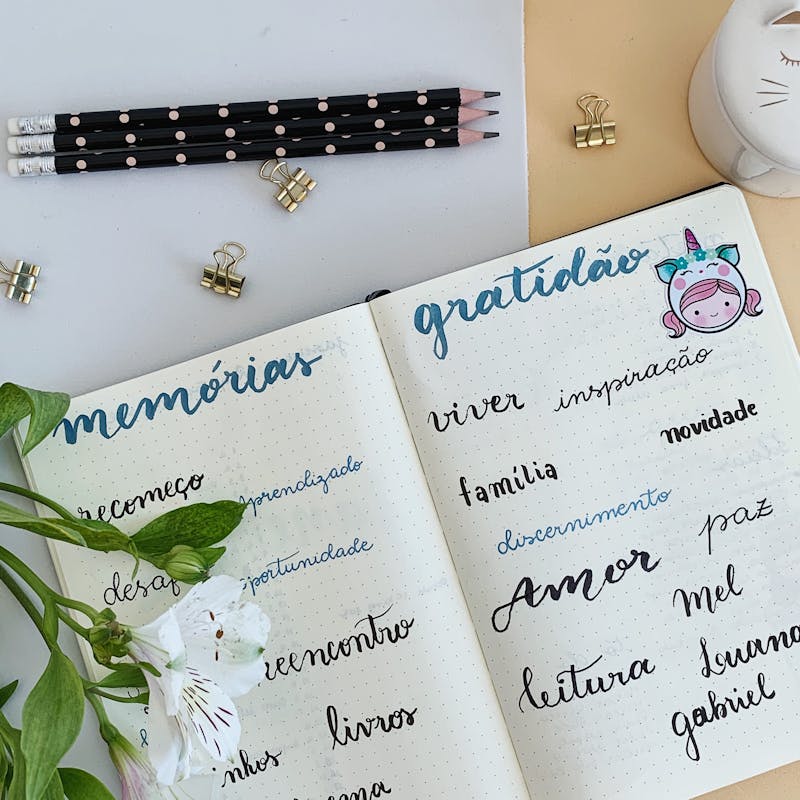
I began ending some days by recalling a few moments that had nothing to do with work. Not as a gratitude performance, but as a corrective.
A conversation that felt honest.
A moment of laughter that surprised me.
A task done slowly on purpose.
A boundary held.
A worry named.
The point wasn’t to romanticize the day.
The point was to acknowledge that the day had dimensions.
I also tried to notice when I was using productivity as anesthesia.
When the impulse to “just get ahead” was really an impulse to avoid feeling.
When taking on one more task was easier than sitting with the discomfort of not knowing what comes next.
Output can be a way of hiding.
Once you see that, you can start choosing differently.
The Strange Relief of an Unoptimized Hour
There’s a particular relief in an hour that doesn’t need to pay for itself.
It might be an evening walk without tracking steps. A meal cooked without documenting it. A book read without trying to extract a lesson.
At first, that kind of hour can feel irresponsible.
Your mind may reach for the familiar question: what is this for?
But if you stay with it, another answer appears.
It’s for being here.
It’s for noticing that your life isn’t only a series of outputs, but a lived experience.
It’s for remembering that your worth isn’t a number.
A More Human Ledger
In the end, I didn’t stop caring about work.
I stopped letting work be the sole accountant of my days.
I still appreciate a day when things ship and problems get solved. I still feel a clean satisfaction in a finished project.
But I’m learning to keep a second ledger—one that doesn’t compete with the first, but completes it.
In that ledger, a day can be good because you were kind when it would have been easier to be sharp.
A day can be meaningful because you made time for someone, or because you told the truth, or because you let yourself rest without performing it.
A day can count even if it doesn’t add up in the usual way.
And sometimes, the most important profit is not what you earned.
It’s what you didn’t lose: your attention, your relationships, your capacity to feel wonder, your ability to meet your own life without rushing past it.
That’s a measurement that doesn’t fit neatly on a dashboard.
It lives in the quieter evidence—the steadier heart, the deeper breath, the sense that your days belong to you again.