The future rarely arrives with a trumpet; it slips in through routine.
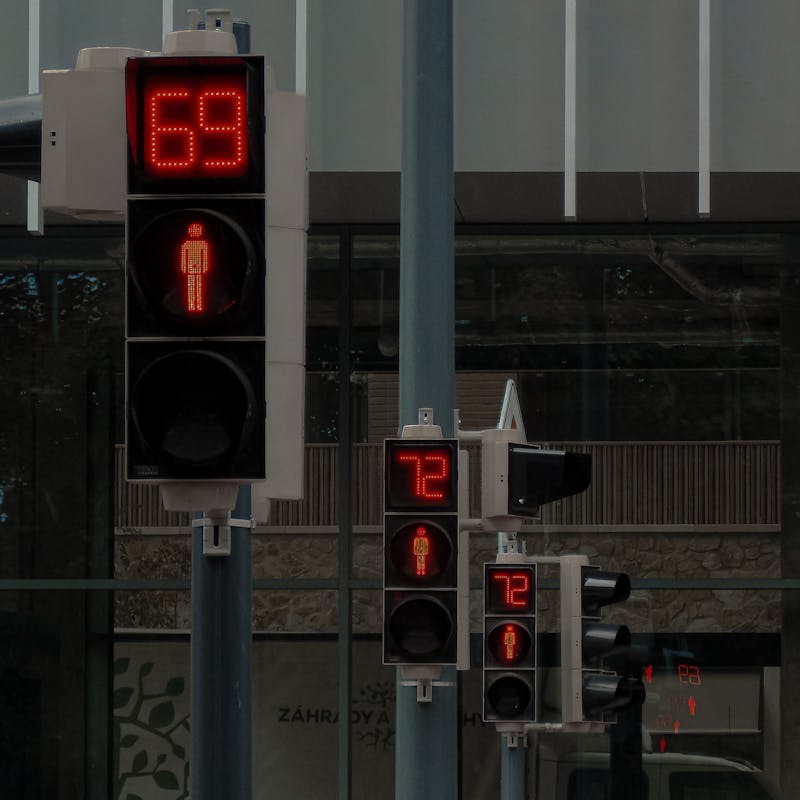
Walk through any city on an ordinary weekday and you can feel it: a subtle tightening of pace, a gentle rerouting of attention. Nothing dramatic appears to be happening. Traffic lights change. Doors unlock. A bus arrives with a small delay. Yet beneath the familiar choreography, quiet machinery is learning the contours of urban life—its bottlenecks, its patterns, its people.
The most powerful forces reshaping cities today aren’t always visible as gleaming towers or sweeping transit lines. They are systems that sense, classify, predict, and nudge. They operate in the background of our commutes, our purchases, our late-night searches, and our daily decisions. And because they’re quiet, they are easy to mistake for neutrality.
The City as a Living Spreadsheet
Cities have always been machines in a metaphorical sense—networks of water, power, streets, and laws. What’s changed is that the city is now also a data structure.
A modern metropolis can be read like a living spreadsheet: rows of households and businesses, columns of energy use and movement, cells that update every minute. Sensors monitor air quality near a highway. Cameras count cars at intersections. Utility meters report electricity demand by the hour. Public transit cards log tap-ins and tap-outs, translating commuting habits into a map of peaks and lulls.
This information is alluring because it promises legibility. When a city becomes measurable, it starts to feel manageable.
But measurement is never simply measurement. It’s a choice about what matters. A city that optimizes for vehicle flow might produce a different kind of daily life than one that optimizes for walkability. A city that treats “safety” as a number to reduce might privilege visible order over deeper stability.
Invisible Hands in Plain Sight
Most people don’t encounter “urban algorithms” directly. They meet them as friction—or its absence.
A navigation app quietly reroutes thousands of drivers through a neighborhood that wasn’t built for through-traffic. A ride-hailing system raises prices on a rainy evening, reshaping who can afford speed and convenience at the exact moment everyone wants it. A building’s access system logs each entry, converting movement into an audit trail that can be useful in emergencies and unsettling in daily life.
Even city services are increasingly guided by predictive models. Some sanitation departments adjust routes based on fill-level sensors in trash bins. Some infrastructure teams use models to anticipate water main breaks based on age, soil conditions, and historical failures.
These are not inherently sinister developments. In many cases, they reduce waste, save time, and prevent accidents.
Still, the quiet part matters. When decisions are automated—or even “suggested” by systems that feel authoritative—citizens can lose the sense that the city is something they co-create. It starts to feel like something they are processed by.
Optimization Has a Personality
The language of smart cities often leans on words like “efficiency” and “innovation,” as if they were universally agreed-upon virtues.
Yet optimization always carries a hidden personality.
If a system is trained to minimize congestion, it may value speed over safety. If it’s trained to maximize fare revenue, it may reduce service to low-income areas that generate fewer rides. If it’s trained to detect risk, it may treat certain places and people as suspicious because the historical record—shaped by past policies—labels them that way.
This is one of the central tensions of tomorrow’s cities: data-driven systems tend to amplify whatever assumptions are baked into their goals and training inputs.
The city becomes a mirror, but not a perfect one. It reflects our priorities, then exaggerates them through repetition.
Attention Is Urban Infrastructure Now
When people think of city-building, they picture roads, parks, housing, and schools.
But attention has become a kind of infrastructure, too.
A person standing on a sidewalk may be physically present yet mentally elsewhere, guided by the small vibrations and notifications that structure modern life. Digital maps tell us which streets to take, which restaurants to try, which stores are “worth it.” Recommendation systems don’t just help us choose; they help decide what we consider choosable.
This matters because cities are, at heart, environments of encounter. They are places where you bump into people unlike yourself, where you overhear a language you don’t speak, where you take a wrong turn and stumble on something beautiful.
A hyper-mediated city can reduce those accidents.
Not by force, but by convenience. If the city is filtered through apps that continuously personalize experience, the urban commons becomes less common. Two people can walk the same street and inhabit different realities—different “best routes,” different “must-try” spots, different warnings, different invitations.
Tomorrow’s cities may be shaped as much by the architecture of attention as by the architecture of concrete.
The New Geography of Privilege
Quiet machinery tends to concentrate benefits where conditions are already favorable.
A neighborhood with strong connectivity and new buildings can easily support smart thermostats, energy monitoring, package lockers, and secure access systems. A neighborhood with aging infrastructure and spotty service may be treated as a risk to be managed rather than a community to be invested in.
Predictive systems can worsen this divide without intending to. If a model uses past patterns of underinvestment as a “signal,” it can recommend more of the same.
Even “green” systems can carry this bias. Dynamic pricing for electricity can reward households that can afford energy-efficient appliances and flexible schedules, while penalizing those who can’t. Smart water monitoring can reduce waste in wealthy districts while older pipes continue to leak elsewhere.
The city becomes a patchwork of futures, distributed unevenly.
When the City Learns You Back
The most unsettling shift may be psychological.
We tend to assume we are the observers and the city is the observed. But in a sensor-rich environment, the city observes back.
Not in a human way, but in the way systems collect signals and build profiles. Where you linger. When you travel. What you avoid. What you buy, search, and click.
And once a system “knows” something about you—accurately or not—it can begin to shape what you see next.
A person who receives constant alerts about certain blocks being dangerous may stop walking there, even if the alerts are based on incomplete data. A commuter who is repeatedly routed away from public transit because an app predicts delays may further depress ridership, reinforcing the idea that transit is unreliable.
These loops can become self-fulfilling.
The city isn’t just responding to behavior; it’s participating in it.
Places Still Matter in a Digital Age
For all this talk of algorithms and sensors, cities remain stubbornly physical.
A child still needs a safe crosswalk. A caregiver still needs a bench near a bus stop. A worker still needs housing that doesn’t consume half their paycheck. A neighborhood still needs shade when summer heat lingers into the evening.
The quiet machinery is at its best when it supports these tangible needs without replacing human judgment.
A model can identify which intersections have the most near-misses, but it can’t feel what it’s like to stand there as cars turn too quickly. A dashboard can show which blocks lack tree canopy, but it can’t capture the relief of shade on a brutal day. Data can point toward a problem; it can’t define what dignity looks like in solving it.
This is the tension city leaders and residents will keep navigating: using powerful tools without surrendering the moral and sensory intelligence that makes cities livable.
Building a City That Can Be Questioned
Quiet systems become dangerous when they are unquestionable.
A city that relies on automated decisions should also build the civic habit of asking: Who designed this? What does it optimize for? What data does it use? Who is harmed when it’s wrong? Who gets to appeal its outcomes?
Accountability doesn’t have to mean hostility toward technology. It can look like clear explanations of how decisions are made, regular audits for bias and error, and community input that influences goals rather than merely reacting to outcomes.
It can also look like humility: acknowledging that some problems are not best solved through prediction and control.
A city that treats residents as partners, not data points, will make different choices about what to automate, what to measure, and what to leave open to human discretion.
The Quietest Machine Is Habit
Perhaps the most influential machinery is not silicon or steel, but habit.
People adapt quickly. A new system rolls out, and within weeks it becomes the new normal. We stop noticing what used to feel invasive or remarkable. We forget what streets looked like before they were covered in cameras, what shopping felt like before it was guided by ratings, what planning a day required before a phone could do it in ten seconds.
This is not a call to retreat into nostalgia. Cities have always evolved, and many past “normals” were unjust or inefficient.
But forgetting is risky.
If we stop noticing the systems around us, we stop imagining alternatives. We accept trade-offs we never consciously agreed to.
The future of cities will not be decided only in council meetings or corporate boardrooms. It will be shaped by what residents tolerate, what they demand, what they bother to ask about.
In a sense, tomorrow’s city is already here, quietly humming under today’s errands.
The question is whether we can hear it well enough to choose what it becomes.