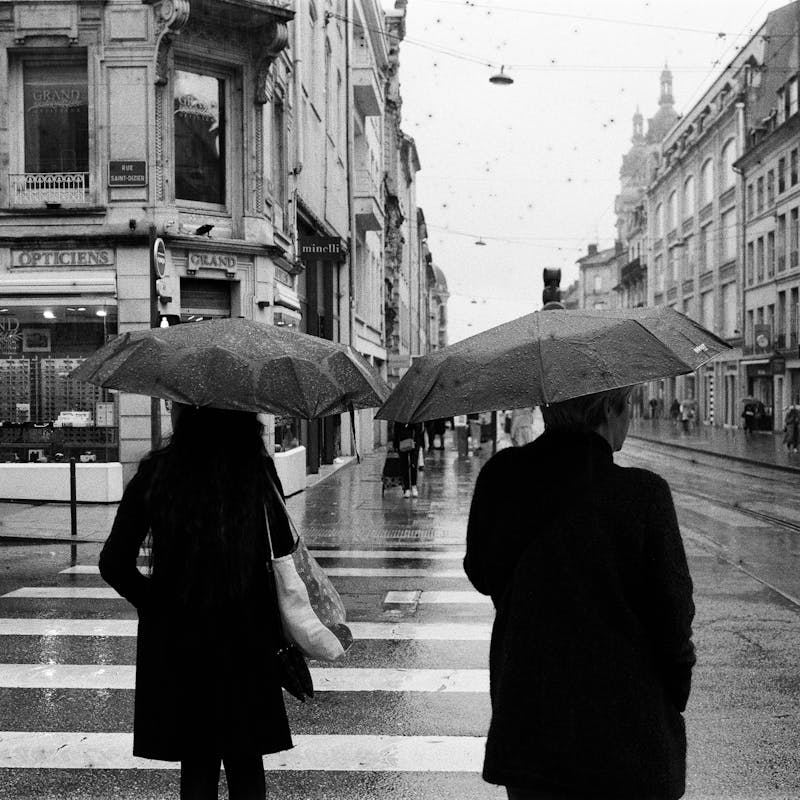
Some mornings feel like they’re happening to someone else.
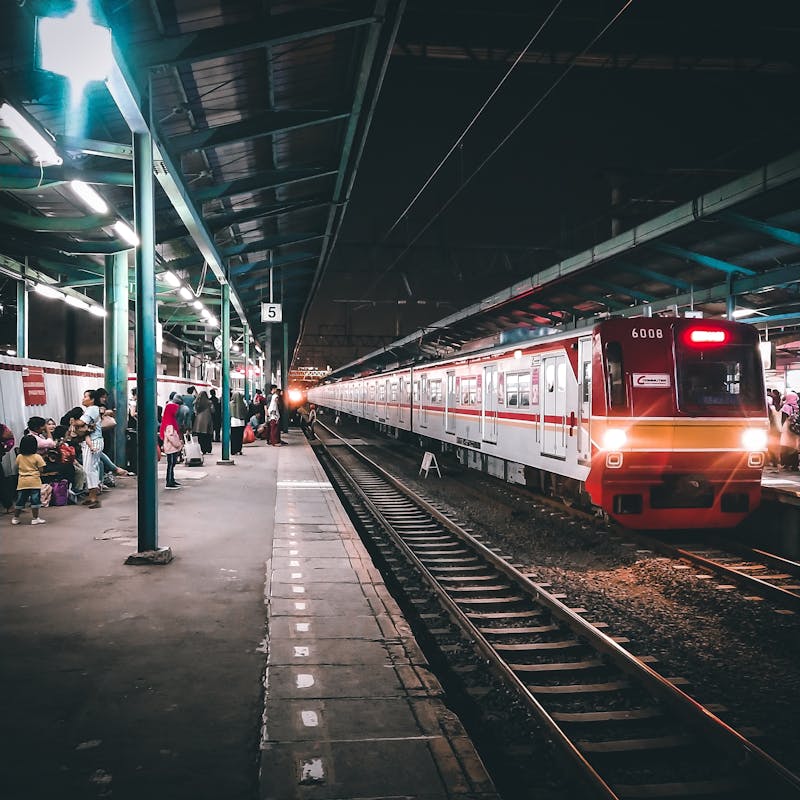
The rain arrives without ceremony, tapping out a quiet rhythm on the commuter window. It blurs the city into watercolor—streetlights smeared into pale gold, brake lights stretched into red ribbons, faces on the platform softened into anonymous shapes. You sit in a moving capsule of glass and metal, going somewhere you’ve gone before, and the world outside looks both familiar and far away.
There’s a particular kind of distance created by rain. Not the distance between two neighborhoods or two stations, but the distance between the person you are today and the person you suspect you’re becoming. It’s subtle, measured in small decisions and half-formed intentions, but on a rainy commute it can feel almost visible, like the space between droplets.
The Window as a Threshold
A commute window is an unromantic object. It’s scratched. It’s smudged. It’s sometimes fogged with the breath of a stranger standing too close.
But on the right day—usually the kind when the sky can’t decide whether to lighten—it becomes a threshold. Inside is your body, your bag, your schedule, your obligations. Outside is a world that doesn’t know your name and doesn’t need to.
Rain turns that threshold into something more intimate. It adds movement to stillness and texture to the blank. Each droplet catches light, swells, and slides down, leaving a brief trail like handwriting that no one can read.
For a few minutes, it’s easy to believe the window is showing you the future in code. Not because you can actually decipher it, but because the mind loves a surface to project onto.
The Commute’s Quiet Contract
Commuting is a daily agreement with time. You give it a portion of your morning and it gives you a predictable arrival.
That predictability is both comforting and dangerous. Comforting because it reduces friction; dangerous because it can make life feel like a loop you never opted into. When you do the same route long enough, your body learns it better than your mind does.
You can make it from your front door to your seat without fully waking up. You can scroll, stare, doze, or rehearse conversations that haven’t happened yet. You can treat the commute like dead time—time that doesn’t count.
Rain complicates that contract. It slows everything down. It crowds people closer. It makes the whole city move as if it’s carrying something fragile.
And suddenly the commute doesn’t feel like a neutral corridor between “real” moments. It feels like a moment itself.
Who You Are in the Glass
There’s a version of you that exists only in transit.
This version is not the polished self you bring to meetings or the softened self you bring home. It’s a quieter self, more observational. It notices details without committing to them.
In the rain, that transit-self often becomes reflective in the literal sense. The window turns into a faint mirror. Your outline floats over the city like a double exposure—your face layered onto passing buildings, your eyes hovering above wet sidewalks.
It can be unsettling, the way your reflection merges with everything outside. It suggests that the boundary between your inner life and your outer life isn’t as solid as it feels.
If you’re honest, you might recognize how much of your becoming happens in this blur. Not during the dramatic milestones, but during the in-between minutes when your mind is free enough to wander and brave enough to ask questions.
The Distance Measured in Small Choices
People like to describe transformation as a sharp turn: a new job, a new city, a new relationship, a clean break.
But more often, becoming is incremental. It’s choosing water instead of another coffee, not because you’re trying to be someone else but because you’re listening to your own body. It’s sending an email you’ve been avoiding. It’s deciding to study for a certification on weeknights. It’s making a doctor’s appointment you kept postponing. It’s learning to say, “I can’t,” without apologizing.
These choices rarely feel heroic. They feel mildly inconvenient.
And yet they’re the bridge. They’re the distance. They’re what separates your current self—who is shaped by habit and immediate comfort—from your future self, who is shaped by accumulated intention.
A rainy commute has a way of highlighting that. The window shows you movement, but not arrival. It reminds you that most of life is travel.
The Softening Effect of Weather
Rain makes the city less certain. The edges of buildings dull. Colors deepen. Sound changes, too—tires hissing over wet pavement, umbrellas snapping open, the muffled hush that settles over a street in steady drizzle.
In that softened world, it becomes harder to pretend you’re made of sharp angles.
You might think of someone you used to be: the younger self who believed adulthood would feel clearer. The self who assumed there would be a day when your personality “finished” loading, like a website.
Rain doesn’t mock that hope, exactly. It simply suggests a different truth: you remain unfinished, and that’s not a flaw. The weather doesn’t apologize for changing. It doesn’t announce its plan. It just moves through its phases.
In the same way, you are allowed to change without a speech.
The People You’ll Never Know
On a rainy train, everyone carries a slightly heavier world. Coats drip. Shoes squeak. Someone clutches a tote bag against their chest as if it contains something breakable.
You see fragments: a tired nurse leaning back with closed eyes, a teenager with damp hair tucked into a hood, a man watching the rain with a stillness that suggests grief or deep thought. You’ll never know which.
There’s a strange comfort in this shared anonymity.
It reminds you that you are not the only person mid-transformation. Everyone around you is crossing some kind of distance: from doubt to decision, from loneliness to connection, from stagnation to risk, from survival to something like ease.
Their futures are invisible to you. Yours is invisible to them.
And yet you’re all moving in the same direction—forward, even if forward is messy.
When the Future Feels Like a Separate City
Sometimes the person you’ll become feels like they live somewhere else.
That future self has different habits, different confidence, maybe even a different laugh. They handle conflict better. They have boundaries. They read more. They move their body with less resentment. They take their own ambitions seriously.
Or maybe they’re simpler than that. Maybe they’re just calmer.
The trouble is that imagining the future can create a painful gap. You look at your current life—unanswered texts, cluttered kitchen counter, budget spreadsheet you keep reopening—and you wonder how anyone crosses from here to there.
Rain can make that gap feel wider. The city outside looks far away even when it’s only a few feet beyond the glass.
But the glass is not a wall. It’s a surface.
The train keeps going.
Your life keeps going.
And the future is not a separate city so much as a slightly altered version of the one you already inhabit.
The Discipline of Noticing
There’s a quiet discipline in simply noticing your own life.
Noticing when you’re rushing. Noticing when you’re numb. Noticing the way you brace your shoulders when you open your email. Noticing the stories you tell yourself about what you deserve.
A rainy commute invites noticing because it slows the frame rate of the world. The outside becomes a film played at half-speed. You can catch your thoughts as they move.
Maybe you notice how often you postpone joy until some imaginary permission slip arrives. Maybe you notice how you’ve been living as if rest must be earned, as if your worth can be measured in output. Maybe you notice the opposite—that you’ve been drifting, waiting for motivation to appear rather than building it.
Noticing doesn’t solve anything by itself.
But it changes the relationship between you and your patterns. It creates space where there used to be autopilot.
And space is where becoming begins.
A Small Scene of Becoming
Picture this: the train pauses between stations. The lights flicker once. The rain keeps moving down the window in thin, deliberate lines.
You glance at your phone and see the calendar reminder you set weeks ago: “Follow up.” No context. Just two words.
Past-you left that message like a breadcrumb.
Maybe you ignore it. Maybe you don’t. Either way, the moment reveals something: there are multiple versions of you, communicating across time. The version who intended. The version who procrastinated. The version who is tired. The version who still wants more.
Becoming isn’t only about big leaps. It’s also about these small handoffs between your selves.
Leaving the Window Behind
Eventually the train arrives. The doors open. People step out into the wet air as if waking from a shared dream.
The window stays behind, holding its last few streaks of rain until the motion begins again. You don’t get to take the blurred city with you. You don’t get to keep the reflective quiet.
But something lingers.
The distance to who you’ll become doesn’t vanish when the weather clears. It remains, steady and alive, made of ordinary mornings and repeated choices.
And maybe that’s the point. The future isn’t waiting at the end of the line like a prize. It’s forming in you while you stand, while you sit, while you watch rain rewrite the world in temporary ink.
The window shows you movement without certainty.
You step onto the platform anyway.