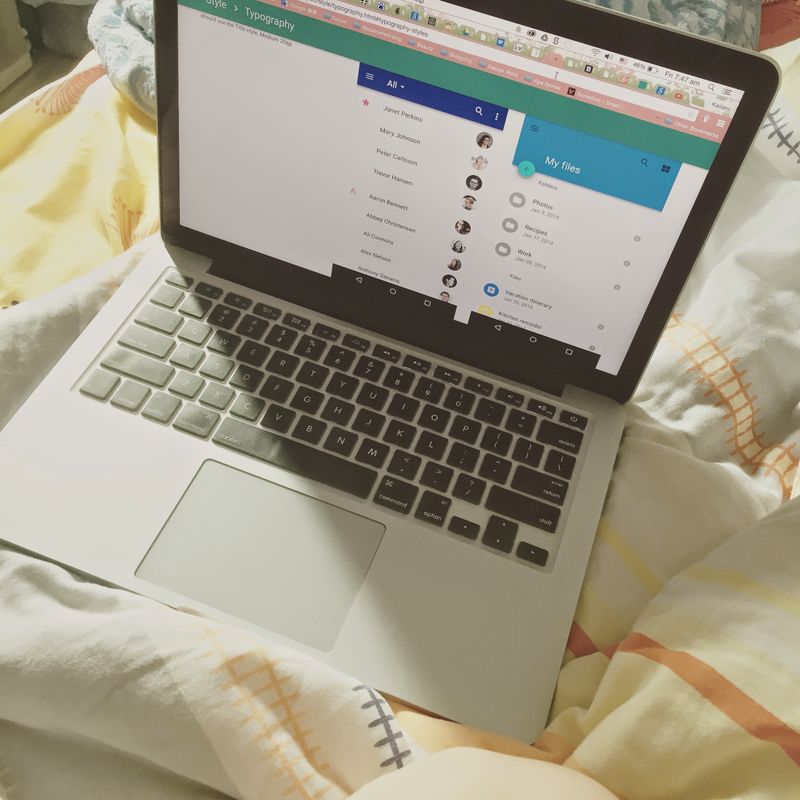
The cracks in a team rarely appear in the video call—they show up in everything that happens between them.
Remote work isn’t new anymore, but remote work culture still feels fragile in ways many leaders didn’t anticipate. This is the part people mean when they say, “We went remote, and something shifted.” Not productivity in the narrow sense, or whether people like sweatpants. What breaks is subtler: the invisible agreements about how decisions are made, how trust is earned, and how belonging is felt.
Culture is a system of signals. In an office, those signals travel through hallway glances, overheard context, and quick repairs after a tense meeting. Remote work doesn’t eliminate culture; it changes the physics of it. And when the physics change, the weak joints in the system become obvious.
The quiet math of “between moments”
Remote teams can run efficient meetings and still feel like they’re slowly coming apart. That’s because culture isn’t built only in scheduled time.
In an office, a lot of alignment happens accidentally: you hear a customer issue as you walk by, you see how a manager responds under stress, you notice what gets praised. These small exposures create a shared reality. Remote work strips away much of that ambient learning.
When the ambient layer disappears, teams become more dependent on deliberate communication—written updates, explicit handoffs, documented decisions. If those aren’t strong, the team doesn’t just lose information; it loses confidence that everyone is working from the same map.
A 2023 study from Microsoft’s Work Trend Index research described how cross-team connections weakened as remote and hybrid work increased, with many people relying more on close-knit ties and less on broader networks. That kind of “network shrinkage” doesn’t just affect collaboration—it changes who gets pulled into opportunities, whose context gets heard, and how innovation travels.
What breaks first in remote work culture?
The earliest fractures are usually decision clarity, trust signals, and belonging. Fixing them often matters more than adding another tool.
Decision clarity dissolves
If an office has a messy decision process, people can still cope because they can chase clarity in real time. Remote work makes ambiguity sticky. A half-made decision lingers in a thread, then becomes “true” through repetition.
Common symptoms: - People ask the same questions in different channels because they don’t know where truth lives. - Projects stall while everyone waits for a green light that never arrives. - Decisions get made by whoever is most available, not whoever is responsible.
Remote culture doesn’t require more meetings. It requires a visible decision trail—who decided, what they decided, when they decided, and what changed.
Trust becomes harder to “feel”
In-person trust is reinforced by casual proof: you see effort, you witness competence, you notice reliability. Remote work can make even strong performers seem opaque.
So people start substituting proxies for trust: - Fast replies get mistaken for commitment. - Constant online presence gets mistaken for productivity. - Charisma in calls gets mistaken for leadership.
When trust depends on proxies, remote work culture becomes performative. People optimize for appearing responsive instead of doing the work that matters.
Belonging turns optional—and that’s the danger
Belonging is not the same as friendliness. It’s the sense that you can take a risk—ask a “dumb” question, disagree, admit uncertainty—without social penalty.
Remote work often reduces the number of low-stakes interactions where psychological safety is quietly reinforced. The result is a team that sounds polite but avoids friction. And when a team avoids friction, it also avoids the kind of honest debate that improves decisions.
Google’s Project Aristotle research on teams famously highlighted psychological safety as a key factor in team effectiveness. Remote environments can still have it, but they don’t get it for free.
The biggest cultural trap: mistaking flexibility for coherence
Flexibility is one of the most meaningful upsides of remote work. But flexibility can also become a cultural loophole: if everyone’s schedule is personal (which it should be), the team still needs shared rules for collaboration.
Here’s where many organizations stumble:
- They grant flexibility without defining how coordination happens.
- They decentralize time without centralizing documentation.
- They celebrate autonomy while leaving accountability vague.
The result is a culture that feels respectful on paper and exhausting in practice. People are constantly negotiating norms that should have been settled once.
A useful question is: What must be synchronous for us to function—and what should be protected as asynchronous? When teams don’t answer that, everything becomes “maybe a meeting,” and attention gets shredded.
Remote work culture isn’t broken—your information design might be
Culture in distributed teams is often less about vibes and more about information architecture. Where does context live? How is it updated? Who maintains it?
A remote team with excellent documentation can feel surprisingly human because people aren’t always scrambling. They have space to be curious, to mentor, to think.
A remote team with weak documentation can feel cold even if everyone is kind, because kindness doesn’t replace clarity.
A practical comparison: office-default vs remote-default behaviors
| Cultural need | Office-default behavior | Remote-default behavior that works | What breaks if ignored |
|---|---|---|---|
| Shared context | Overhearing, drop-ins | Written updates, recorded decisions | Rework, conflicting assumptions |
| Trust signals | Visibility of effort | Predictable delivery, transparent progress | Micromanagement, “status theater” |
| Belonging | Casual connection | Rituals + inclusive facilitation | Isolation, quiet disengagement |
| Conflict repair | Quick hallway resets | Explicit follow-ups, norms for disagreement | Resentment, passive avoidance |
| Learning | Shadowing, osmosis | Deliberate mentoring, docs, demos | Uneven growth, knowledge hoarding |
The table looks operational, but it’s cultural. It defines what people can safely assume about how the team functions.
The subtle break: who gets seen, and when
Remote work changes the social economy of attention.
In an office, “being seen” is partially random. You bump into people. You get pulled into conversations. Remote work makes visibility more dependent on: - who speaks comfortably in group calls, - who has uninterrupted space at home, - who can attend meetings in the dominant time zone, - who already has relationships.
This is why remote work culture can quietly drift into inequality even with good intentions. The people who are most visible get more context, more credit, and more opportunity. The people who are less visible may still perform well but feel as if they’re living on the edge of the narrative.
McKinsey’s research on women in the workplace has repeatedly found that women often carry more “office housework” and face visibility challenges in different forms; remote work can reshape these dynamics, but it doesn’t automatically erase them. Without thoughtful meeting facilitation and clear crediting norms, unequal visibility can harden.
A small but powerful fix is credit hygiene: naming contributors in writing, documenting decisions with owners, and making wins legible without forcing self-promotion.
A checklist to rebuild remote work culture without forcing fake closeness
Not every team needs virtual happy hours. Many teams need something more grounded: predictable systems that reduce social guesswork.
Use this as a lightweight reset—especially if the team has grown quickly or feels more brittle than it used to.
- Define “where truth lives.” Choose one place for decisions and one for project status. Make it boring and consistent.
- Write down decision rights. Who owns what calls? What needs input vs approval? Ambiguity is the fastest culture tax.
- Normalize slow communication. Create explicit response-time expectations so people aren’t trapped in constant vigilance.
- Make meetings earn their keep. Use agendas, end with owners, and send a short written recap that becomes searchable.
- Design for time zones. Rotate meeting times when possible, record key sessions, and protect async participation.
- Create a repeatable conflict path. A norm like “if a thread gets tense, we move to a quick call, then summarize in writing” prevents lingering damage.
- Measure workload, not presence. Reward outcomes and reliability—discourage “always on” signaling.
- Build mentoring into the work. Short demo sessions, pairing, and documented playbooks beat vague encouragement.
These aren’t cultural accessories. They’re load-bearing beams.
When remote culture works, it feels strangely calm
The best remote teams don’t feel hyper-connected every day. They feel steady.
There’s less scrambling for context because context is captured. There’s less fear of misunderstanding because decisions are traceable. There’s more trust because commitments are clear and follow-through is visible without surveillance.
And there’s a particular kind of respect that emerges when a team does remote well: people stop treating time as something to seize from one another. They treat attention as a shared resource that must be protected.
That’s the deeper cultural shift remote work makes possible. Not a world with fewer relationships, but a world where relationships are less dependent on constant proximity to survive.
If your remote work culture feels like it’s cracking, it may not be because people care less. It may be because the team is missing the quiet structures that used to be provided by the office itself. The question isn’t whether to “bring back culture.” It’s whether to rebuild the invisible agreements—so work can happen without everyone having to guess what’s real.